THE ADVENTURE COLLECTIVE® · Independent discovery and booking for outdoor travel

See Jordan’s two headline landscapes in a single long day: the carved city of Petra followed by a 4x4 safari through the red sands of Wadi Rum. This full-day private tour from Amman pairs history, geology and Bedouin hospitality with practical logistics to help you plan a packed, unforgettable day.
See Jordan’s two headline landscapes in a single long day: the carved city of Petra followed by a 4x4 safari through the red sands of Wadi Rum. This full-day private tour from Amman pairs history, geology and Bedouin hospitality with practical logistics to help you plan a packed, unforgettable day.
The day begins before sunrise, with a climate-controlled van threading out of Amman and onto the Desert Highway. Headlights cut through low, blue dawn; the road strips past basalt fields and scrub until the sandstone walls of Petra rear into view. Arriving at the visitor center, the route narrows into the Siq, a 1.2-kilometre slot canyon that funnels you toward the Treasury — the carved façade that first convinced 19th-century explorers that an entire city had been hewn from rock.
Verified experiences and guided adventures in the surrounding area.
Operated by R&H VIP Transportation Services · Wadi Musa, Ma'an Governorate
The day begins before sunrise, with a climate-controlled van threading out of Amman and onto the Desert Highway. Headlights cut through low, blue dawn; the road strips past basalt fields and scrub until the sandstone walls of Petra rear into view. Arriving at the visitor center, the route narrows into the Siq, a 1.2-kilometre slot canyon that funnels you toward the Treasury — the carved façade that first convinced 19th-century explorers that an entire city had been hewn from rock.
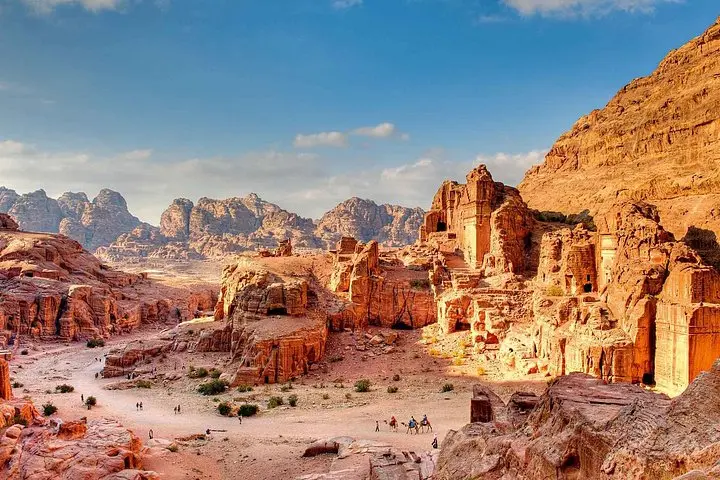
Petra’s stone is literal history: Nabataean engineers diverted seasonal wadis, chiselled cisterns and sculpted monumental façades into crimson and cream cliffs from about the 6th century B.C. Walk the Street of Facades, climb toward the Royal Tombs and, if time allows, push on to the Monastery — each step a lesson in an arid-engineered civilization that moved trade across the Arabian Desert.
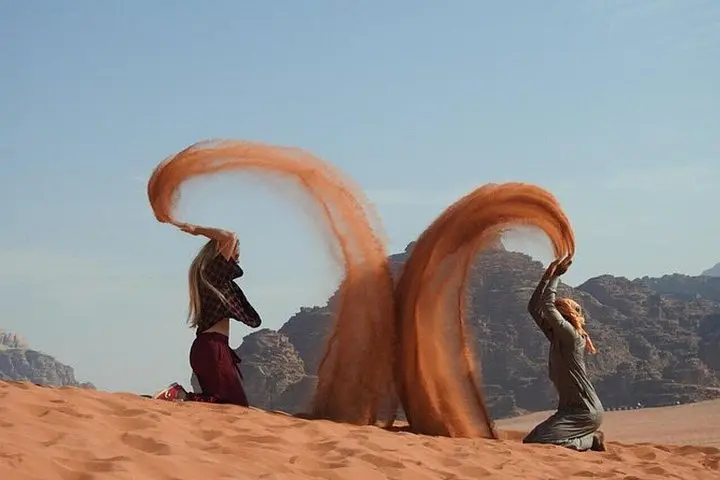
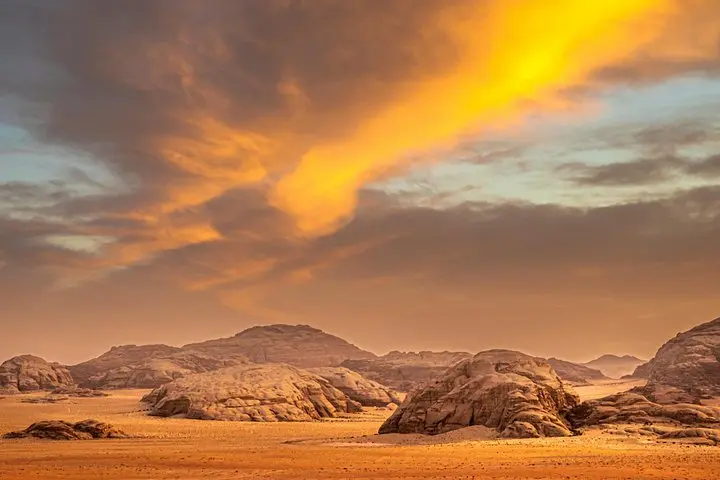
By mid-afternoon the van rolls south toward Wadi Rum, the Valley of the Moon. Geology shifts from layered sandstone in Petra to the broad, wind-polished amphitheaters of Wadi Rum where granite and sandstone towers sprout from rippled red sand. Local Bedouin guides take over in a 4x4 for a two-hour safari across plains, climbing into narrow canyons and across dunes. Stop for mint tea at a camp, watch light slide down curving walls, and feel the desert’s scale — a landscape that has carried camel caravans, film crews and Lawrence of Arabia’s footprints.
This itinerary is high on mileage and low on hurry: expect a 3-hour drive from Amman to Petra, two hours in-network at Petra for highlights, then roughly two hours to Wadi Rum and a 2-hour 4x4 safari. The full loop returns to Amman the same evening — a 10–14 hour day depending on traffic and how long you linger at viewpoints.
Practicalities matter. Buy the Jordan Pass ahead of time to cover visa and site-entry fees and bring layered clothing — desert temperatures swing dramatically between morning chill and afternoon heat. Hydrate: bottled water is provided on board, but carry a refillable bottle. Footwear should be sturdy; the Siq and Petra’s carved stairways are uneven and often dusty. If you want a deeper read on Petra’s architecture, book a local guide at the visitor center; in Wadi Rum, accept the local driver’s route — they know sandbowl crossings and sheltered viewpoints where light is dramatic.
For travelers who prize efficiency with cultural texture, this one-day tour stitches Jordan’s two headline landscapes into a single, deliberately paced experience: ancient stone giving way to open desert, and a day that leaves you with both carved façades and dune-sculpted horizons printed on the memory.
Expect roughly 3 hours by car along the Desert Highway, though traffic and stops can extend the trip.
It is strongly recommended — the Jordan Pass covers visa and Petra entry fees and speeds up arrival formalities.
The supplier lists wheelchair accessibility, but Petra’s terrain includes uneven stone and steps; confirm specific needs with the operator before booking.
A licensed English-speaking driver is included; local Petra guides and Wadi Rum safari drivers can be arranged or are available for extra cost.
The safari crosses dunes and rough tracks; it’s not technical but can be bumpy — secure loose items and be prepared for short climbs on and off the vehicle.
Yes, camel rides are available locally in Wadi Rum but are typically at additional expense and arranged on site.
R&H VIP Transportation Services operates guided outdoor trips and adventures with an emphasis on safety, stewardship, and memorable experiences.
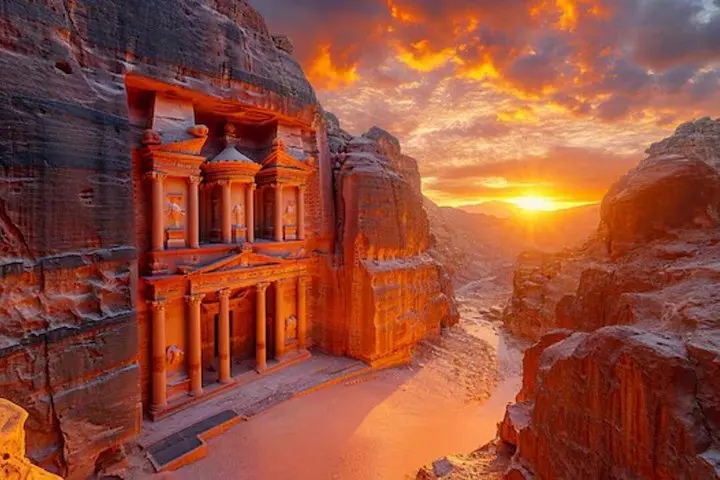
The day begins before sunrise, with a climate-controlled van threading out of Amman and onto the Desert Highway. Headlights cut through low, blue dawn; the road strips past basalt fields and scrub until the sandstone walls of Petra rear into view. Arriving at the visitor center, the route narrows into the Siq, a 1.2-kilometre slot canyon that funnels you toward the Treasury — the carved façade that first convinced 19th-century explorers that an entire city had been hewn from rock.
The day begins before sunrise, with a climate-controlled van threading out of Amman and onto the Desert Highway. Headlights cut through low, blue dawn; the road strips past basalt fields and scrub until the sandstone walls of Petra rear into view. Arriving at the visitor center, the route narrows into the Siq, a 1.2-kilometre slot canyon that funnels you toward the Treasury — the carved façade that first convinced 19th-century explorers that an entire city had been hewn from rock.
Petra’s stone is literal history: Nabataean engineers diverted seasonal wadis, chiselled cisterns and sculpted monumental façades into crimson and cream cliffs from about the 6th century B.C. Walk the Street of Facades, climb toward the Royal Tombs and, if time allows, push on to the Monastery — each step a lesson in an arid-engineered civilization that moved trade across the Arabian Desert.
By mid-afternoon the van rolls south toward Wadi Rum, the Valley of the Moon. Geology shifts from layered sandstone in Petra to the broad, wind-polished amphitheaters of Wadi Rum where granite and sandstone towers sprout from rippled red sand. Local Bedouin guides take over in a 4x4 for a two-hour safari across plains, climbing into narrow canyons and across dunes. Stop for mint tea at a camp, watch light slide down curving walls, and feel the desert’s scale — a landscape that has carried camel caravans, film crews and Lawrence of Arabia’s footprints.
This itinerary is high on mileage and low on hurry: expect a 3-hour drive from Amman to Petra, two hours in-network at Petra for highlights, then roughly two hours to Wadi Rum and a 2-hour 4x4 safari. The full loop returns to Amman the same evening — a 10–14 hour day depending on traffic and how long you linger at viewpoints.
Practicalities matter. Buy the Jordan Pass ahead of time to cover visa and site-entry fees and bring layered clothing — desert temperatures swing dramatically between morning chill and afternoon heat. Hydrate: bottled water is provided on board, but carry a refillable bottle. Footwear should be sturdy; the Siq and Petra’s carved stairways are uneven and often dusty. If you want a deeper read on Petra’s architecture, book a local guide at the visitor center; in Wadi Rum, accept the local driver’s route — they know sandbowl crossings and sheltered viewpoints where light is dramatic.
For travelers who prize efficiency with cultural texture, this one-day tour stitches Jordan’s two headline landscapes into a single, deliberately paced experience: ancient stone giving way to open desert, and a day that leaves you with both carved façades and dune-sculpted horizons printed on the memory.