THE ADVENTURE COLLECTIVE® · Independent discovery and booking for outdoor travel

See Petra’s rose-red façade and Wadi Rum’s martian cliffs in one intense day. This private full-day tour from the Wadi Araba border pairs a guided Petra visit with a 2-hour Bedouin 4x4 through Wadi Rum.
See Petra’s rose-red façade and Wadi Rum’s martian cliffs in one intense day. This private full-day tour from the Wadi Araba border pairs a guided Petra visit with a 2-hour Bedouin 4x4 through Wadi Rum.
You step off the pier and the driver is waiting—name on a sign, windows fogged from an early sea crossing. The road climbs out of the coastal plain and, within an hour, the landscape shifts: scrub gives way to the warm, layered stone of the Nabataean world. By mid-morning you push through the Siq, Petra’s narrow canyon, and the rock seems to breathe—pink and rust bands catching light like page after page of an ancient ledger.
Verified experiences and guided adventures in the surrounding area.
Operated by Zaid Tours and Travel · Wadi Musa, Ma'an Governorate
You step off the pier and the driver is waiting—name on a sign, windows fogged from an early sea crossing. The road climbs out of the coastal plain and, within an hour, the landscape shifts: scrub gives way to the warm, layered stone of the Nabataean world. By mid-morning you push through the Siq, Petra’s narrow canyon, and the rock seems to breathe—pink and rust bands catching light like page after page of an ancient ledger.
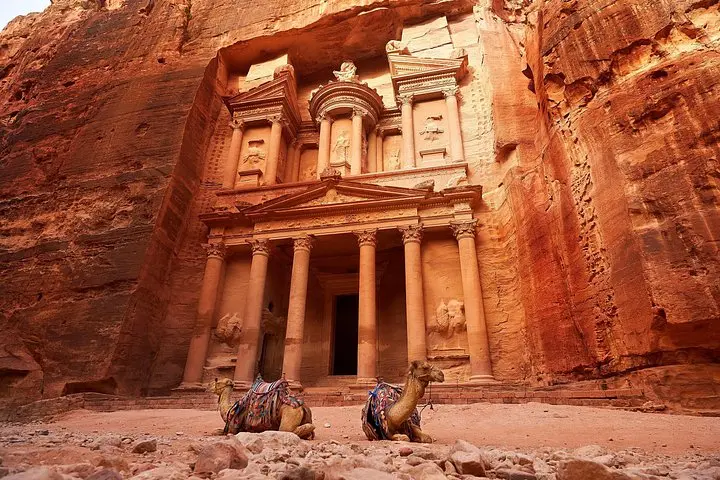
Petra is the city carved into the living rock by the Nabataeans more than two millennia ago. The Treasury (Al-Khazneh) appears as the gorge opens, a façade worn by wind and human passage but still precise enough to read as architecture rather than ruin. Your guide will map the layout: the amphitheater cut into the hill, the Royal Tombs climbing the cliff, and, if time allows, the steep switchbacks to the Monastery (Ad Deir), where a high ledge rewards those who climb with sweeping valley views.
Geology here is the story of water and sand—the sandstone layers folded and eroded into the dramatic colors Petra is known for. A short drive later you trade carved city for open desert. Wadi Rum’s sandstone mesas and granite intrusions flare orange and red; sunlight makes the cliffs look like living metal. The landscape has cinematic scale—no wonder filmmakers used it as otherworldly backdrops. A local Bedouin drives the 4x4 across soft sand, pointing out pre-Christian petroglyphs and the Seven Pillars of Wisdom, a group of rock pillars tied to T.E. Lawrence’s wartime story.
Culture and hospitality are constant here: Bedouin tents for mint tea, vendors selling handmade goods near entrances, and guides who are custodians of both story and route. Conservation is a quiet concern—Petra is vulnerable to foot traffic and water erosion, while Wadi Rum’s fragile desert soils respond slowly to disturbance. Respect site rules and local etiquette and you help preserve it.
Practical guidance: the day is long—about 10 hours—so plan for sun, dust, and lots of walking. Start early from the Wadi Araba border, wear sturdy shoes for cobbled paths and stair climbs, and bring a reusable water bottle; refill points are limited in the canyon. Entrance fees and a local Petra guide are included; lunch is on you at Petra’s visitor area. The Wadi Rum component is a roughly two-hour 4x4 tour—comfortable but bouncy. If you want to climb the Monastery, allow extra time and steady legs.
Timing matters for photography and comfort—early morning or late afternoon light on Petra’s facades and Wadi Rum’s cliffs is exceptional. Finally, allow the day to be paced: both places reward lingering, even when the schedule presses you forward.
The tour runs approximately 10 hours from pick-up at the Wadi Araba Border to drop-off, with guided time in Petra and a two-hour 4x4 in Wadi Rum.
Yes—one-day entrance to Petra and Wadi Rum entry fees are included in the tour price.
Petra involves uneven ground and stairs; the tour can accommodate some mobility limitations but contact the operator in advance to discuss needs.
Visa requirements depend on nationality; check entry rules before travel—your tour operator can advise on border procedures.
The itinerary allows optional time to climb the Monastery if you’re prepared for the steep stone steps, but it’s subject to overall pacing and group preference.
Lunch is not included; there are cafés near Petra’s entrance and simple eateries in nearby areas—plan to pay for your own meal.
Zaid Tours and Travel operates guided outdoor trips and adventures with an emphasis on safety, stewardship, and memorable experiences.
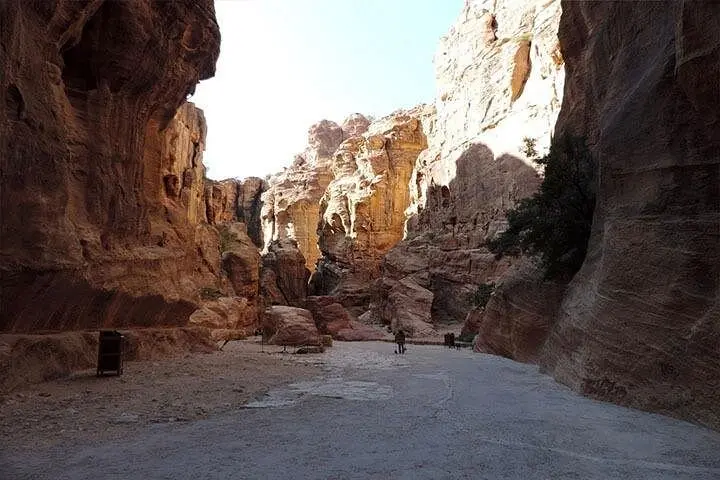
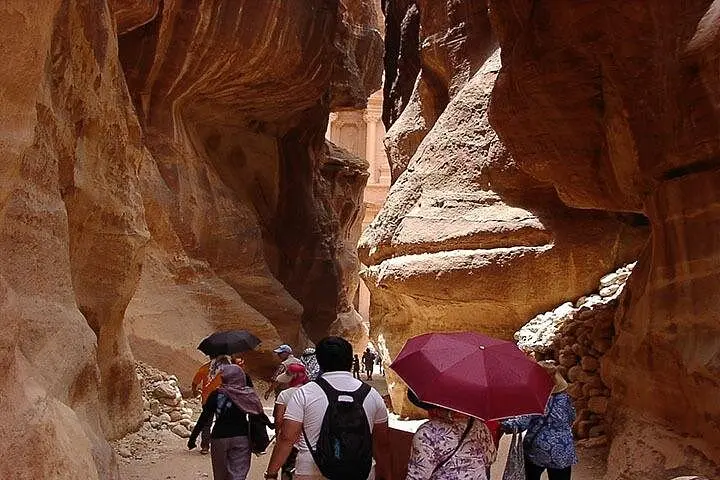
You step off the pier and the driver is waiting—name on a sign, windows fogged from an early sea crossing. The road climbs out of the coastal plain and, within an hour, the landscape shifts: scrub gives way to the warm, layered stone of the Nabataean world. By mid-morning you push through the Siq, Petra’s narrow canyon, and the rock seems to breathe—pink and rust bands catching light like page after page of an ancient ledger.
You step off the pier and the driver is waiting—name on a sign, windows fogged from an early sea crossing. The road climbs out of the coastal plain and, within an hour, the landscape shifts: scrub gives way to the warm, layered stone of the Nabataean world. By mid-morning you push through the Siq, Petra’s narrow canyon, and the rock seems to breathe—pink and rust bands catching light like page after page of an ancient ledger.
Petra is the city carved into the living rock by the Nabataeans more than two millennia ago. The Treasury (Al-Khazneh) appears as the gorge opens, a façade worn by wind and human passage but still precise enough to read as architecture rather than ruin. Your guide will map the layout: the amphitheater cut into the hill, the Royal Tombs climbing the cliff, and, if time allows, the steep switchbacks to the Monastery (Ad Deir), where a high ledge rewards those who climb with sweeping valley views.
Geology here is the story of water and sand—the sandstone layers folded and eroded into the dramatic colors Petra is known for. A short drive later you trade carved city for open desert. Wadi Rum’s sandstone mesas and granite intrusions flare orange and red; sunlight makes the cliffs look like living metal. The landscape has cinematic scale—no wonder filmmakers used it as otherworldly backdrops. A local Bedouin drives the 4x4 across soft sand, pointing out pre-Christian petroglyphs and the Seven Pillars of Wisdom, a group of rock pillars tied to T.E. Lawrence’s wartime story.
Culture and hospitality are constant here: Bedouin tents for mint tea, vendors selling handmade goods near entrances, and guides who are custodians of both story and route. Conservation is a quiet concern—Petra is vulnerable to foot traffic and water erosion, while Wadi Rum’s fragile desert soils respond slowly to disturbance. Respect site rules and local etiquette and you help preserve it.
Practical guidance: the day is long—about 10 hours—so plan for sun, dust, and lots of walking. Start early from the Wadi Araba border, wear sturdy shoes for cobbled paths and stair climbs, and bring a reusable water bottle; refill points are limited in the canyon. Entrance fees and a local Petra guide are included; lunch is on you at Petra’s visitor area. The Wadi Rum component is a roughly two-hour 4x4 tour—comfortable but bouncy. If you want to climb the Monastery, allow extra time and steady legs.
Timing matters for photography and comfort—early morning or late afternoon light on Petra’s facades and Wadi Rum’s cliffs is exceptional. Finally, allow the day to be paced: both places reward lingering, even when the schedule presses you forward.