THE ADVENTURE COLLECTIVE® · Independent discovery and booking for outdoor travel

Cross the Gulf of Aqaba from Sharm El Sheikh and follow the ancient Wadi Sabra approach into Petra. This long but rewarding day trip delivers the Treasury, Roman Theater and carved citadels with a ferry crossing and included lunch.
Cross the Gulf of Aqaba from Sharm El Sheikh and follow the ancient Wadi Sabra approach into Petra. This long but rewarding day trip delivers the Treasury, Roman Theater and carved citadels with a ferry crossing and included lunch.
You step off the ferry and the wind pushes the red cliffs into sharper relief, as if the rocks themselves are insisting you keep moving. The trip threads Sinai’s bare ridges, a short ferry across the Gulf of Aqaba, then the narrow approach where the Wadi Sabra trail leads into Petra — a route once used by Nabataean caravans.
Verified experiences and guided adventures in the surrounding area.
Operated by Noun Travel · Wadi Musa, Ma'an Governorate
You step off the ferry and the wind pushes the red cliffs into sharper relief, as if the rocks themselves are insisting you keep moving. The trip threads Sinai’s bare ridges, a short ferry across the Gulf of Aqaba, then the narrow approach where the Wadi Sabra trail leads into Petra — a route once used by Nabataean caravans.
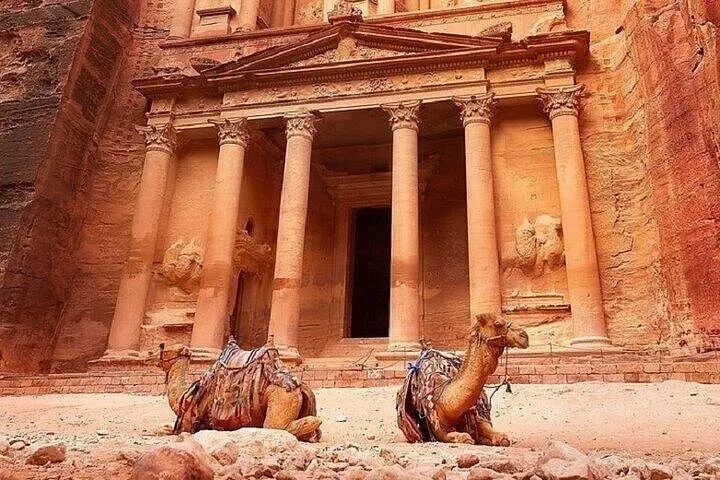
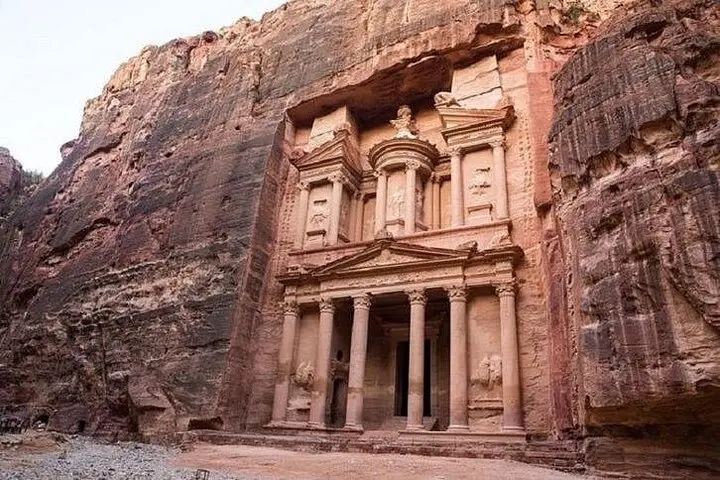
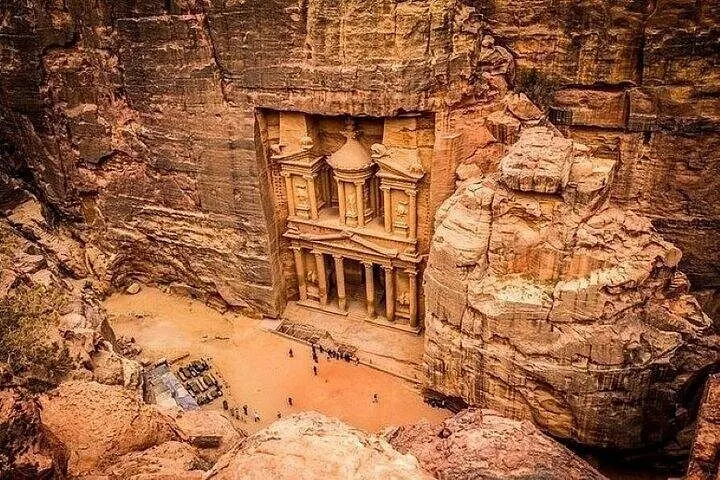
Petra sits where sandstone meets dry air; its carved facades are a product of soft rock and centuries of wind and flash-flood erosion. The Treasury (Al-Khazneh) and the Roman Theater show the city’s blend of Nabataean engineering and Greco-Roman design, while lesser-visited niches and rock-cut tombs reveal everyday life centuries ago. Local Bedouin culture still colors the town of Wadi Musa nearby, where hospitality and simple trade persist.
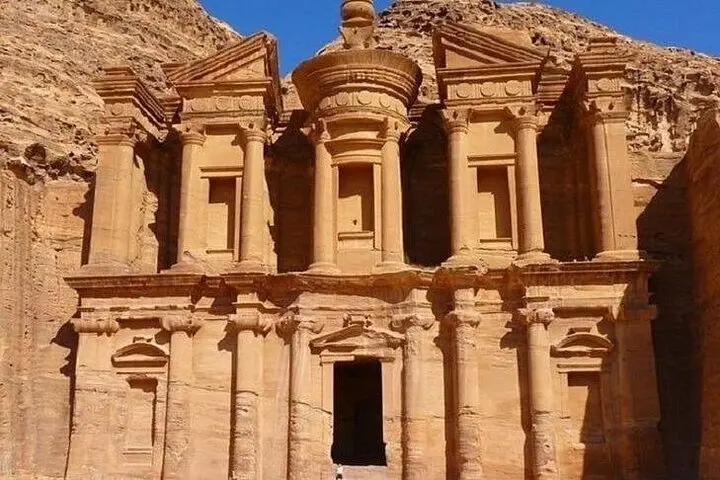
Expect a long day: a ferry transit, border formalities, and several hours walking across uneven, often sandy surfaces. From the Petra Visitor Center it’s roughly 1–2 km through the Siq to the Treasury; reaching the Monastery involves ascending about 700–800 stone steps (30–60 minutes depending on pace). Temperatures vary — intense sun on exposed trails, cooler air in shaded canyons.
Practical tips: carry passport and any required visas, bring 2–3 liters of water, wear sturdy shoes with good grip, and budget time for customs at the ferry. Lunch is included on the tour, but snacks and electrolytes are wise for the walking sections. Arrive early if you want softer light on the rose stone and quieter paths.
The itinerary notes admission to the Roman Theater is included; check your booking details for what portion of the Petra site entrance is covered — some entrance fees are handled locally.
Visa requirements depend on nationality; many travelers can obtain a visa on arrival at Aqaba, but it’s essential to verify your specific requirements before travel.
Expect multiple hours on foot: roughly 1–2 km from the Visitor Center to the Treasury via the Siq, plus longer walks to sites like the Monastery which requires climbing several hundred stone steps.
Ferry services across the Gulf of Aqaba operate regularly but are subject to weather and schedules; the crossing is routine but allow extra time for boarding and customs.
Noun Travel operates guided outdoor trips and adventures with an emphasis on safety, stewardship, and memorable experiences.
You step off the ferry and the wind pushes the red cliffs into sharper relief, as if the rocks themselves are insisting you keep moving. The trip threads Sinai’s bare ridges, a short ferry across the Gulf of Aqaba, then the narrow approach where the Wadi Sabra trail leads into Petra — a route once used by Nabataean caravans.
You step off the ferry and the wind pushes the red cliffs into sharper relief, as if the rocks themselves are insisting you keep moving. The trip threads Sinai’s bare ridges, a short ferry across the Gulf of Aqaba, then the narrow approach where the Wadi Sabra trail leads into Petra — a route once used by Nabataean caravans.
Petra sits where sandstone meets dry air; its carved facades are a product of soft rock and centuries of wind and flash-flood erosion. The Treasury (Al-Khazneh) and the Roman Theater show the city’s blend of Nabataean engineering and Greco-Roman design, while lesser-visited niches and rock-cut tombs reveal everyday life centuries ago. Local Bedouin culture still colors the town of Wadi Musa nearby, where hospitality and simple trade persist.
Expect a long day: a ferry transit, border formalities, and several hours walking across uneven, often sandy surfaces. From the Petra Visitor Center it’s roughly 1–2 km through the Siq to the Treasury; reaching the Monastery involves ascending about 700–800 stone steps (30–60 minutes depending on pace). Temperatures vary — intense sun on exposed trails, cooler air in shaded canyons.
Practical tips: carry passport and any required visas, bring 2–3 liters of water, wear sturdy shoes with good grip, and budget time for customs at the ferry. Lunch is included on the tour, but snacks and electrolytes are wise for the walking sections. Arrive early if you want softer light on the rose stone and quieter paths.