THE ADVENTURE COLLECTIVE® · Independent discovery and booking for outdoor travel

Walk the Siq to the Treasury, climb to the Monastery and experience Petra’s carved sandstone facades in a single day. This full‑day private tour from Amman combines transport, park fees and a guide for a focused visit to Jordan’s ancient capital.
Walk the Siq to the Treasury, climb to the Monastery and experience Petra’s carved sandstone facades in a single day. This full‑day private tour from Amman combines transport, park fees and a guide for a focused visit to Jordan’s ancient capital.
You enter Petra through a knife‑thin slot canyon called the Siq, the sandstone walls pressing close enough to whisper history as you walk. Light slants down in bands of ochre and rose; at the end of the gorge the Treasury’s carved façade suddenly unfolds—an architectural flourish cut from living rock that makes the pulse quicken. The route continues across terraces, past the Roman theater, and up terraces and steps to the soaring façade of the Monastery, where broad views open over the wadis below.
Verified experiences and guided adventures in the surrounding area.
Operated by Oman Day Tours · Wadi Musa, Ma'an Governorate
You enter Petra through a knife‑thin slot canyon called the Siq, the sandstone walls pressing close enough to whisper history as you walk. Light slants down in bands of ochre and rose; at the end of the gorge the Treasury’s carved façade suddenly unfolds—an architectural flourish cut from living rock that makes the pulse quicken. The route continues across terraces, past the Roman theater, and up terraces and steps to the soaring façade of the Monastery, where broad views open over the wadis below.
Petra was the Nabatean capital from the 4th century BCE and a crossroads for incense and spice routes. The city’s sandstone geology produces dramatic striations and fragile forms that erode with time, so pathways and viewpoints often require cautious footing. Local culture in Wadi Musa blends Bedouin hospitality with tourist services; guides add context about Nabatean water systems and Byzantine-era reuse of monuments.
Practically, this is a full‑day outing: expect 6–8 hours including transport from Amman. The visit mixes level walking through the Siq with steep stone steps and uneven trails to the Monastery—moderate fitness makes the day comfortable. Bring at least 2 liters of water, sun protection, and sturdy shoes; early starts avoid heat and crowds. The tour typically includes round‑trip private transfer, bottled water and national park fees, but check what’s confirmed at booking. Be prepared for significant walking, variable shade, and sudden viewpoints that reward the effort with one of the Middle East’s most unforgettable scenes.
From the main entrance through the Siq to the Treasury is about 1–1.5 kilometers; including onward routes to the Roman theatre and Monastery expect several kilometers and multiple stair sections over the day.
This tour typically includes national park fees according to the listing, but confirm at booking since ticketing rules and inclusions can change.
Children can do the route but may find the stairs tiring; the site has many uneven surfaces and slopes, so visitors with limited mobility will find access restricted—some key viewpoints are reachable, but the Monastery requires many steps.
There are kiosks, cafés and Bedouin vendors near major attractions that sell drinks and light snacks, but options are limited—bring your own supplies for a full day.
Oman Day Tours operates guided outdoor trips and adventures with an emphasis on safety, stewardship, and memorable experiences.
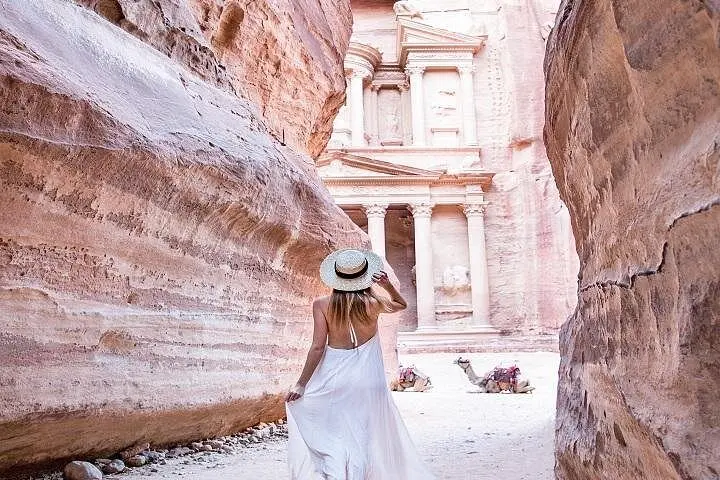
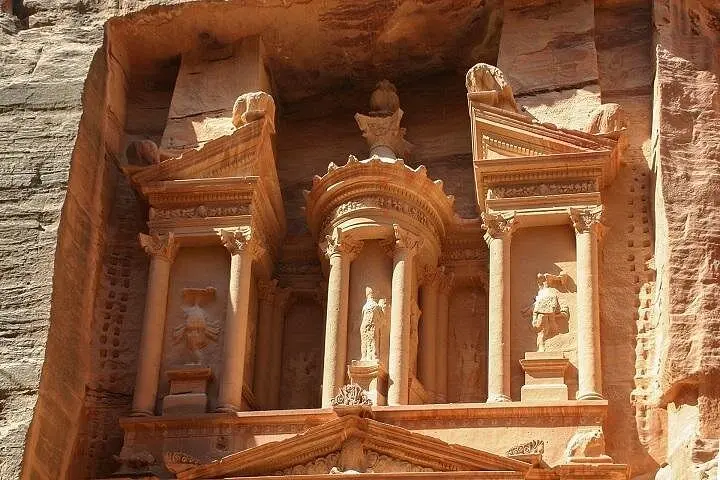
You enter Petra through a knife‑thin slot canyon called the Siq, the sandstone walls pressing close enough to whisper history as you walk. Light slants down in bands of ochre and rose; at the end of the gorge the Treasury’s carved façade suddenly unfolds—an architectural flourish cut from living rock that makes the pulse quicken. The route continues across terraces, past the Roman theater, and up terraces and steps to the soaring façade of the Monastery, where broad views open over the wadis below.
You enter Petra through a knife‑thin slot canyon called the Siq, the sandstone walls pressing close enough to whisper history as you walk. Light slants down in bands of ochre and rose; at the end of the gorge the Treasury’s carved façade suddenly unfolds—an architectural flourish cut from living rock that makes the pulse quicken. The route continues across terraces, past the Roman theater, and up terraces and steps to the soaring façade of the Monastery, where broad views open over the wadis below.
Petra was the Nabatean capital from the 4th century BCE and a crossroads for incense and spice routes. The city’s sandstone geology produces dramatic striations and fragile forms that erode with time, so pathways and viewpoints often require cautious footing. Local culture in Wadi Musa blends Bedouin hospitality with tourist services; guides add context about Nabatean water systems and Byzantine-era reuse of monuments.
Practically, this is a full‑day outing: expect 6–8 hours including transport from Amman. The visit mixes level walking through the Siq with steep stone steps and uneven trails to the Monastery—moderate fitness makes the day comfortable. Bring at least 2 liters of water, sun protection, and sturdy shoes; early starts avoid heat and crowds. The tour typically includes round‑trip private transfer, bottled water and national park fees, but check what’s confirmed at booking. Be prepared for significant walking, variable shade, and sudden viewpoints that reward the effort with one of the Middle East’s most unforgettable scenes.