THE ADVENTURE COLLECTIVE® · Independent discovery and booking for outdoor travel

Walk Petra’s main route from the Siq to Qasr al-Bint with a guide in 2–2.5 hours. This compact guided trail covers the Treasury, Royal Tombs, Colonnaded Street and Nabataean waterworks—ideal for first-time visitors seeking context and key photo stops.
Walk Petra’s main route from the Siq to Qasr al-Bint with a guide in 2–2.5 hours. This compact guided trail covers the Treasury, Royal Tombs, Colonnaded Street and Nabataean waterworks—ideal for first-time visitors seeking context and key photo stops.
You step from the Visitors Centre into a sunbaked gorge and the world narrows: the Siq’s sheer rose-red walls close in, sand warming underfoot and a faint whisper of ancient water channels at your side. The path eases into open light at Al Khazneh—the Treasury—where carved facades loom like frozen theater sets, and the guide’s voice maps out a city cut from living rock.
Verified experiences and guided adventures in the surrounding area.
Operated by Jordan Horizon Tours · Wadi Musa, Ma'an Governorate
You step from the Visitors Centre into a sunbaked gorge and the world narrows: the Siq’s sheer rose-red walls close in, sand warming underfoot and a faint whisper of ancient water channels at your side. The path eases into open light at Al Khazneh—the Treasury—where carved facades loom like frozen theater sets, and the guide’s voice maps out a city cut from living rock.
Petra’s main trail traces the heartbeat of the Nabataean capital, a trade hub from the 1st century BC to the Roman annexation. The geology is sandstone—soft, striated layers shaped by wind and flash floods—so facades wear with each visitor and season. Cultural traces are everywhere: Nabataean water channels, ceramic pipework, and niche-carved deities in the Siq testify to sophisticated engineering and ritual life.
Expect 4 km of mostly stone-and-packed-earth trail with short stair sections, narrow canyon walking, and one gentle downhill approach from the gate (return uphill). Highlights: the Siq’s camelier carvings, the Obelisk Tomb, the Theatre, the Royal Tombs’ viewpoint, the Colonnaded Street, and finally Qasr al-Bint. A knowledgeable guide points out construction methods and the city’s role on incense routes.
Practical edge: allow 2–2.5 hours with slow photo stops, buy or arrange your Petra entry ticket in advance where possible, wear sturdy shoes for uneven stone, and carry layered sun protection and water—the tour provides one bottle but extra is wise. Respect fragile facades: don’t climb carvings and follow marked paths to help preserve Petra’s sandstone heritage.
Yes—entry tickets are required at the Visitors Centre; your operator can arrange them or you can purchase at the gate. Buying ahead reduces wait time.
Generally yes—the route is short and mostly flat through the Siq and site, but families should be prepared for uneven ground and uphill return from the gate.
You can enter independently, but a guide provides historical context, points out subtle features like Nabataean waterworks, and manages timing to hit highlights efficiently.
No—do not climb or touch facades. Sandstone is fragile and visitor contact accelerates erosion; follow designated paths and respect signage.
Jordan Horizon Tours operates guided outdoor trips and adventures with an emphasis on safety, stewardship, and memorable experiences.
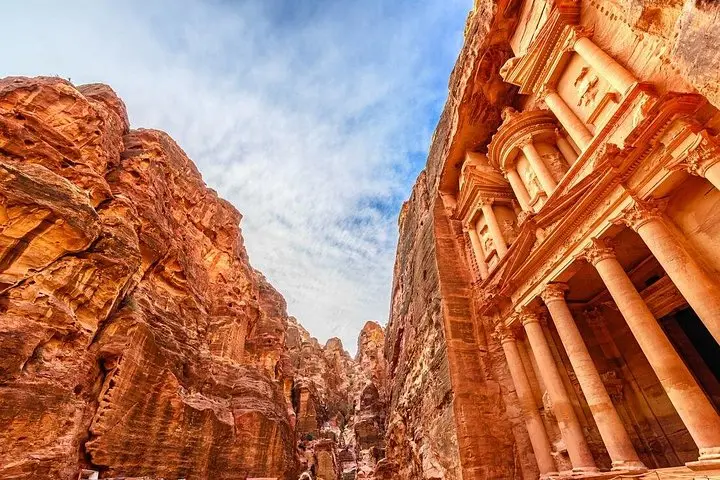
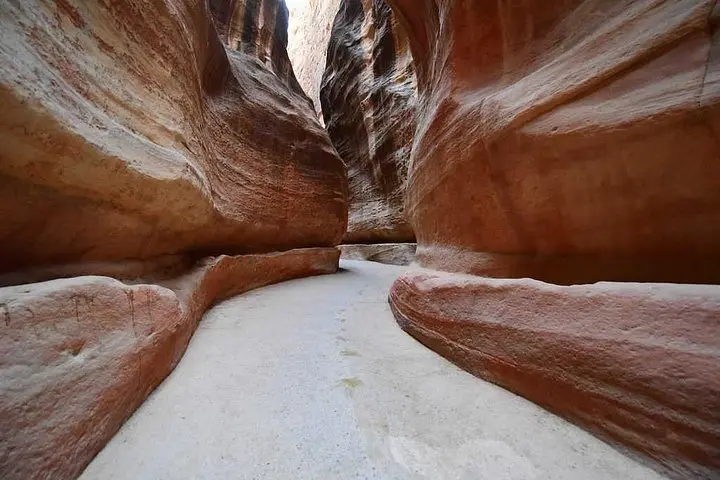
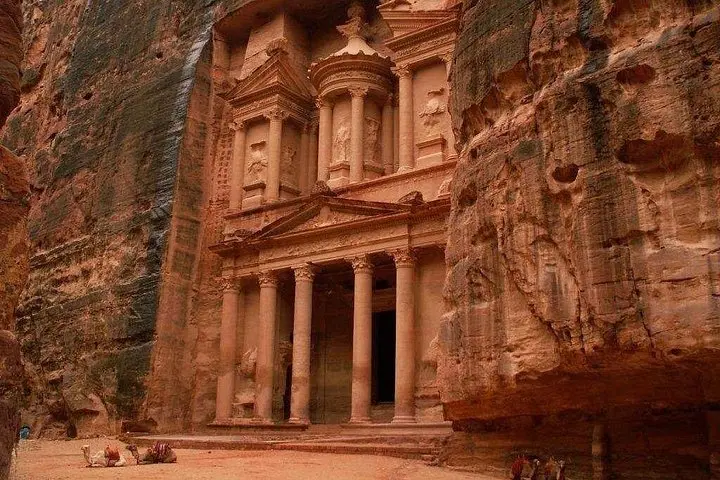
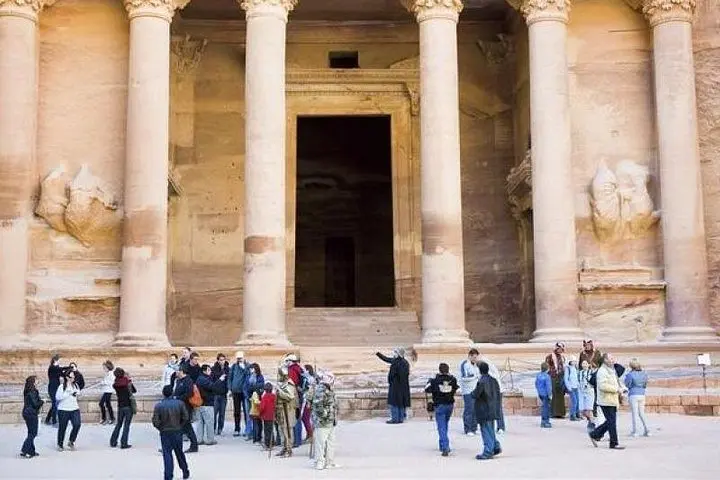
You step from the Visitors Centre into a sunbaked gorge and the world narrows: the Siq’s sheer rose-red walls close in, sand warming underfoot and a faint whisper of ancient water channels at your side. The path eases into open light at Al Khazneh—the Treasury—where carved facades loom like frozen theater sets, and the guide’s voice maps out a city cut from living rock.
You step from the Visitors Centre into a sunbaked gorge and the world narrows: the Siq’s sheer rose-red walls close in, sand warming underfoot and a faint whisper of ancient water channels at your side. The path eases into open light at Al Khazneh—the Treasury—where carved facades loom like frozen theater sets, and the guide’s voice maps out a city cut from living rock.
Petra’s main trail traces the heartbeat of the Nabataean capital, a trade hub from the 1st century BC to the Roman annexation. The geology is sandstone—soft, striated layers shaped by wind and flash floods—so facades wear with each visitor and season. Cultural traces are everywhere: Nabataean water channels, ceramic pipework, and niche-carved deities in the Siq testify to sophisticated engineering and ritual life.
Expect 4 km of mostly stone-and-packed-earth trail with short stair sections, narrow canyon walking, and one gentle downhill approach from the gate (return uphill). Highlights: the Siq’s camelier carvings, the Obelisk Tomb, the Theatre, the Royal Tombs’ viewpoint, the Colonnaded Street, and finally Qasr al-Bint. A knowledgeable guide points out construction methods and the city’s role on incense routes.
Practical edge: allow 2–2.5 hours with slow photo stops, buy or arrange your Petra entry ticket in advance where possible, wear sturdy shoes for uneven stone, and carry layered sun protection and water—the tour provides one bottle but extra is wise. Respect fragile facades: don’t climb carvings and follow marked paths to help preserve Petra’s sandstone heritage.