THE ADVENTURE COLLECTIVE® · Independent discovery and booking for outdoor travel

A full-day guided trek through Petra that links Little Petra’s back trail to the Monastery, then sweeps through the archaeological city to the Treasury and the Siq. Expect 21 km of varied terrain, significant elevation gain, and essential Jordan Pass requirements.
A full-day guided trek through Petra that links Little Petra’s back trail to the Monastery, then sweeps through the archaeological city to the Treasury and the Siq. Expect 21 km of varied terrain, significant elevation gain, and essential Jordan Pass requirements.
You step out of the low dawn light of Wadi Musa and into a landscape that seems to unfold one carved wall at a time. The back trail from Little Petra climbs through narrow canyons and terraced ruins, then opens onto the broad shoulder above the Monastery where a raw, wind-sanded panorama waits.
Verified experiences and guided adventures in the surrounding area.
Operated by Hike Jordan tours · Wadi Musa, Ma'an Governorate
You step out of the low dawn light of Wadi Musa and into a landscape that seems to unfold one carved wall at a time. The back trail from Little Petra climbs through narrow canyons and terraced ruins, then opens onto the broad shoulder above the Monastery where a raw, wind-sanded panorama waits.
Petra’s cliffs are sandstone pages written by millennia: Nabataean engineers hollowed tombs and channels into the red rock in the 1st century BCE, and later trade routes layered Byzantine and Islamic footprints over the site. Geology here is immediate — striated sandstone, soft in places, sharp in others — which dictates both where you walk and how you should move. Culturally, Petra was a crossroads; caravan routes brought spices, silk and ideas, and that exchange is still legible in carved facades and ancient cisterns.
This tour covers roughly 21 km (about 9 miles) of walking across varied terrain — back trails, stepped approaches, and the Siq — with intermittent elevation gain up to several hundred meters on the ascent to the Monastery. Expect packed-earth tracks, loose scree on steep sections, and flagged archaeological areas where leaving the path damages fragile stone.
Practical guidance: start at first light to avoid midday heat and crowds, carry 2–3 liters of water, and use rigid-soled hiking shoes for the ups and downs. Bring a printed Jordan Pass with two days valid for Petra access, and budget cash for shared transport and tips. Walk deliberately, respect fenced ruins, and allow time to sit on a ledge and let the cliffs quieten your pace — the stone has a way of making you listen.
Yes — purchase a Jordan Pass with at least 2-day Petra access before arrival to streamline entry; it often includes visa fees if bought prior to entering Jordan.
The guided route covers about 21 km (9 miles) across city and back trails with several hundred meters of cumulative elevation gain, most noticeably on the ascent to the Monastery.
This tour is not recommended for travelers with spinal issues, cardiovascular problems, or pregnancy due to sustained walking and stair sections; children should be experienced hikers and supervised closely.
Guiding fees are included, but admission fees, shared transport costs and personal expenses are typically paid separately; confirm details with the operator before departure.
Hike Jordan tours operates guided outdoor trips and adventures with an emphasis on safety, stewardship, and memorable experiences.
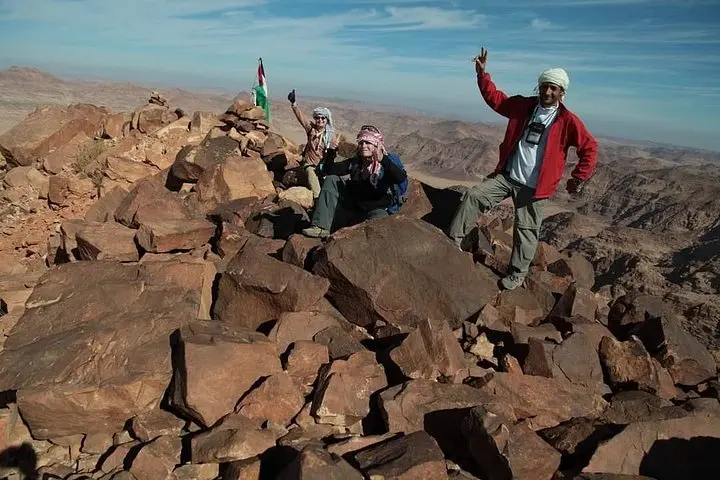
You step out of the low dawn light of Wadi Musa and into a landscape that seems to unfold one carved wall at a time. The back trail from Little Petra climbs through narrow canyons and terraced ruins, then opens onto the broad shoulder above the Monastery where a raw, wind-sanded panorama waits.
You step out of the low dawn light of Wadi Musa and into a landscape that seems to unfold one carved wall at a time. The back trail from Little Petra climbs through narrow canyons and terraced ruins, then opens onto the broad shoulder above the Monastery where a raw, wind-sanded panorama waits.
Petra’s cliffs are sandstone pages written by millennia: Nabataean engineers hollowed tombs and channels into the red rock in the 1st century BCE, and later trade routes layered Byzantine and Islamic footprints over the site. Geology here is immediate — striated sandstone, soft in places, sharp in others — which dictates both where you walk and how you should move. Culturally, Petra was a crossroads; caravan routes brought spices, silk and ideas, and that exchange is still legible in carved facades and ancient cisterns.
This tour covers roughly 21 km (about 9 miles) of walking across varied terrain — back trails, stepped approaches, and the Siq — with intermittent elevation gain up to several hundred meters on the ascent to the Monastery. Expect packed-earth tracks, loose scree on steep sections, and flagged archaeological areas where leaving the path damages fragile stone.
Practical guidance: start at first light to avoid midday heat and crowds, carry 2–3 liters of water, and use rigid-soled hiking shoes for the ups and downs. Bring a printed Jordan Pass with two days valid for Petra access, and budget cash for shared transport and tips. Walk deliberately, respect fenced ruins, and allow time to sit on a ledge and let the cliffs quieten your pace — the stone has a way of making you listen.