THE ADVENTURE COLLECTIVE® · Independent discovery and booking for outdoor travel
Cover Petra’s must-see highlights in a single, logistically dense day from Jerusalem — fly to Eilat, cross into Jordan, and walk the Siq to the Treasury. Practical tips on timing, terrain, and border formalities help you plan for a full but rewarding day.
Cover Petra’s must-see highlights in a single, logistically dense day from Jerusalem — fly to Eilat, cross into Jordan, and walk the Siq to the Treasury. Practical tips on timing, terrain, and border formalities help you plan for a full but rewarding day.
You step out before dawn in Jerusalem, suitcase zipped and passport in hand, and the day contracts and stretches around one single objective: Petra. The trip threads through an early domestic flight to Eilat, a short Egged shuttle to the Arava border, and a border crossing into Jordan before the carved sandstone canyons finally open.
Verified experiences and guided adventures in the surrounding area.
Operated by Booking-tours.com · Wadi Musa, Ma'an Governorate
You step out before dawn in Jerusalem, suitcase zipped and passport in hand, and the day contracts and stretches around one single objective: Petra. The trip threads through an early domestic flight to Eilat, a short Egged shuttle to the Arava border, and a border crossing into Jordan before the carved sandstone canyons finally open.
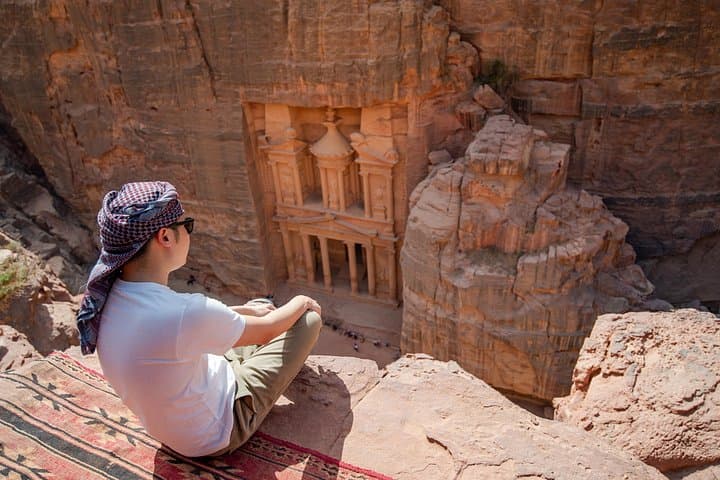
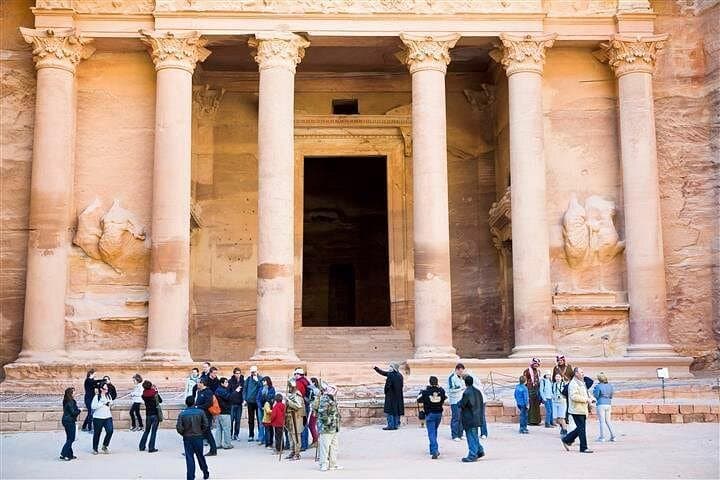
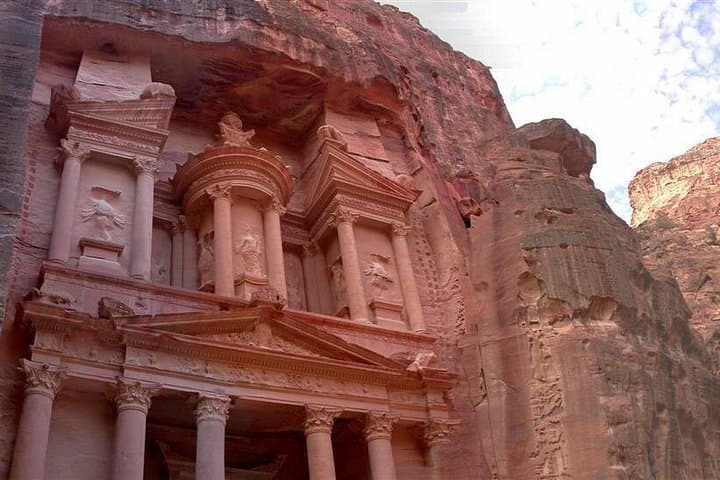
Petra’s approach is cinematic but literal — a 1.2 km slot canyon called the Siq funnels you toward Al-Khazneh (the Treasury) with rough, uneven flagstone underfoot and sandstone walls that change from pale gold to deep rust as the sun moves. The main visitor loop covered on a four-hour walking tour typically accrues 3–5 km of walking with short stair sections and occasional 50–200 m elevation changes if you choose viewpoints like the Royal Tombs or the steps toward the Roman theater.
Geologically, Petra is a playground of Jordanian sandstone shaped by wind and water; historically it was the Nabatean caravan hub and later reworked in Roman times — UNESCO-listed in 1985. Culturally, local Bedouin communities and market stalls at the site offer snacks, tea, and textiles.
Practically: carry a refillable water bottle, wear toe-protecting, grippy shoes, and bring sun protection and layers for an early start and a cool desert evening. Border formalities and visas require your passport and some flexibility with timing. Expect a very long travel day — this is a marathon of logistics and a sprint through one of the world’s most remarkable archaeological landscapes.
Yes — a current valid passport is required. Visa requirements depend on nationality; plan to pay any Jordanian entry fees at the border and confirm specifics with your operator before travel.
Internal flights to/from Eilat, hotel pickup/drop-off, an air-conditioned minivan and entrance to Petra are included as noted in the itinerary.
Expect about 3–5 km of walking on uneven flagstone through the Siq and open sites, with short stair sections and moderate elevation changes if you visit viewpoints.
Children must be accompanied by an adult. The tour requires moderate mobility; those with limited mobility may find the Siq and stair sections challenging.
Booking-tours.com operates guided outdoor trips and adventures with an emphasis on safety, stewardship, and memorable experiences.

You step out before dawn in Jerusalem, suitcase zipped and passport in hand, and the day contracts and stretches around one single objective: Petra. The trip threads through an early domestic flight to Eilat, a short Egged shuttle to the Arava border, and a border crossing into Jordan before the carved sandstone canyons finally open.
You step out before dawn in Jerusalem, suitcase zipped and passport in hand, and the day contracts and stretches around one single objective: Petra. The trip threads through an early domestic flight to Eilat, a short Egged shuttle to the Arava border, and a border crossing into Jordan before the carved sandstone canyons finally open.
Petra’s approach is cinematic but literal — a 1.2 km slot canyon called the Siq funnels you toward Al-Khazneh (the Treasury) with rough, uneven flagstone underfoot and sandstone walls that change from pale gold to deep rust as the sun moves. The main visitor loop covered on a four-hour walking tour typically accrues 3–5 km of walking with short stair sections and occasional 50–200 m elevation changes if you choose viewpoints like the Royal Tombs or the steps toward the Roman theater.
Geologically, Petra is a playground of Jordanian sandstone shaped by wind and water; historically it was the Nabatean caravan hub and later reworked in Roman times — UNESCO-listed in 1985. Culturally, local Bedouin communities and market stalls at the site offer snacks, tea, and textiles.
Practically: carry a refillable water bottle, wear toe-protecting, grippy shoes, and bring sun protection and layers for an early start and a cool desert evening. Border formalities and visas require your passport and some flexibility with timing. Expect a very long travel day — this is a marathon of logistics and a sprint through one of the world’s most remarkable archaeological landscapes.
