THE ADVENTURE COLLECTIVE® · Independent discovery and booking for outdoor travel

Spend a long, deliberate day walking from Petra’s shadowed Siq into the Treasury and then crossing into the vast amphitheater of Wadi Rum by 4x4. This private tour from Amman pairs close-up archaeology with red-dune panoramas and Bedouin hospitality.
Spend a long, deliberate day walking from Petra’s shadowed Siq into the Treasury and then crossing into the vast amphitheater of Wadi Rum by 4x4. This private tour from Amman pairs close-up archaeology with red-dune panoramas and Bedouin hospitality.
You step out of the air-conditioned minivan while the desert air rearranges your plans: a dry, warm rush that smells faintly of thyme and sun-warmed stone. Ahead, a slit of shade — the Siq — yawns between red sandstone walls, and a murmur runs through the small group as the Treasury’s carved face appears, monumental and immediate after 1.2 kilometers of narrowing gorge.
Verified experiences and guided adventures in the surrounding area.
Operated by We Guide Travel · Wadi Musa, Ma'an Governorate
You step out of the air-conditioned minivan while the desert air rearranges your plans: a dry, warm rush that smells faintly of thyme and sun-warmed stone. Ahead, a slit of shade — the Siq — yawns between red sandstone walls, and a murmur runs through the small group as the Treasury’s carved face appears, monumental and immediate after 1.2 kilometers of narrowing gorge.
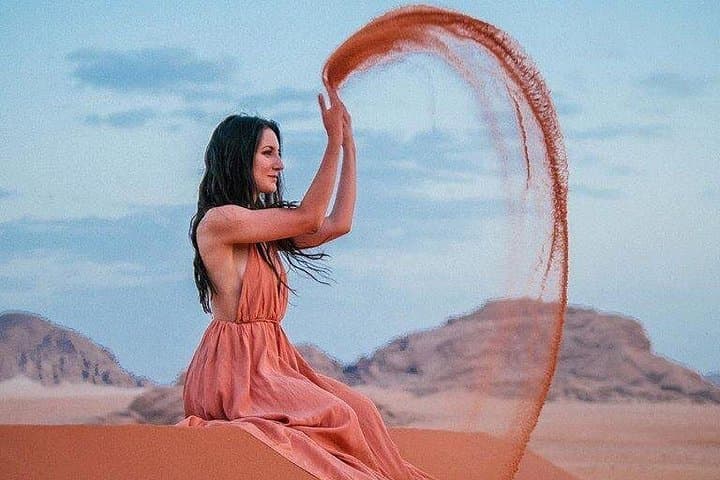
This is a day of contrasts: the carved, urban remains of Petra and the wind-sanded plains of Wadi Rum share the same ochre palette but are different in pace. Petra was the Nabatean economic engine from the first millennium BCE, its façades cut directly from Jurassic sandstone and positioned to catch trade routes and rain. The Siq itself is an ancient watercourse engineered with channels and cisterns; the cliffs here rise to roughly 80 meters, funneling light and shadow into the canyon. Wadi Rum’s story is geological — a vast playground of granite and sandstone sculpted by wind and rare floods into arches, towers and crimson dunes. It’s also Bedouin country, mapped into memory by tribal routes and by T.E. Lawrence’s wartime expeditions.
History and human hospitality are present in both places: in Petra, follow your guide close enough to hear how caravan economics shaped grand tombs and tomb hierarchies; in Wadi Rum, sit for mint tea in a Bedouin tent and learn local stories of navigation by star and mountain. The two sites sit physically apart — expect about 2.5 hours’ drive from Amman to Petra and then a roughly 1.5–2 hour transfer between Petra and Wadi Rum depending on route — so this is a marathon day that rewards preparation.
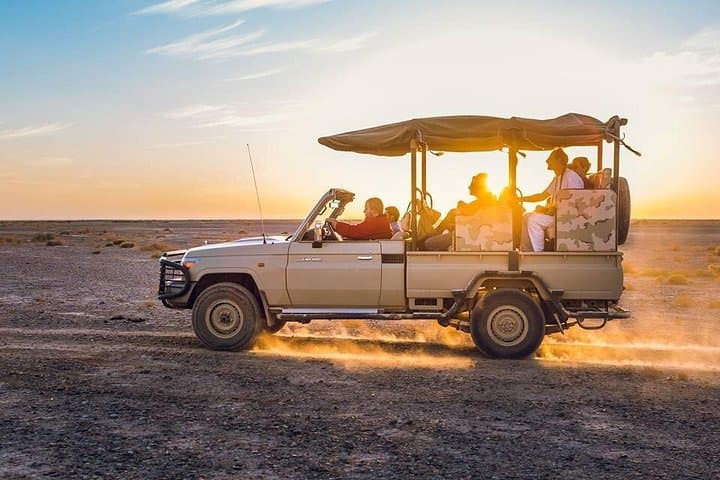
Practicalities: Petra’s main route through the Siq to the Treasury is ~1.2 km one-way; a full wander to the Monastery (Ad Deir) is a steep hike involving roughly 800 carved steps and adds several hours. The itinerary typically allows 3–4 hours in Petra and about 3 hours for a 4x4 exploration of Wadi Rum, which traverses desert plains, narrow gorges and viewpoints. Petra entry and any specialist guide inside are usually not included — bring cash (Jordanian dinar) for tickets, tips and optional extras like camels. Wear sturdy, broken-in walking shoes, sun protection and carry at least 2 liters of water per person; temperatures can swing widely between sun-exposed rock and shaded canyon.
Timing is everything: start at first light if you can to avoid crowds at the Treasury and midday heat in the desert. Respect Bedouin hosts, follow your guide’s route across fragile sandstone, and pack out what you bring in. This full-day private tour stitches two of Jordan’s most cinematic landscapes into one long, unforgettable story — one that asks for energy, curiosity and a readiness to be moved by both carved stone and open sand.
No — Petra admission is typically not included in the base tour price; you’ll purchase tickets at the Petra Visitor Center or in advance and can arrange a local guide there.
Expect about 2.5 hours from Amman to Petra; travel between Petra and Wadi Rum takes roughly 1.5–2 hours depending on route and stops.
Camel rides are optional extras; you can request to add one during your Wadi Rum stop, usually paid in cash to local Bedouin operators.
Yes—the operator notes infant seats available and the tour is described as suitable for general fitness levels, but long day hours can be tiring for young children.
Yes—this listing is for a private full-day tour with dedicated transportation and a private driver; guides inside Petra are optional and may be arranged locally.
Tipping is customary; plan a modest tip for your Petra guide if hired and a small amount for Bedouin hosts offering tea or rides—cash in small denominations is useful.
We Guide Travel operates guided outdoor trips and adventures with an emphasis on safety, stewardship, and memorable experiences.
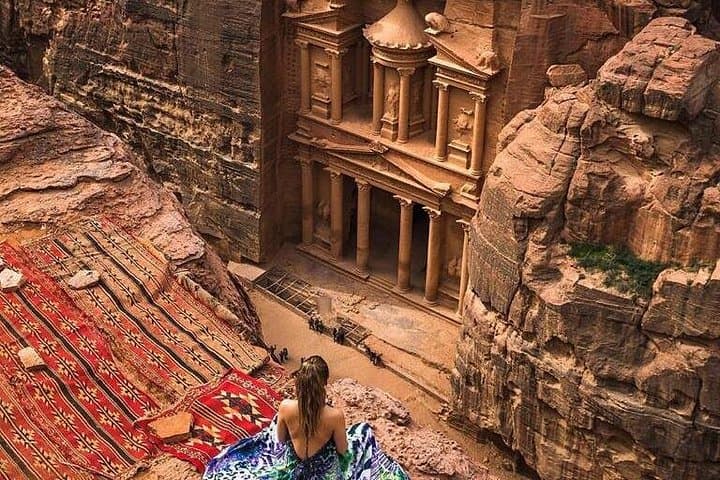
You step out of the air-conditioned minivan while the desert air rearranges your plans: a dry, warm rush that smells faintly of thyme and sun-warmed stone. Ahead, a slit of shade — the Siq — yawns between red sandstone walls, and a murmur runs through the small group as the Treasury’s carved face appears, monumental and immediate after 1.2 kilometers of narrowing gorge.
You step out of the air-conditioned minivan while the desert air rearranges your plans: a dry, warm rush that smells faintly of thyme and sun-warmed stone. Ahead, a slit of shade — the Siq — yawns between red sandstone walls, and a murmur runs through the small group as the Treasury’s carved face appears, monumental and immediate after 1.2 kilometers of narrowing gorge.
This is a day of contrasts: the carved, urban remains of Petra and the wind-sanded plains of Wadi Rum share the same ochre palette but are different in pace. Petra was the Nabatean economic engine from the first millennium BCE, its façades cut directly from Jurassic sandstone and positioned to catch trade routes and rain. The Siq itself is an ancient watercourse engineered with channels and cisterns; the cliffs here rise to roughly 80 meters, funneling light and shadow into the canyon. Wadi Rum’s story is geological — a vast playground of granite and sandstone sculpted by wind and rare floods into arches, towers and crimson dunes. It’s also Bedouin country, mapped into memory by tribal routes and by T.E. Lawrence’s wartime expeditions.
History and human hospitality are present in both places: in Petra, follow your guide close enough to hear how caravan economics shaped grand tombs and tomb hierarchies; in Wadi Rum, sit for mint tea in a Bedouin tent and learn local stories of navigation by star and mountain. The two sites sit physically apart — expect about 2.5 hours’ drive from Amman to Petra and then a roughly 1.5–2 hour transfer between Petra and Wadi Rum depending on route — so this is a marathon day that rewards preparation.
Practicalities: Petra’s main route through the Siq to the Treasury is ~1.2 km one-way; a full wander to the Monastery (Ad Deir) is a steep hike involving roughly 800 carved steps and adds several hours. The itinerary typically allows 3–4 hours in Petra and about 3 hours for a 4x4 exploration of Wadi Rum, which traverses desert plains, narrow gorges and viewpoints. Petra entry and any specialist guide inside are usually not included — bring cash (Jordanian dinar) for tickets, tips and optional extras like camels. Wear sturdy, broken-in walking shoes, sun protection and carry at least 2 liters of water per person; temperatures can swing widely between sun-exposed rock and shaded canyon.
Timing is everything: start at first light if you can to avoid crowds at the Treasury and midday heat in the desert. Respect Bedouin hosts, follow your guide’s route across fragile sandstone, and pack out what you bring in. This full-day private tour stitches two of Jordan’s most cinematic landscapes into one long, unforgettable story — one that asks for energy, curiosity and a readiness to be moved by both carved stone and open sand.