THE ADVENTURE COLLECTIVE® · Independent discovery and booking for outdoor travel

Cover Petra’s carved canyons and Wadi Rum’s red dunes in a focused three-day private tour from Amman Airport. Expect guided walks through Petra, a Bedouin-led jeep ride in Wadi Rum, and practical tips to make the most of both.
Cover Petra’s carved canyons and Wadi Rum’s red dunes in a focused three-day private tour from Amman Airport. Expect guided walks through Petra, a Bedouin-led jeep ride in Wadi Rum, and practical tips to make the most of both.
You step out of the air-conditioned airport shuttle into a landscape that insists on attention: ochre cliffs burn slowly under a Middle Eastern sun, and a driver with an orange sign folds himself into the role of guide and guardian. Over the next three days this private tour threads two of Jordan’s most elemental places — Petra’s carved canyons and the wind-sculpted emptiness of Wadi Rum — into a compact, paced encounter with history and geology.
Verified experiences and guided adventures in the surrounding area.
Operated by BookingJordan.com · Wadi Musa, Ma'an Governorate
You step out of the air-conditioned airport shuttle into a landscape that insists on attention: ochre cliffs burn slowly under a Middle Eastern sun, and a driver with an orange sign folds himself into the role of guide and guardian. Over the next three days this private tour threads two of Jordan’s most elemental places — Petra’s carved canyons and the wind-sculpted emptiness of Wadi Rum — into a compact, paced encounter with history and geology.
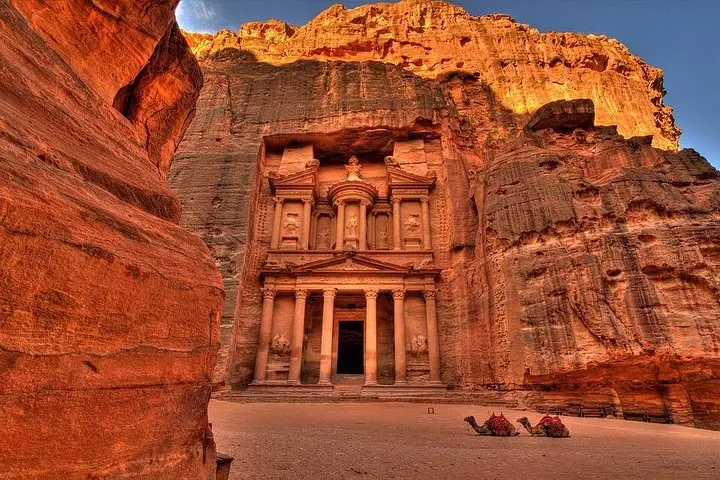
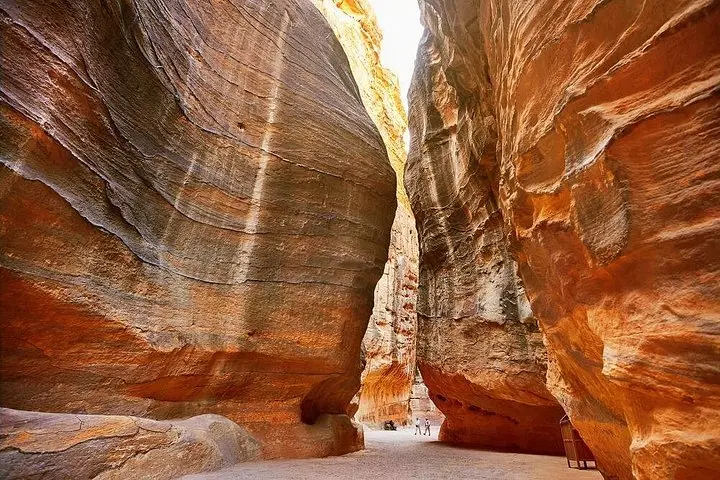
Petra arrives as a sequence of reveals. The Siq narrows, the sandstone walls lean in, and the Treasury suddenly rises — a 140-foot façade that reads like an ancient announcement. The Nabataeans, who established Petra around the 6th century B.C., engineered water channels and façades that turned a remote gorge into a functioning city and trade hub. Walking with a local guide for two hours gives you the key angles: the Street of Facades, the Royal Tombs, and the steps toward the High Place of Sacrifice where you can feel the rock’s slow, patient weathering.
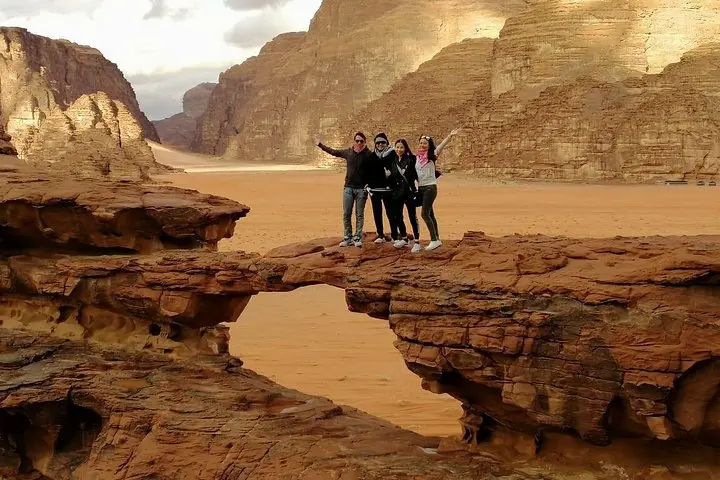
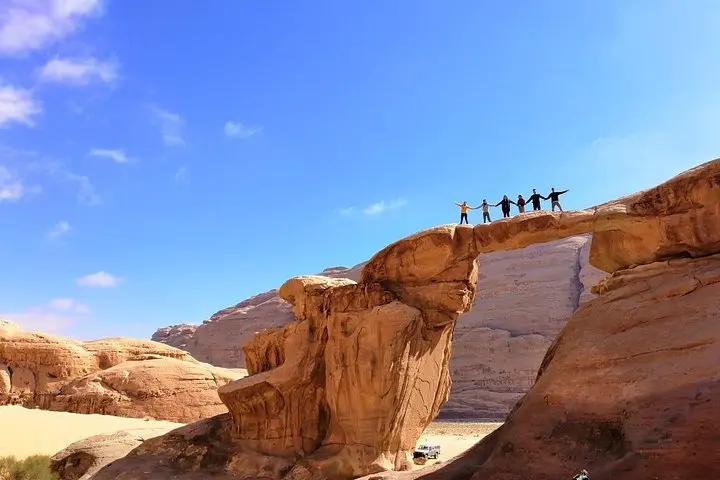
Then the landscape changes. A 1.5-hour drive moves you into Wadi Rum, where Bedouin camps tuck into dunes and sandstone canyons. The desert here is not empty so much as attentive: the wind rearranges the sand daily, natural arches frame low light, and rock inscriptions quietly keep human presence in view. A three-hour jeep ride led by a Bedouin driver covers Nabataean temples, Khazali Canyon’s petroglyphs, red dunes, and a natural bridge — each stop a chapter in a long, layered story of people meeting place.
Practicality steers the trip. Expect about three hours of guided walking in Petra with additional unguided exploring; the terrain is sandy and rocky with elevation changes where steps and loose scree test your footwear. Wadi Rum’s jeep sections are bumpy; bring a small daypack for sun protection, water, and a camera. Hotel nights are yours to reserve for flexibility; camps in the desert range from simple to upscale, and local hosts will often offer tea and short cultural exchanges.
To make the most of it: start early at Petra to avoid midday heat and crowded views of the Treasury, carry at least 2 liters of water per person for Petra and another 1–2 liters for Wadi Rum, and wear grippy shoes for uneven rock and sand. If you have mobility concerns, discuss walking distances with your operator ahead of time — the route through the Siq involves several uneven surfaces.
This compact itinerary requires moderate fitness but rewards travelers with layered landscapes — a city carved from cliff and a desert that rearranges itself every sunrise — both teaching how human history and geology can meet on a grand, personal scale.
This tour includes entrance fees for Petra and Wadi Rum as listed, but always confirm at booking and carry ID for ticket checks.
Expect up to 3–4 hours of walking on uneven sandstone paths and steps; the guided portion is about two hours with additional free time to explore.
The jeep ride is bumpy and includes short climbs; children and older travelers should be comfortable with off-road conditions and report mobility concerns before booking.
The tour operator leaves hotel and camp bookings to you for flexibility; camps in Wadi Rum vary from basic Bedouin tents to upgraded desert camps.
Visa requirements depend on nationality; many travelers can obtain a visa on arrival at Queen Alia International Airport but check current regulations before travel.
Carry Jordanian dinar for small purchases and tipping; tipping guides, drivers, and camp staff is customary and appreciated.
BookingJordan.com operates guided outdoor trips and adventures with an emphasis on safety, stewardship, and memorable experiences.
You step out of the air-conditioned airport shuttle into a landscape that insists on attention: ochre cliffs burn slowly under a Middle Eastern sun, and a driver with an orange sign folds himself into the role of guide and guardian. Over the next three days this private tour threads two of Jordan’s most elemental places — Petra’s carved canyons and the wind-sculpted emptiness of Wadi Rum — into a compact, paced encounter with history and geology.
You step out of the air-conditioned airport shuttle into a landscape that insists on attention: ochre cliffs burn slowly under a Middle Eastern sun, and a driver with an orange sign folds himself into the role of guide and guardian. Over the next three days this private tour threads two of Jordan’s most elemental places — Petra’s carved canyons and the wind-sculpted emptiness of Wadi Rum — into a compact, paced encounter with history and geology.
Petra arrives as a sequence of reveals. The Siq narrows, the sandstone walls lean in, and the Treasury suddenly rises — a 140-foot façade that reads like an ancient announcement. The Nabataeans, who established Petra around the 6th century B.C., engineered water channels and façades that turned a remote gorge into a functioning city and trade hub. Walking with a local guide for two hours gives you the key angles: the Street of Facades, the Royal Tombs, and the steps toward the High Place of Sacrifice where you can feel the rock’s slow, patient weathering.
Then the landscape changes. A 1.5-hour drive moves you into Wadi Rum, where Bedouin camps tuck into dunes and sandstone canyons. The desert here is not empty so much as attentive: the wind rearranges the sand daily, natural arches frame low light, and rock inscriptions quietly keep human presence in view. A three-hour jeep ride led by a Bedouin driver covers Nabataean temples, Khazali Canyon’s petroglyphs, red dunes, and a natural bridge — each stop a chapter in a long, layered story of people meeting place.
Practicality steers the trip. Expect about three hours of guided walking in Petra with additional unguided exploring; the terrain is sandy and rocky with elevation changes where steps and loose scree test your footwear. Wadi Rum’s jeep sections are bumpy; bring a small daypack for sun protection, water, and a camera. Hotel nights are yours to reserve for flexibility; camps in the desert range from simple to upscale, and local hosts will often offer tea and short cultural exchanges.
To make the most of it: start early at Petra to avoid midday heat and crowded views of the Treasury, carry at least 2 liters of water per person for Petra and another 1–2 liters for Wadi Rum, and wear grippy shoes for uneven rock and sand. If you have mobility concerns, discuss walking distances with your operator ahead of time — the route through the Siq involves several uneven surfaces.
This compact itinerary requires moderate fitness but rewards travelers with layered landscapes — a city carved from cliff and a desert that rearranges itself every sunrise — both teaching how human history and geology can meet on a grand, personal scale.