THE ADVENTURE COLLECTIVE® · Independent discovery and booking for outdoor travel

Board a short boat and step into a staged Nile island where recreated tombs, workshops and temples make ancient Egypt immediate and tactile. This half-day tour combines canalside sailing, living-history scenes and museum exhibits for a compact primer on daily life in pharaonic times.
Board a short boat and step into a staged Nile island where recreated tombs, workshops and temples make ancient Egypt immediate and tactile. This half-day tour combines canalside sailing, living-history scenes and museum exhibits for a compact primer on daily life in pharaonic times.
A short launch from central Cairo drops visitors into a narrow, green ribbon of Nile island where history performs itself in miniature. You begin on a shaded dock, the canal rippling as a small boat pushes off; reed-fringed channels direct your view toward reconstructed temples, modest houses, and costumed craftsmen carving stone the way their models did millennia ago.
Verified experiences and guided adventures in the surrounding area.
Operated by Available travel Egypt · Cairo, Cairo Governorate
A short launch from central Cairo drops visitors into a narrow, green ribbon of Nile island where history performs itself in miniature. You begin on a shaded dock, the canal rippling as a small boat pushes off; reed-fringed channels direct your view toward reconstructed temples, modest houses, and costumed craftsmen carving stone the way their models did millennia ago.
The Pharaonic Village was conceived in the late 20th century as a living museum: staged scenes recreate New Kingdom tombs, household life, ancient agriculture and small-scale industry so visitors can see, hear and smell the practical side of pharaonic Egypt rather than only its monuments. Geologically you are on the Nile’s alluvial floodplain; culturally you cross centuries in minutes — Coptic rooms jut next to Islamic exhibits, and modern Egyptian history sits in curated displays.
Expect an easy-paced, interpretive visit of 3–5 hours that mixes short boat trips, walkable exhibits and staged performances. Guides will narrate mummification demonstrations, show domestic scenes and point out replica tomb paintings and papyrus-making. Rest stops, cafés and a small petting zoo make it family-friendly, while ramps and accessible boats mean most visitors can participate.
Practical matters: bring sun protection and a refillable bottle, wear closed-toe shoes for uneven surfaces, and allow extra time for hotel pickup and Cairo traffic. Photographs are encouraged but be respectful around performers and any active conservation work. For travelers wanting a compact primer on ancient Egyptian daily life without the crowds at Giza, the Pharaonic Village is a readable, sensory-first introduction.
The experience typically lasts 3–5 hours including hotel pickup and return; on-site activities run about 2–3 hours.
Yes — the attraction reports wheelchair-accessible areas and transportation options, though certain boats or narrow paths may still be challenging; check with the operator for specifics.
No—basic admission includes guide services and pickup; cafés and a restaurant on site offer food for purchase.
Photography is generally allowed for public exhibits and open-air scenes; be respectful and follow any signage or guide instructions near staged rituals or conservation zones.
Available travel Egypt operates guided outdoor trips and adventures with an emphasis on safety, stewardship, and memorable experiences.
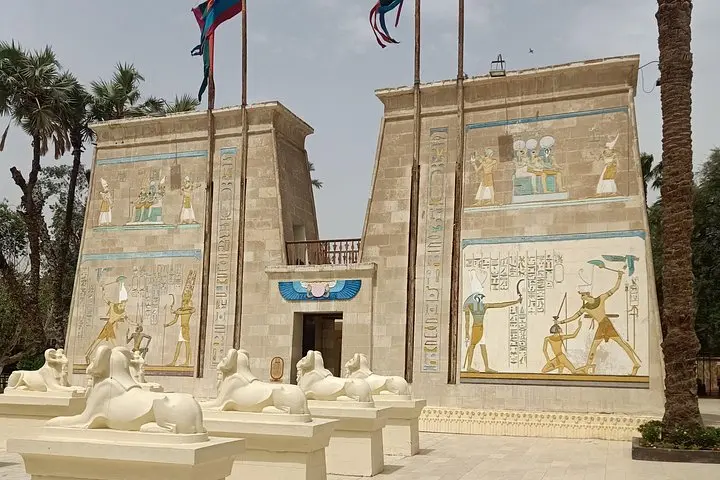
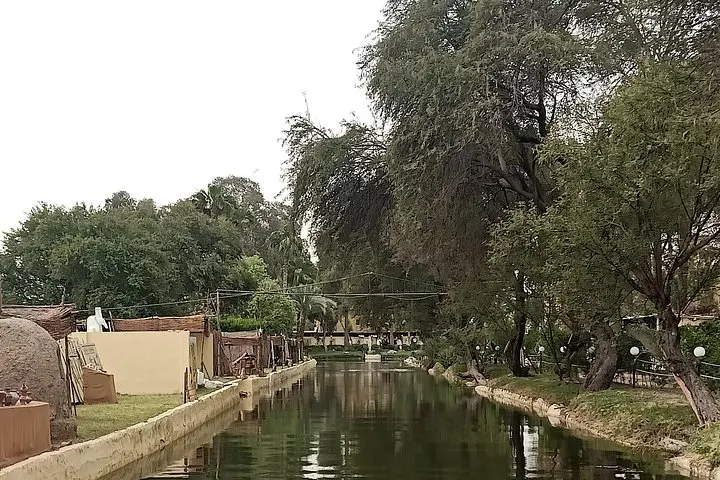
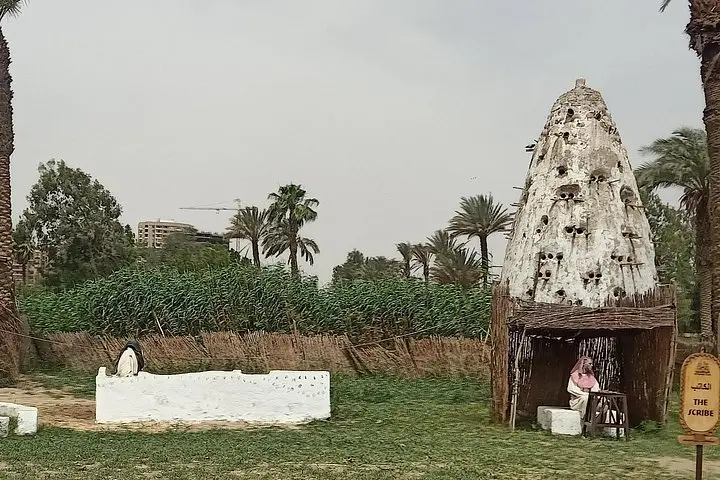
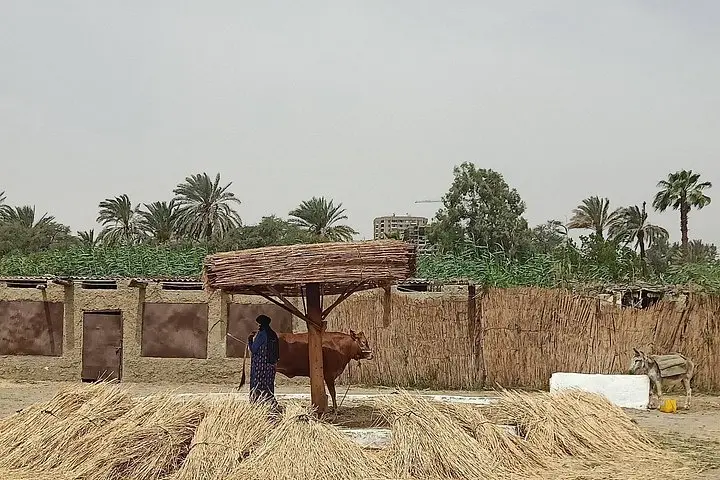
A short launch from central Cairo drops visitors into a narrow, green ribbon of Nile island where history performs itself in miniature. You begin on a shaded dock, the canal rippling as a small boat pushes off; reed-fringed channels direct your view toward reconstructed temples, modest houses, and costumed craftsmen carving stone the way their models did millennia ago.
A short launch from central Cairo drops visitors into a narrow, green ribbon of Nile island where history performs itself in miniature. You begin on a shaded dock, the canal rippling as a small boat pushes off; reed-fringed channels direct your view toward reconstructed temples, modest houses, and costumed craftsmen carving stone the way their models did millennia ago.
The Pharaonic Village was conceived in the late 20th century as a living museum: staged scenes recreate New Kingdom tombs, household life, ancient agriculture and small-scale industry so visitors can see, hear and smell the practical side of pharaonic Egypt rather than only its monuments. Geologically you are on the Nile’s alluvial floodplain; culturally you cross centuries in minutes — Coptic rooms jut next to Islamic exhibits, and modern Egyptian history sits in curated displays.
Expect an easy-paced, interpretive visit of 3–5 hours that mixes short boat trips, walkable exhibits and staged performances. Guides will narrate mummification demonstrations, show domestic scenes and point out replica tomb paintings and papyrus-making. Rest stops, cafés and a small petting zoo make it family-friendly, while ramps and accessible boats mean most visitors can participate.
Practical matters: bring sun protection and a refillable bottle, wear closed-toe shoes for uneven surfaces, and allow extra time for hotel pickup and Cairo traffic. Photographs are encouraged but be respectful around performers and any active conservation work. For travelers wanting a compact primer on ancient Egyptian daily life without the crowds at Giza, the Pharaonic Village is a readable, sensory-first introduction.