THE ADVENTURE COLLECTIVE® · Independent discovery and booking for outdoor travel

Catch the sun lifting over Maya Bay before the day boats arrive, then snorkel emerald lagoons and reef gardens on a speedboat circuit. This early-morning tour packs iconic sights—Viking Cave, Monkey Beach and Shark Point—into a focused half- or full-day adventure.
Catch the sun lifting over Maya Bay before the day boats arrive, then snorkel emerald lagoons and reef gardens on a speedboat circuit. This early-morning tour packs iconic sights—Viking Cave, Monkey Beach and Shark Point—into a focused half- or full-day adventure.
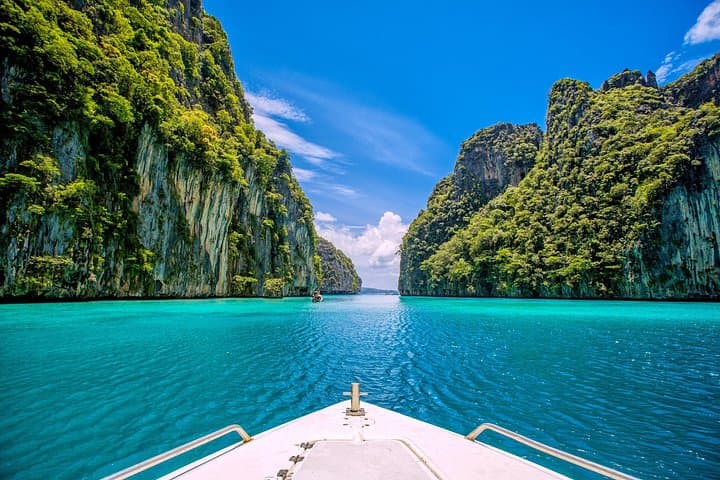
The bow cleaves pre-dawn water as the islands rise from the horizon—limestone cliffs dark against a violet sky, the sea nudging the boat forward like an impatient guide.
Verified experiences and guided adventures in the surrounding area.
Operated by Siam Scape Journeys · Ko Phi Phi, Krabi Province
The bow cleaves pre-dawn water as the islands rise from the horizon—limestone cliffs dark against a violet sky, the sea nudging the boat forward like an impatient guide.
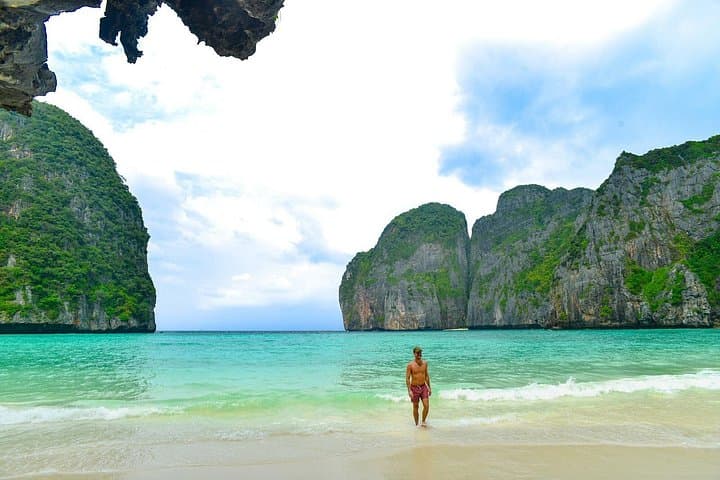
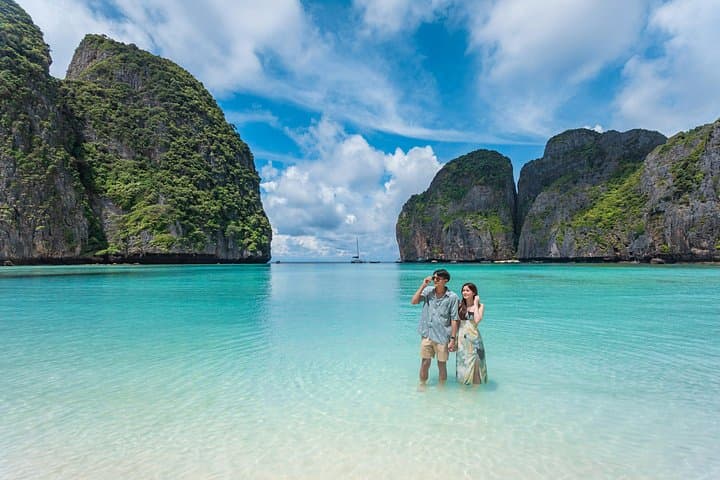
Arriving at Maya Bay for sunrise is a study in light and silence: limestone faces soften, birds pulse along rock ledges, and the first rays stripe the water. The route threads Pileh Lagoon’s emerald basin, grazes the sculpted mouth of Viking Cave, and drops you into the reef-scattered shallows of Shark Point and Coral Bay where coral bommies host parades of tropical fish.
Phi Phi’s geology is abrupt and recent—young limestone towers carved by sea and monsoon—while Viking Cave holds centuries-old human stories, from swifts’ nest harvesting to modern conservation debates. Local culture on Phi Phi Don centers on fishing and tourism; national park rules and fees aim to keep these islands viable.
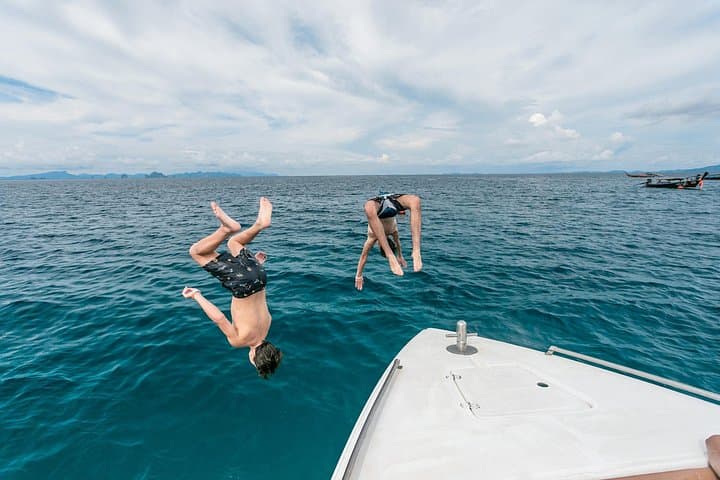
Practical guidance: tours run early (pick-up around 06:00–06:30 on Ton Sai Pier), last 4–8 hours depending on the full- or half-day option, and include life jackets and masks—consider bringing your own gear. Expect short boat transfers, light swims from the boat to reefs, and uneven sand at some landings. Sunscreen, hydration, and a towel are essentials; seas can be glassy or choppy depending on weather.
Plan for crowds after sunrise, respect no-touch rules around coral, and time your visit in the dry season (Dec–Feb) for the calmest water and best visibility.
You should be comfortable in the water; life jackets are provided and guides stay close during snorkeling, but basic swimming ability is recommended.
Yes—masks and life jackets are included, though many travelers prefer to bring their own mask for fit and comfort.
Blacktip reef sharks are sometimes seen at Shark Point; they are generally small, non-aggressive, and a natural part of the reef ecosystem.
This is a day tour only—large luggage is not suitable; overnight stays require separate ferry arrangements and are not part of the tour.
Siam Scape Journeys operates guided outdoor trips and adventures with an emphasis on safety, stewardship, and memorable experiences.
The bow cleaves pre-dawn water as the islands rise from the horizon—limestone cliffs dark against a violet sky, the sea nudging the boat forward like an impatient guide.
The bow cleaves pre-dawn water as the islands rise from the horizon—limestone cliffs dark against a violet sky, the sea nudging the boat forward like an impatient guide.
Arriving at Maya Bay for sunrise is a study in light and silence: limestone faces soften, birds pulse along rock ledges, and the first rays stripe the water. The route threads Pileh Lagoon’s emerald basin, grazes the sculpted mouth of Viking Cave, and drops you into the reef-scattered shallows of Shark Point and Coral Bay where coral bommies host parades of tropical fish.
Phi Phi’s geology is abrupt and recent—young limestone towers carved by sea and monsoon—while Viking Cave holds centuries-old human stories, from swifts’ nest harvesting to modern conservation debates. Local culture on Phi Phi Don centers on fishing and tourism; national park rules and fees aim to keep these islands viable.
Practical guidance: tours run early (pick-up around 06:00–06:30 on Ton Sai Pier), last 4–8 hours depending on the full- or half-day option, and include life jackets and masks—consider bringing your own gear. Expect short boat transfers, light swims from the boat to reefs, and uneven sand at some landings. Sunscreen, hydration, and a towel are essentials; seas can be glassy or choppy depending on weather.
Plan for crowds after sunrise, respect no-touch rules around coral, and time your visit in the dry season (Dec–Feb) for the calmest water and best visibility.