THE ADVENTURE COLLECTIVE® · Independent discovery and booking for outdoor travel

Step off the Nile and into 3,000 years of history—Philae’s carved halls and a colorful Nubian village lie within a single guided day trip from Aswan. Learn what to expect, how to prepare, and how to be a considerate visitor.
Step off the Nile and into 3,000 years of history—Philae’s carved halls and a colorful Nubian village lie within a single guided day trip from Aswan. Learn what to expect, how to prepare, and how to be a considerate visitor.
A morning light lifts off the Nile and the motorboat pushes toward an island crowned with stone. By the time travelers step ashore at Philae, wind and river have already shaped the site’s story: chipped reliefs, marble thresholds, and columns that remember pharaohs and Roman governors alike.
Verified experiences and guided adventures in the surrounding area.
Operated by Aqua Egypt Tours · Aswan, Aswan Governorate
A morning light lifts off the Nile and the motorboat pushes toward an island crowned with stone. By the time travelers step ashore at Philae, wind and river have already shaped the site’s story: chipped reliefs, marble thresholds, and columns that remember pharaohs and Roman governors alike.
Philae’s temples were once threatened by the Aswan Dam; in the 1960s UNESCO led a relocation to nearby Agilkia Island. The stone here mixes Pharaonic carving with later Roman and Coptic touches, a layered record of religion and politics. Beyond the temple’s outer colonnades the Nile spreads, its current daring small boats and lining the banks with palm groves. Across the water, Nubian villages offer painted houses and a culture that blends African, Arab, and riverine traditions—music, crafts, and foods shaped by the Nile’s rhythm.
The guided day trip typically includes a short motorboat crossing, a two-hour Philae exploration with an Egyptologist, then a visit to a Nubian village for market browsing, a possible family visit, and sunset views.
Practical guidance: wear comfortable walking shoes for uneven stone and short steps, bring sun protection and a refillable water bottle, and carry modest layers for temple interiors and evening breezes. Cameras are welcome but be respectful during family visits and at religious sites. Expect light walking overall and a pace set by the guide; meals and small purchases support local livelihoods, so bring small bills. This is an accessible, culturally rich half-day that pairs archaeology with contemporary Nile life.
Entrance fees to Philae are typically included in guided tours; confirm with the operator before departure.
Yes—short motorboat crossings are common and calm, though those with mobility concerns should notify the operator for assistance.
Tours generally allot about two hours at Philae to cover main structures, reliefs, and the island museum highlights.
Casual, modest clothing is appropriate—lightweight long sleeves and a scarf for women if you plan home visits; comfortable shoes for village lanes.
Aqua Egypt Tours operates guided outdoor trips and adventures with an emphasis on safety, stewardship, and memorable experiences.

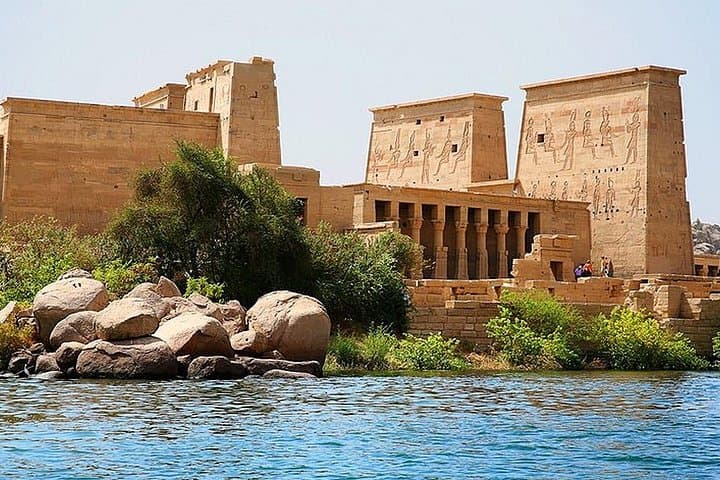


A morning light lifts off the Nile and the motorboat pushes toward an island crowned with stone. By the time travelers step ashore at Philae, wind and river have already shaped the site’s story: chipped reliefs, marble thresholds, and columns that remember pharaohs and Roman governors alike.
A morning light lifts off the Nile and the motorboat pushes toward an island crowned with stone. By the time travelers step ashore at Philae, wind and river have already shaped the site’s story: chipped reliefs, marble thresholds, and columns that remember pharaohs and Roman governors alike.
Philae’s temples were once threatened by the Aswan Dam; in the 1960s UNESCO led a relocation to nearby Agilkia Island. The stone here mixes Pharaonic carving with later Roman and Coptic touches, a layered record of religion and politics. Beyond the temple’s outer colonnades the Nile spreads, its current daring small boats and lining the banks with palm groves. Across the water, Nubian villages offer painted houses and a culture that blends African, Arab, and riverine traditions—music, crafts, and foods shaped by the Nile’s rhythm.
The guided day trip typically includes a short motorboat crossing, a two-hour Philae exploration with an Egyptologist, then a visit to a Nubian village for market browsing, a possible family visit, and sunset views.
Practical guidance: wear comfortable walking shoes for uneven stone and short steps, bring sun protection and a refillable water bottle, and carry modest layers for temple interiors and evening breezes. Cameras are welcome but be respectful during family visits and at religious sites. Expect light walking overall and a pace set by the guide; meals and small purchases support local livelihoods, so bring small bills. This is an accessible, culturally rich half-day that pairs archaeology with contemporary Nile life.