THE ADVENTURE COLLECTIVE® · Independent discovery and booking for outdoor travel

Climb to the hilltop temple of Phnom Bok for sweeping Eastern Baray views and close-up Khmer carvings on a 6-hour guided tour from Siem Reap. Expect a steep but manageable ascent, cultural context from a local guide, and quieter ruins than Angkor’s busiest sites.
Climb to the hilltop temple of Phnom Bok for sweeping Eastern Baray views and close-up Khmer carvings on a 6-hour guided tour from Siem Reap. Expect a steep but manageable ascent, cultural context from a local guide, and quieter ruins than Angkor’s busiest sites.
A climb up Phnom Bok opens with the clack of tuk-tuk wheels leaving Siem Reap’s dusty streets and ends with wind on a rocky summit that rewards effort with long views over the Eastern Baray.
Verified experiences and guided adventures in the surrounding area.
Operated by Khmer Detours · Siem Reap, Siem Reap Province
A climb up Phnom Bok opens with the clack of tuk-tuk wheels leaving Siem Reap’s dusty streets and ends with wind on a rocky summit that rewards effort with long views over the Eastern Baray.
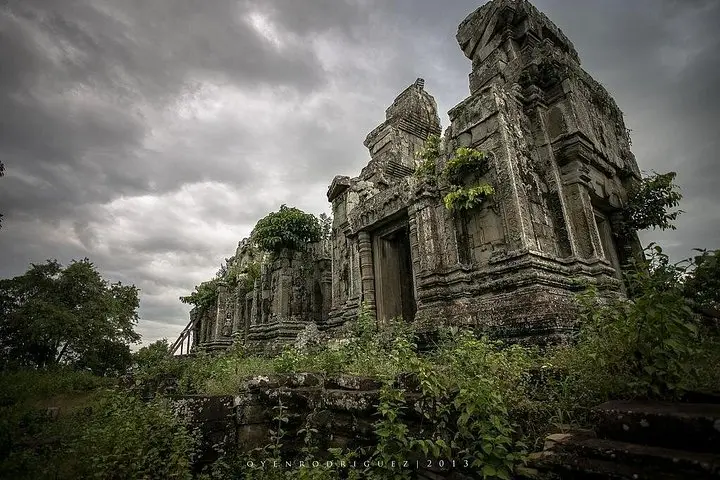
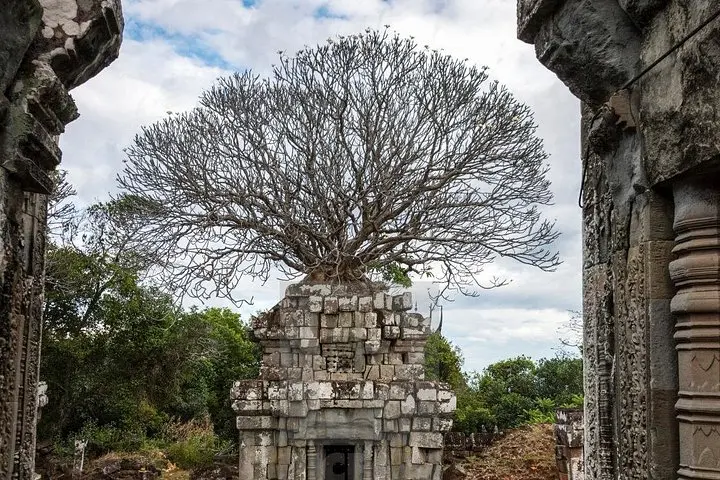
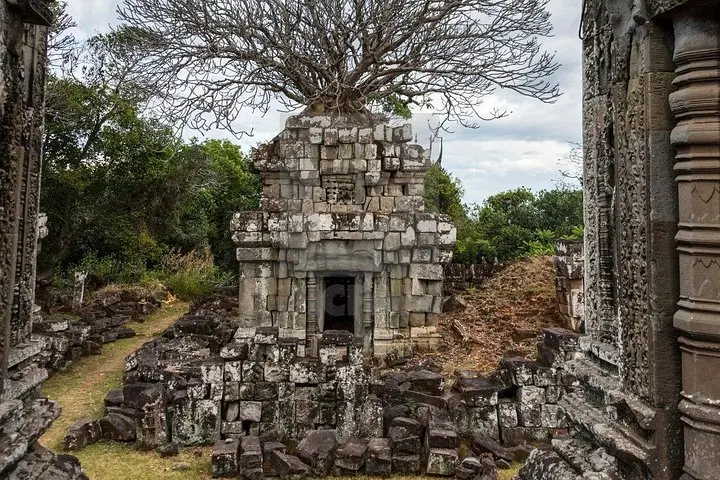
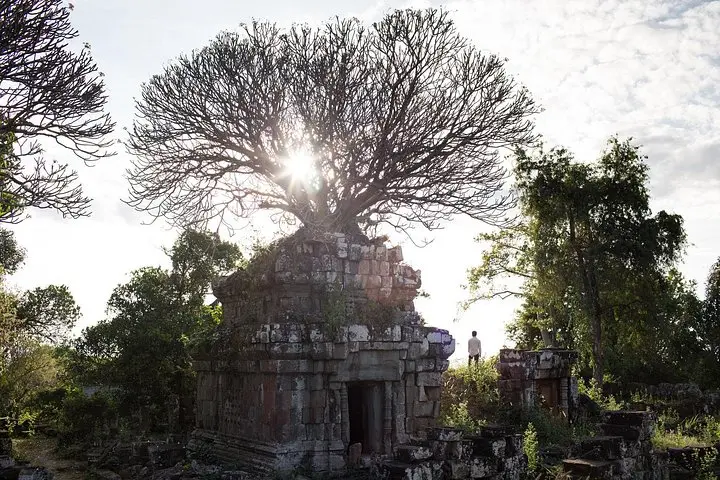
The 6‑hour guided loop threads a relatively short but steep ascent to an 11th‑century hilltop shrine built under King Yasovarman, who briefly centered power in this region before moving to the greater Angkor complex. The temple’s laterite and sandstone blocks show the same Khmer carving language as Angkor Wat, but scaled to a quieter, less trafficked place where the stones and sky feel more immediate.
Geologically the hill is a modest rise above the flat Tonle Sap plains; walking paths alternate packed dirt, loose stone, and a few steps built into the slope. Culturally, the temple remains active—visitors should follow local norms for modest dress and minimal noise. Morning light slices across lintels; afternoon storms can push through fast in the wet season and change the mood of the view.
Practical side: expect roughly 200–350 vertical meters of climbing spread across short, steep pitches and flatter observation terraces. Bring a guide for historical context and to navigate small access trails, and budget time for photos at the summit and a simple lunch included in the tour.
Plan an early start to avoid heat and crowds, wear sturdy shoes, carry 1–2 liters of water, and cover shoulders and knees when approaching the sanctuary. The visit pairs well with other eastern Angkor sites and a slow return through rice paddies that recall how this landscape sustained Khmer polities for centuries.
The guided tour runs about 6 hours total including transport; the uphill walking portions are short but steep—plan on intermittent climbs totaling a few hundred vertical meters.
Yes; the site operates year-round but access can be slippery in heavy rain—dress appropriately and follow your guide’s directions.
Basic facilities and a simple lunch are included on most tours; toilets near the site are often simple and may be squat-style in rural areas.
Children are welcome but must be accompanied by an adult; parents should consider the steep sections and sun exposure when deciding.
Khmer Detours operates guided outdoor trips and adventures with an emphasis on safety, stewardship, and memorable experiences.
A climb up Phnom Bok opens with the clack of tuk-tuk wheels leaving Siem Reap’s dusty streets and ends with wind on a rocky summit that rewards effort with long views over the Eastern Baray.
A climb up Phnom Bok opens with the clack of tuk-tuk wheels leaving Siem Reap’s dusty streets and ends with wind on a rocky summit that rewards effort with long views over the Eastern Baray.
The 6‑hour guided loop threads a relatively short but steep ascent to an 11th‑century hilltop shrine built under King Yasovarman, who briefly centered power in this region before moving to the greater Angkor complex. The temple’s laterite and sandstone blocks show the same Khmer carving language as Angkor Wat, but scaled to a quieter, less trafficked place where the stones and sky feel more immediate.
Geologically the hill is a modest rise above the flat Tonle Sap plains; walking paths alternate packed dirt, loose stone, and a few steps built into the slope. Culturally, the temple remains active—visitors should follow local norms for modest dress and minimal noise. Morning light slices across lintels; afternoon storms can push through fast in the wet season and change the mood of the view.
Practical side: expect roughly 200–350 vertical meters of climbing spread across short, steep pitches and flatter observation terraces. Bring a guide for historical context and to navigate small access trails, and budget time for photos at the summit and a simple lunch included in the tour.
Plan an early start to avoid heat and crowds, wear sturdy shoes, carry 1–2 liters of water, and cover shoulders and knees when approaching the sanctuary. The visit pairs well with other eastern Angkor sites and a slow return through rice paddies that recall how this landscape sustained Khmer polities for centuries.