THE ADVENTURE COLLECTIVE® · Independent discovery and booking for outdoor travel

A full-day trek into Phnom Kulen combines jungle trails, ancient river-carved lingas, the Reclining Buddha at Preah Ang Thom and a refreshing waterfall swim. This practical guide outlines what to expect, how to prepare, and local insights for a safe, respectful visit from Siem Reap.
A full-day trek into Phnom Kulen combines jungle trails, ancient river-carved lingas, the Reclining Buddha at Preah Ang Thom and a refreshing waterfall swim. This practical guide outlines what to expect, how to prepare, and local insights for a safe, respectful visit from Siem Reap.
You step off the air-conditioned minivan into humid forest air and the mountain answers in birdsong and distant water. The trail climbs away from the village, roots and boulders shifting underfoot, and the trees begin to open toward limestone outcrops where ancient carvings shelter in moss. Phnom Kulen isn’t just a waterfall stop — it’s a living shrine: carved lingas along the riverbed, a large reclining Buddha at Preah Ang Thom, and jungle trails that thread through a national park that feels older than the surrounding plains.
Verified experiences and guided adventures in the surrounding area.
Operated by Angkor Wat Tour Guide · Siem Reap, Siem Reap Province
You step off the air-conditioned minivan into humid forest air and the mountain answers in birdsong and distant water. The trail climbs away from the village, roots and boulders shifting underfoot, and the trees begin to open toward limestone outcrops where ancient carvings shelter in moss. Phnom Kulen isn’t just a waterfall stop — it’s a living shrine: carved lingas along the riverbed, a large reclining Buddha at Preah Ang Thom, and jungle trails that thread through a national park that feels older than the surrounding plains.
Historically Phnom Kulen is considered the birthplace of the Khmer Empire; King Jayavarman II declared independence from Java here in the ninth century. Geologically the plateau is a sandstone-capped ridge with steep escarpments that feed clear streams into the Tonlé Sap watershed. Culturally you’ll pass small village shrines and rice paddies; vendors sell cold fruit near the falls and local guides interpret both the archaeology and present-day traditions.
Practically, expect a full-day outing (10–12 hours door-to-door from Siem Reap) with several short steep sections and uneven jungle footing — total walking distance commonly ranges 6–10 km with intermittent scrambling and river crossings. The waterfall pools invite a cool swim but watch currents near the plunge. Bring a daypack with water, a rain shell, sturdy trail shoes, insect repellent and small Cambodian riel for entrance fees or snacks. Start early to miss the heat and the crowds at Preah Ang Thom, and leave no trace: the mountain’s sacred sites and fragile sandstone carvings are best experienced respectfully and quietly.
The day tour runs about 10–12 hours roundtrip from Siem Reap, with 6–10 km of hiking over varied terrain depending on the route.
Yes — there are natural pools below Phnom Kulen Waterfall, but check local guidance for current conditions and avoid strong currents near the plunge.
Entrance fees are usually paid at the start of the tour; the guide typically assists but confirm inclusion when booking.
The walk includes uneven ground and short steep sections; it’s best for those with moderate mobility and not recommended for people with serious back or heart problems.
Angkor Wat Tour Guide operates guided outdoor trips and adventures with an emphasis on safety, stewardship, and memorable experiences.

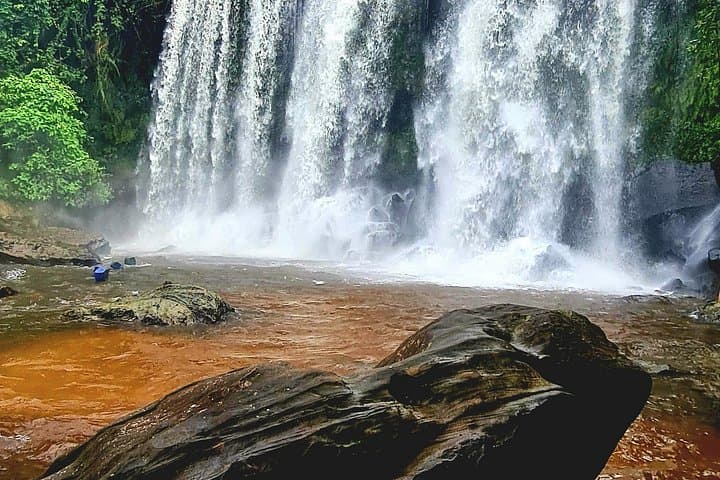

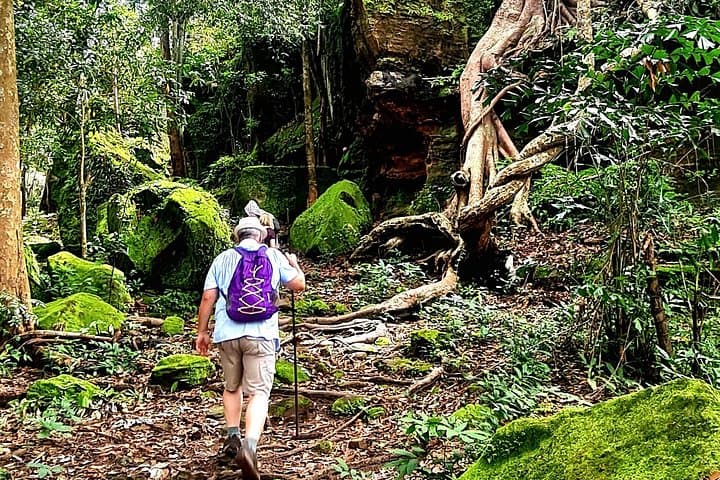
You step off the air-conditioned minivan into humid forest air and the mountain answers in birdsong and distant water. The trail climbs away from the village, roots and boulders shifting underfoot, and the trees begin to open toward limestone outcrops where ancient carvings shelter in moss. Phnom Kulen isn’t just a waterfall stop — it’s a living shrine: carved lingas along the riverbed, a large reclining Buddha at Preah Ang Thom, and jungle trails that thread through a national park that feels older than the surrounding plains.
You step off the air-conditioned minivan into humid forest air and the mountain answers in birdsong and distant water. The trail climbs away from the village, roots and boulders shifting underfoot, and the trees begin to open toward limestone outcrops where ancient carvings shelter in moss. Phnom Kulen isn’t just a waterfall stop — it’s a living shrine: carved lingas along the riverbed, a large reclining Buddha at Preah Ang Thom, and jungle trails that thread through a national park that feels older than the surrounding plains.
Historically Phnom Kulen is considered the birthplace of the Khmer Empire; King Jayavarman II declared independence from Java here in the ninth century. Geologically the plateau is a sandstone-capped ridge with steep escarpments that feed clear streams into the Tonlé Sap watershed. Culturally you’ll pass small village shrines and rice paddies; vendors sell cold fruit near the falls and local guides interpret both the archaeology and present-day traditions.
Practically, expect a full-day outing (10–12 hours door-to-door from Siem Reap) with several short steep sections and uneven jungle footing — total walking distance commonly ranges 6–10 km with intermittent scrambling and river crossings. The waterfall pools invite a cool swim but watch currents near the plunge. Bring a daypack with water, a rain shell, sturdy trail shoes, insect repellent and small Cambodian riel for entrance fees or snacks. Start early to miss the heat and the crowds at Preah Ang Thom, and leave no trace: the mountain’s sacred sites and fragile sandstone carvings are best experienced respectfully and quietly.