THE ADVENTURE COLLECTIVE® · Independent discovery and booking for outdoor travel

A half-day to full-day escape from Siem Reap that mixes jungle hiking, a cooling swim beneath Kulen Waterfall, and a walk across the River of a Thousand Lingas — an open-air gallery of ancient Hindu carvings. Expect short hikes, cultural stops, and a picnic lunch.
A half-day to full-day escape from Siem Reap that mixes jungle hiking, a cooling swim beneath Kulen Waterfall, and a walk across the River of a Thousand Lingas — an open-air gallery of ancient Hindu carvings. Expect short hikes, cultural stops, and a picnic lunch.
Rain-scrubbed air and the rattle of a minivan engine announce the escape from Siem Reap as the road climbs toward Phnom Kulen. Fields fall away and the canopy tightens; the jungle seems to breathe, the river daring you to step into its carved stones. By mid-morning you’re at the River of a Thousand Lingas — a shallow sandstone procession of Hindu carvings where water threads through centuries of devotion — then higher still to the two-tiered Kulen Waterfall, where spray erases the line between land and sky.
Verified experiences and guided adventures in the surrounding area.
Operated by Travel to Inspire · Siem Reap, Siem Reap Province
Rain-scrubbed air and the rattle of a minivan engine announce the escape from Siem Reap as the road climbs toward Phnom Kulen. Fields fall away and the canopy tightens; the jungle seems to breathe, the river daring you to step into its carved stones. By mid-morning you’re at the River of a Thousand Lingas — a shallow sandstone procession of Hindu carvings where water threads through centuries of devotion — then higher still to the two-tiered Kulen Waterfall, where spray erases the line between land and sky.
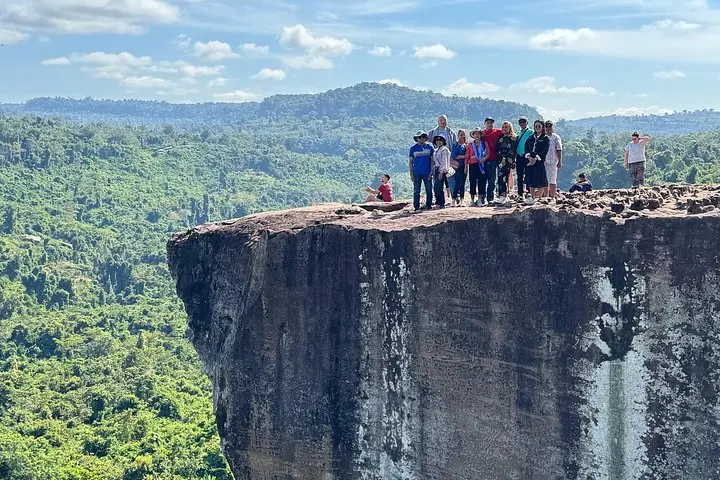
Phnom Kulen is more than a scenic stop; it’s the birthplace of the Angkor Empire. Kings once declared sovereignty here, marking the riverbed with lingas and yonis as offerings to Vishnu and Shiva. Geologically the summit is a sandstone plateau that resists erosion, creating knobbly outcrops, shallow channels and plunging cascades. Cultural life remains close to the surface: monks chant near the Giant Reclining Buddha and villagers press sugar palm and weave baskets at family homesteads.
On a typical small-group day tour you’ll hike jungle tracks (uneven, often damp), swim at the base of the falls, visit the mountaintop Buddha and sample local snacks over a picnic lunch, with hotel pickup and entrance fees included. Practical notes: cover shoulders and knees at sacred sites, bring reef or water shoes for slippery rock, and carry sun protection and insect repellent. Aim for an early start to avoid mid-day heat and make the most of the light for photography. Respect local customs, keep valuables secured, and let the mountain’s quiet pace set yours for the day.
The transfer is about 50 km and typically takes 1.5 hours one way, depending on traffic and road conditions.
Yes—swimming is allowed at Kulen Waterfall; wear footwear for traction and never dive off rocks.
This tour typically includes national park entrance fees and relevant permits—confirm at booking for full details.
The itinerary is generally accessible to most ages, but expect uneven terrain and short hikes; infants must sit on laps and pregnant travelers are advised against participating.
Travel to Inspire operates guided outdoor trips and adventures with an emphasis on safety, stewardship, and memorable experiences.
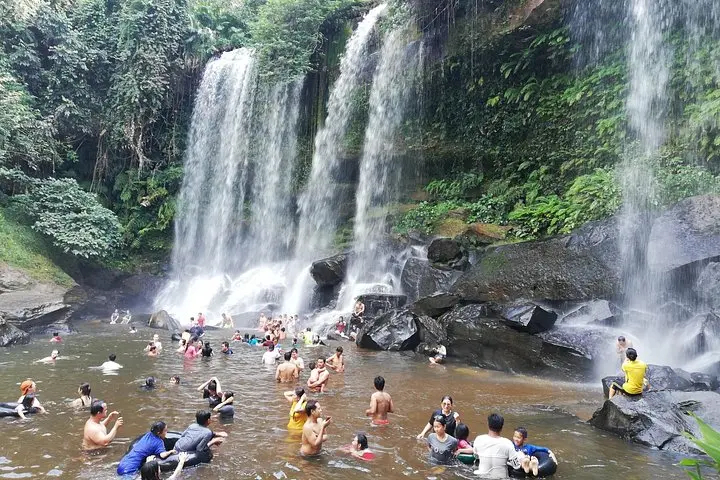
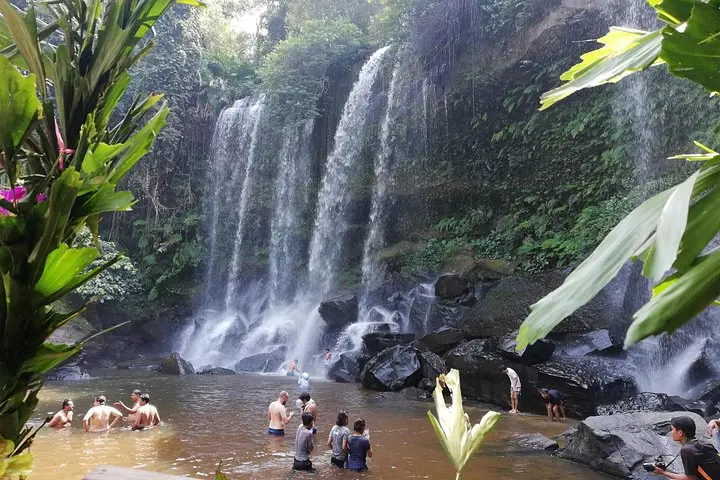
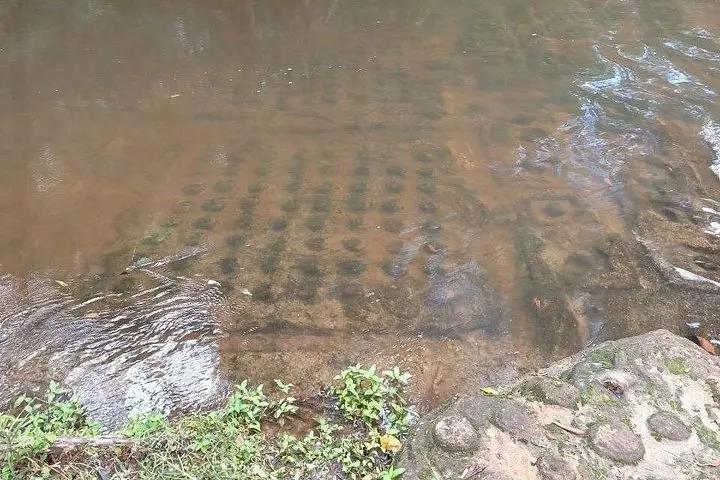
Rain-scrubbed air and the rattle of a minivan engine announce the escape from Siem Reap as the road climbs toward Phnom Kulen. Fields fall away and the canopy tightens; the jungle seems to breathe, the river daring you to step into its carved stones. By mid-morning you’re at the River of a Thousand Lingas — a shallow sandstone procession of Hindu carvings where water threads through centuries of devotion — then higher still to the two-tiered Kulen Waterfall, where spray erases the line between land and sky.
Rain-scrubbed air and the rattle of a minivan engine announce the escape from Siem Reap as the road climbs toward Phnom Kulen. Fields fall away and the canopy tightens; the jungle seems to breathe, the river daring you to step into its carved stones. By mid-morning you’re at the River of a Thousand Lingas — a shallow sandstone procession of Hindu carvings where water threads through centuries of devotion — then higher still to the two-tiered Kulen Waterfall, where spray erases the line between land and sky.
Phnom Kulen is more than a scenic stop; it’s the birthplace of the Angkor Empire. Kings once declared sovereignty here, marking the riverbed with lingas and yonis as offerings to Vishnu and Shiva. Geologically the summit is a sandstone plateau that resists erosion, creating knobbly outcrops, shallow channels and plunging cascades. Cultural life remains close to the surface: monks chant near the Giant Reclining Buddha and villagers press sugar palm and weave baskets at family homesteads.
On a typical small-group day tour you’ll hike jungle tracks (uneven, often damp), swim at the base of the falls, visit the mountaintop Buddha and sample local snacks over a picnic lunch, with hotel pickup and entrance fees included. Practical notes: cover shoulders and knees at sacred sites, bring reef or water shoes for slippery rock, and carry sun protection and insect repellent. Aim for an early start to avoid mid-day heat and make the most of the light for photography. Respect local customs, keep valuables secured, and let the mountain’s quiet pace set yours for the day.