THE ADVENTURE COLLECTIVE® · Independent discovery and booking for outdoor travel

Escape Siem Reap for a full-day private tour to Phnom Kulen: carved riverbeds of 1000 lingas, a 16‑meter reclining Buddha, and seasonal waterfalls with swim-ready pools. This tour blends Angkorian history with rugged forest walks and cooling mountain water.
Escape Siem Reap for a full-day private tour to Phnom Kulen: carved riverbeds of 1000 lingas, a 16‑meter reclining Buddha, and seasonal waterfalls with swim-ready pools. This tour blends Angkorian history with rugged forest walks and cooling mountain water.
A morning drive from Siem Reap drops the city behind you and climbs into cooler air as the road winds toward Phnom Kulen. On arrival the forest opens to a riverbed chequered with ancient carvings; sunlight slices through canopy gaps and the river seems to dare you to follow it upstream toward the carved lingas. Elsewhere a 16‑meter reclining Buddha lies hewn from sandstone, a calm presence above a temple complex where pilgrims pause and incense smoke moves like slow breath.
Verified experiences and guided adventures in the surrounding area.
Operated by Ta Prohm Temple Tour · Siem Reap, Siem Reap Province
A morning drive from Siem Reap drops the city behind you and climbs into cooler air as the road winds toward Phnom Kulen. On arrival the forest opens to a riverbed chequered with ancient carvings; sunlight slices through canopy gaps and the river seems to dare you to follow it upstream toward the carved lingas. Elsewhere a 16‑meter reclining Buddha lies hewn from sandstone, a calm presence above a temple complex where pilgrims pause and incense smoke moves like slow breath.
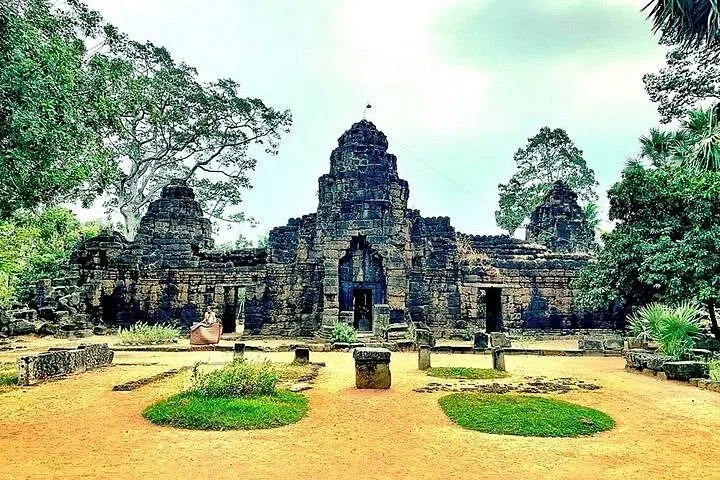
Phnom Kulen was Mahendraparvata during the Angkorian era and is traditionally described as the site where Jayavarman II proclaimed Khmer independence in 802 CE. The plateau’s sandstone and laterite fed Angkor’s builders; over time river channels scoured shallow beds where artisans incised images of Shiva and rows of lingas.
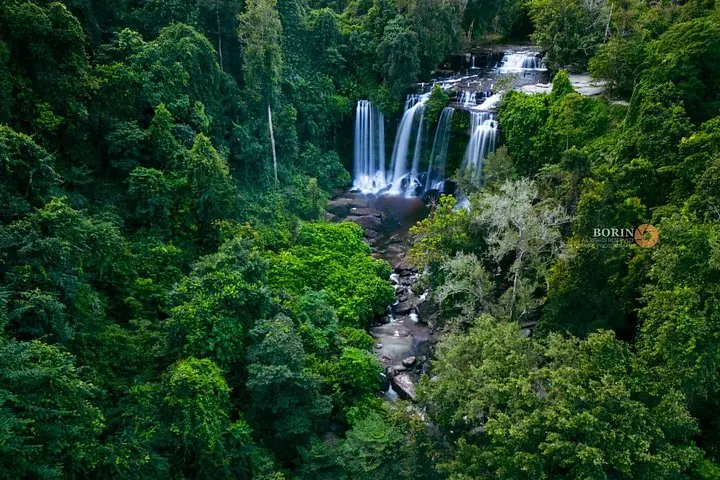
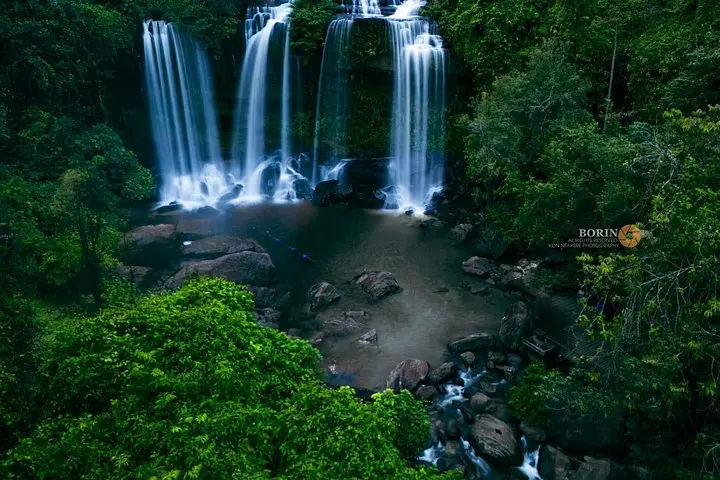
Geology here is simple and immediate: a forested sandstone plateau that yields cool springs and seasonal waterfalls. The largest falls swell in the rains to a thundering curtain 15–20 m high; in the dry months the rock carvings in the riverbed are most visible and the pools are clearer for swimming.
Practical notes: expect a full day (8–9 hours) with multiple short walks over uneven stone and dirt, some steps at the pagoda, and miles driven on rural roads. Bring sturdy shoes for slippery rocks, swimwear if you plan to enter the pools, sunscreen and insect repellent, and a respectful cover for temple visits. Guides routinely handle permits, explain the history, and locate quieter viewpoints, leaving you to trade city heat for river chill and panoramic ridgelines.
Expect about 1–1.5 hours each way depending on traffic and your hotel location; many operators include hotel pickup and drop‑off.
Yes—there are clear pools suitable for swimming, especially in the dry season, but currents and slippery rocks make caution essential.
The lingas are always there, but they are most visible during the dry months when water levels are low; heavy rain can obscure some carvings.
Short walks and some steps are required; parts of the park are wheelchair accessible but riverbeds and steep approaches to viewpoints are not ideal for limited mobility.
Ta Prohm Temple Tour operates guided outdoor trips and adventures with an emphasis on safety, stewardship, and memorable experiences.
A morning drive from Siem Reap drops the city behind you and climbs into cooler air as the road winds toward Phnom Kulen. On arrival the forest opens to a riverbed chequered with ancient carvings; sunlight slices through canopy gaps and the river seems to dare you to follow it upstream toward the carved lingas. Elsewhere a 16‑meter reclining Buddha lies hewn from sandstone, a calm presence above a temple complex where pilgrims pause and incense smoke moves like slow breath.
A morning drive from Siem Reap drops the city behind you and climbs into cooler air as the road winds toward Phnom Kulen. On arrival the forest opens to a riverbed chequered with ancient carvings; sunlight slices through canopy gaps and the river seems to dare you to follow it upstream toward the carved lingas. Elsewhere a 16‑meter reclining Buddha lies hewn from sandstone, a calm presence above a temple complex where pilgrims pause and incense smoke moves like slow breath.
Phnom Kulen was Mahendraparvata during the Angkorian era and is traditionally described as the site where Jayavarman II proclaimed Khmer independence in 802 CE. The plateau’s sandstone and laterite fed Angkor’s builders; over time river channels scoured shallow beds where artisans incised images of Shiva and rows of lingas.
Geology here is simple and immediate: a forested sandstone plateau that yields cool springs and seasonal waterfalls. The largest falls swell in the rains to a thundering curtain 15–20 m high; in the dry months the rock carvings in the riverbed are most visible and the pools are clearer for swimming.
Practical notes: expect a full day (8–9 hours) with multiple short walks over uneven stone and dirt, some steps at the pagoda, and miles driven on rural roads. Bring sturdy shoes for slippery rocks, swimwear if you plan to enter the pools, sunscreen and insect repellent, and a respectful cover for temple visits. Guides routinely handle permits, explain the history, and locate quieter viewpoints, leaving you to trade city heat for river chill and panoramic ridgelines.