THE ADVENTURE COLLECTIVE® · Independent discovery and booking for outdoor travel

Spend a private day on Phnom Kulen to see the 1000 Lingas riverbed, a carved reclining Buddha, and a cooling jungle waterfall. This personalized tour combines Khmer history with short jungle walks and a swim beneath the falls.
Spend a private day on Phnom Kulen to see the 1000 Lingas riverbed, a carved reclining Buddha, and a cooling jungle waterfall. This personalized tour combines Khmer history with short jungle walks and a swim beneath the falls.
You step off the air‑conditioned vehicle into humid jungle air and the sound of water already playing in the distance — Phnom Kulen rises ahead, a sandstone plateau that was once the cradle of the Khmer Empire.
Verified experiences and guided adventures in the surrounding area.
Operated by Southeast Asia Journeys · Siem Reap, Siem Reap Province
You step off the air‑conditioned vehicle into humid jungle air and the sound of water already playing in the distance — Phnom Kulen rises ahead, a sandstone plateau that was once the cradle of the Khmer Empire.
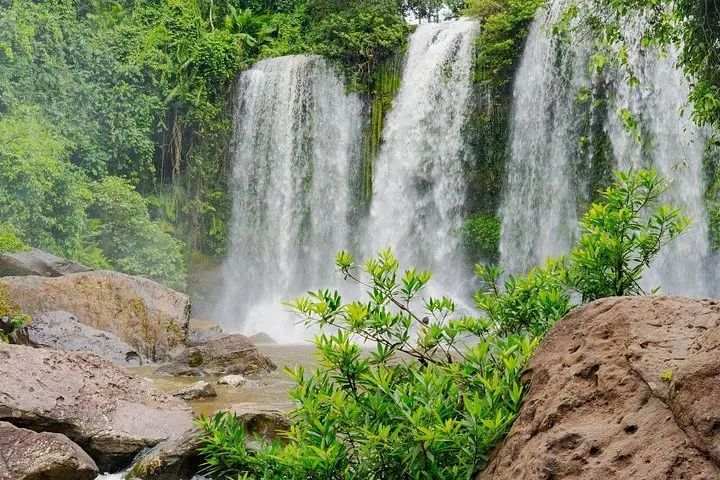
The route moves from roadside rice paddies into a green highland that tops out around 480 meters above sea level. On the riverbed near the falls, thousands of lingas — shallow Shiva carvings — mark an ancient hydraulic ritual used to bless water for rice fields. A reclining Buddha carved in situ cuts a quiet silhouette on a sandstone face; nearby, cliffside stupas and scores of small temple remains hint at the plateau’s 9th–11th century spiritual importance.
Geologically the plateau is a hard sandstone outcrop; trails are rocky and often slick where streams cross. Culturally this area remains active and respected: local guides will point out sacrificial stones and explain continuing pilgrimage practices.
Practically, expect a full 7–8 hour day with roughly one hour drive each way from Siem Reap. Walks at sites are short (typically under 2 km total) but can include uneven steps and muddy patches; bring sturdy shoes, sun protection, and a light towel if you plan to swim beneath the falls. The wet season swells the cascades and brightens jungle green, but also makes footing treacherous.
The private format gives time to linger at Peoung Jrounh shrine, inspect the riverbed lingas, and cool off in the plunge pool — all with a local guide to explain history, etiquette, and safe swimming spots.
The tour typically includes about a one‑hour drive each way depending on traffic and road conditions.
Yes — visitors often swim in the plunge pool, but follow guide instructions about currents and safe entry points.
Kulen passes and applicable fees are included in the tour according to the itinerary; confirm with the operator at booking.
Yes — the tour is private and paced, but guests with spinal, heart, or pregnancy restrictions should avoid strenuous sections and consult the operator.
Southeast Asia Journeys operates guided outdoor trips and adventures with an emphasis on safety, stewardship, and memorable experiences.
You step off the air‑conditioned vehicle into humid jungle air and the sound of water already playing in the distance — Phnom Kulen rises ahead, a sandstone plateau that was once the cradle of the Khmer Empire.
You step off the air‑conditioned vehicle into humid jungle air and the sound of water already playing in the distance — Phnom Kulen rises ahead, a sandstone plateau that was once the cradle of the Khmer Empire.
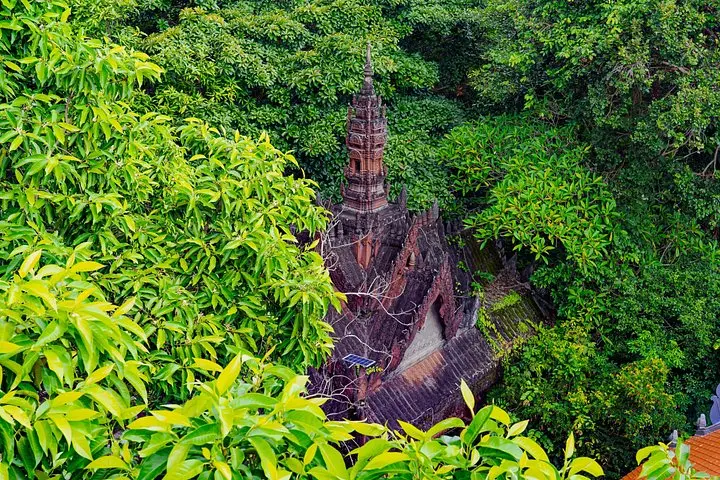
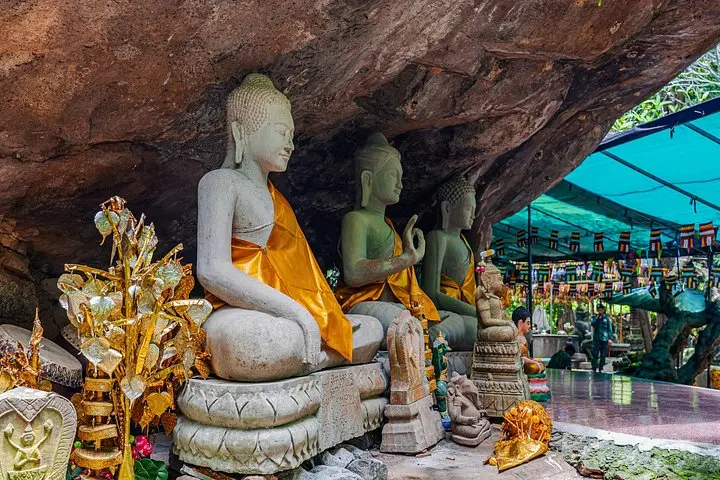
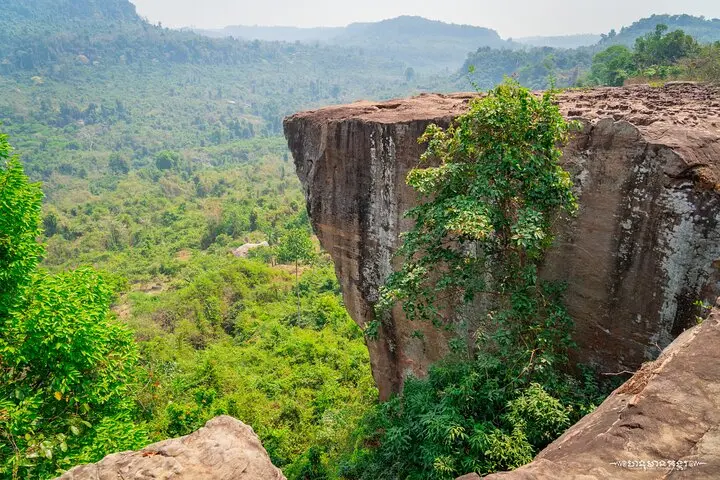
The route moves from roadside rice paddies into a green highland that tops out around 480 meters above sea level. On the riverbed near the falls, thousands of lingas — shallow Shiva carvings — mark an ancient hydraulic ritual used to bless water for rice fields. A reclining Buddha carved in situ cuts a quiet silhouette on a sandstone face; nearby, cliffside stupas and scores of small temple remains hint at the plateau’s 9th–11th century spiritual importance.
Geologically the plateau is a hard sandstone outcrop; trails are rocky and often slick where streams cross. Culturally this area remains active and respected: local guides will point out sacrificial stones and explain continuing pilgrimage practices.
Practically, expect a full 7–8 hour day with roughly one hour drive each way from Siem Reap. Walks at sites are short (typically under 2 km total) but can include uneven steps and muddy patches; bring sturdy shoes, sun protection, and a light towel if you plan to swim beneath the falls. The wet season swells the cascades and brightens jungle green, but also makes footing treacherous.
The private format gives time to linger at Peoung Jrounh shrine, inspect the riverbed lingas, and cool off in the plunge pool — all with a local guide to explain history, etiquette, and safe swimming spots.