THE ADVENTURE COLLECTIVE® · Independent discovery and booking for outdoor travel

Head north from Siem Reap to Phnom Kulen for a compact day of geology, Khmer history and waterfall swimming. See the reclining Buddha, the River of a Thousand Lingas and a traditional palm‑sugar village on this 5–6 hour tour.
Head north from Siem Reap to Phnom Kulen for a compact day of geology, Khmer history and waterfall swimming. See the reclining Buddha, the River of a Thousand Lingas and a traditional palm‑sugar village on this 5–6 hour tour.
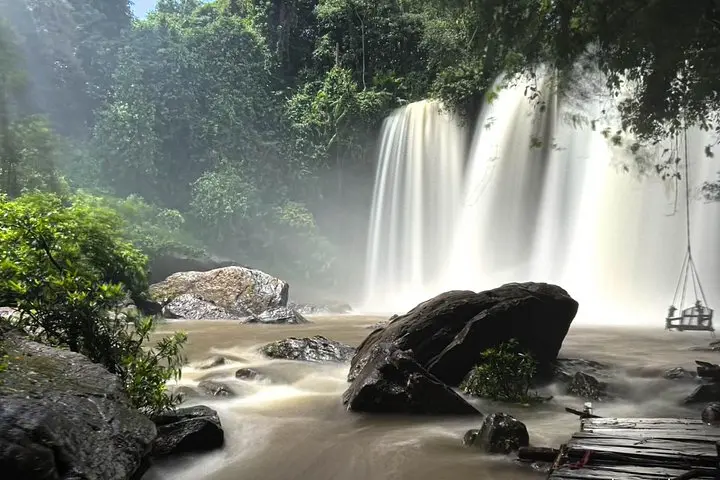
The road out of Siem Reap narrows and the green opens — rice paddies give way to a low sandstone plateau crowned by Phnom Kulen. After the 1½‑hour drive you step into humid air threaded with the roar of the waterfall; water carves smooth channels through centuries‑old rock and the stone river of lingas glints like a map of a lost capital.
Verified experiences and guided adventures in the surrounding area.
Operated by Siem Reap Shared Tour · Phnom Kulen, Siem Reap Province
The road out of Siem Reap narrows and the green opens — rice paddies give way to a low sandstone plateau crowned by Phnom Kulen. After the 1½‑hour drive you step into humid air threaded with the roar of the waterfall; water carves smooth channels through centuries‑old rock and the stone river of lingas glints like a map of a lost capital.
Phnom Kulen is where Jayavarman II declared the Khmer Empire independent in 802 AD, making this mountain as much a political birthplace as a spiritual one. Geologically the park is a sandstone blockscape: shallow rivers have sculpted basins, cliffs and plunge pools that feed the waterfall. Scattered shrines and the enormous reclining Buddha reflect continuous local devotion; the carved lingas in the riverbed are deliberate ritual markers rather than random graffiti.
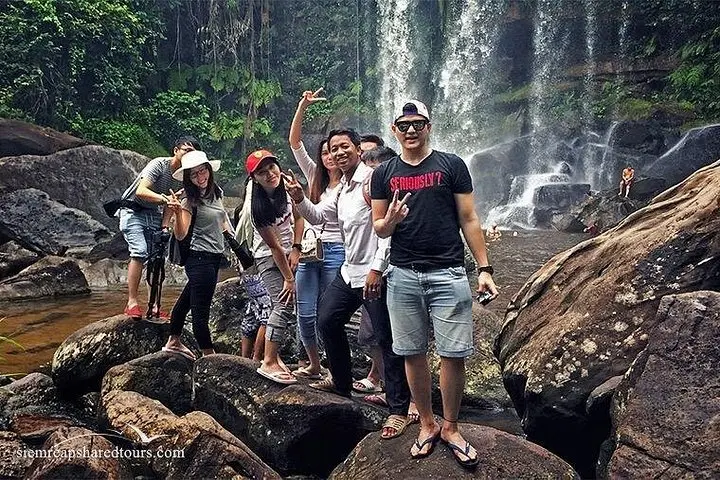
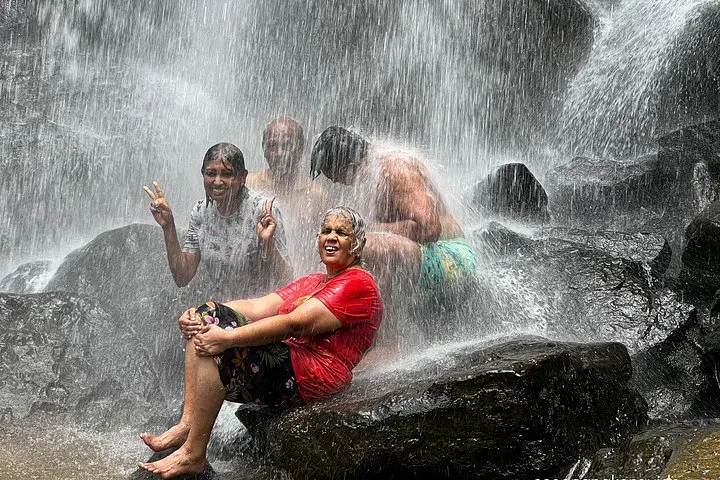
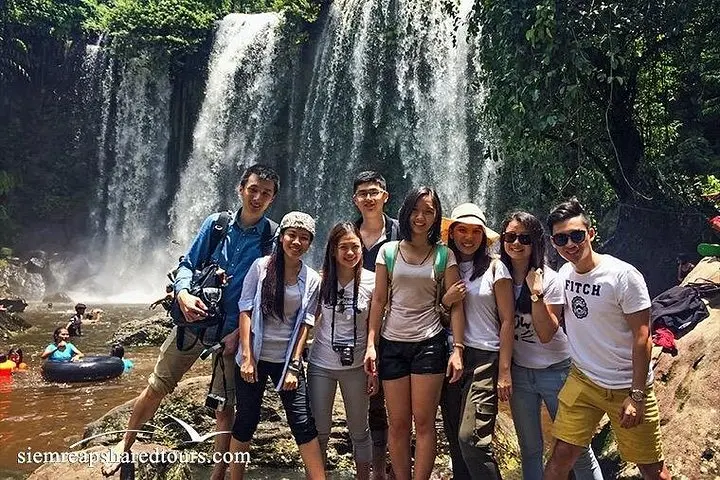
Expect short walks over uneven, sometimes slippery rock, and a few stair sections to reach viewpoints and the Buddha. The itinerary typically covers the main waterfall for swimming and photos, the River of a Thousand Lingas (low‑water rock carvings), the massive reclining Buddha and a stop at a palm‑sugar village for a simple lunch and demonstration. Guides provide historical context and local protocols — cover shoulders and knees at sacred sites.
Practical notes: bring sturdy shoes that grip wet stone, insect protection, sun cover and cash for the park fee and village purchases. Visit early in the day to avoid heat and the thickest afternoon rains in the wet season; always heed guide warnings around fast currents and slippery pools.
The drive is about 1–1.5 hours each way depending on traffic and road conditions; expect a full day with travel time included.
Yes, there are designated pools for swimming, but conditions change with water level — always follow your guide and avoid strong currents.
Yes — the national park charges an entrance fee paid on arrival; bring cash in local currency for the fee and village purchases.
Generally yes; the tour is advertised as suitable for all fitness levels, but some walking on uneven surfaces and steps is required.
Siem Reap Shared Tour operates guided outdoor trips and adventures with an emphasis on safety, stewardship, and memorable experiences.
The road out of Siem Reap narrows and the green opens — rice paddies give way to a low sandstone plateau crowned by Phnom Kulen. After the 1½‑hour drive you step into humid air threaded with the roar of the waterfall; water carves smooth channels through centuries‑old rock and the stone river of lingas glints like a map of a lost capital.
The road out of Siem Reap narrows and the green opens — rice paddies give way to a low sandstone plateau crowned by Phnom Kulen. After the 1½‑hour drive you step into humid air threaded with the roar of the waterfall; water carves smooth channels through centuries‑old rock and the stone river of lingas glints like a map of a lost capital.
Phnom Kulen is where Jayavarman II declared the Khmer Empire independent in 802 AD, making this mountain as much a political birthplace as a spiritual one. Geologically the park is a sandstone blockscape: shallow rivers have sculpted basins, cliffs and plunge pools that feed the waterfall. Scattered shrines and the enormous reclining Buddha reflect continuous local devotion; the carved lingas in the riverbed are deliberate ritual markers rather than random graffiti.
Expect short walks over uneven, sometimes slippery rock, and a few stair sections to reach viewpoints and the Buddha. The itinerary typically covers the main waterfall for swimming and photos, the River of a Thousand Lingas (low‑water rock carvings), the massive reclining Buddha and a stop at a palm‑sugar village for a simple lunch and demonstration. Guides provide historical context and local protocols — cover shoulders and knees at sacred sites.
Practical notes: bring sturdy shoes that grip wet stone, insect protection, sun cover and cash for the park fee and village purchases. Visit early in the day to avoid heat and the thickest afternoon rains in the wet season; always heed guide warnings around fast currents and slippery pools.