THE ADVENTURE COLLECTIVE® · Independent discovery and booking for outdoor travel

Drive into the high forest of Phnom Kulen to stand beneath Kulen Waterfall, then follow a shallow river strewn with ancient Shiva Linga carvings at Kbal Spean. This compact day tour blends geology, devotional sites and a cooling swim with local cultural context.
Drive into the high forest of Phnom Kulen to stand beneath Kulen Waterfall, then follow a shallow river strewn with ancient Shiva Linga carvings at Kbal Spean. This compact day tour blends geology, devotional sites and a cooling swim with local cultural context.
You step out of the minivan where the road thins and the forest sharpens: heat presses on the leaves, cicadas keep time, and the scent of damp limestone drifts from uphill. The first stretch is a drive through low jungle that rises quickly into the plateau of Phnom Kulen — a place Cambodians revere; the road curves, then opens onto spray and stone at the Kulen Waterfall.
Verified experiences and guided adventures in the surrounding area.
Operated by Asia Voyage Travel · Phnom Kulen, Siem Reap Province
You step out of the minivan where the road thins and the forest sharpens: heat presses on the leaves, cicadas keep time, and the scent of damp limestone drifts from uphill. The first stretch is a drive through low jungle that rises quickly into the plateau of Phnom Kulen — a place Cambodians revere; the road curves, then opens onto spray and stone at the Kulen Waterfall.
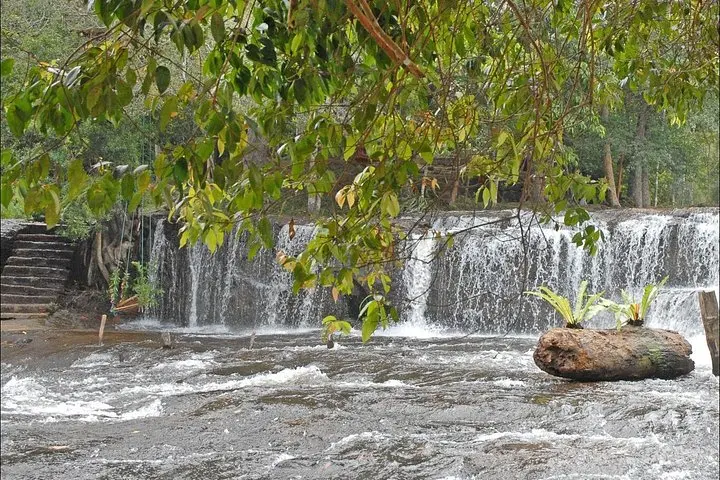
Phnom Kulen is the cradle of the Khmer Empire: in AD 802, Jayavarman II declared sovereignty here. Geologically it’s a sandstone massif whose streams have carved shallow channels across bedrock, perfect for the intricate Shiva Linga carvings at Kbal Spean. The River of a Thousand Lingas threads the forest, the carvings only visible in low water when the river dares you to step across and trace ancient symbols beneath your feet.
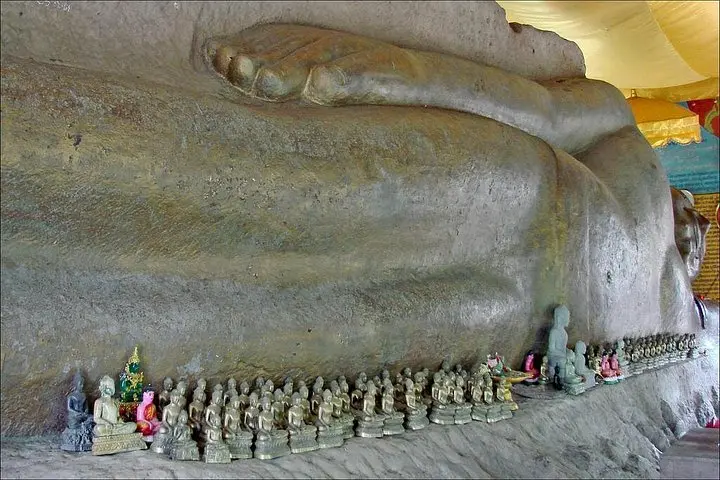
Culturally, you'll encounter small pagodas and a reclining Buddha that anchors local pilgrimage practices; vendors sell simple rice-and-fish lunches near the park entrance.
Practically: expect a half-day of mixed activity — short drives, paved and dirt walking, and a steeper 20–30 minute climb to the river and pagoda. Wear grippy shoes for wet rock, carry water and sunscreen, and budget time for slow photography at the falls. Guides typically explain the religious iconography and can arrange pickup from Siem Reap; park entry fees apply on-site. Humidity and sun matter here — start early to avoid crowds and to see the carvings with clearer water levels.
The typical itinerary runs about six hours, including driving from Siem Reap, time at Kulen Waterfall, and the walk to Kbal Spean and the pagoda.
Yes—many visitors take a dip in designated pools, but check conditions and follow guide instructions for safety and respect for the site.
Join-in tours sometimes include the Kulen entrance ticket; private bookings may require payment on arrival—confirm with your operator before travel.
Families and older adults can enjoy most of the sites, but expect some uneven paths and short climbs; those with limited mobility should plan accordingly.
Asia Voyage Travel operates guided outdoor trips and adventures with an emphasis on safety, stewardship, and memorable experiences.
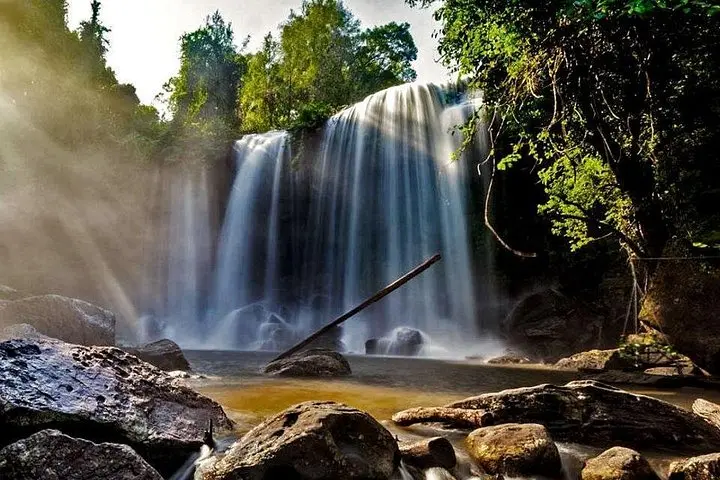
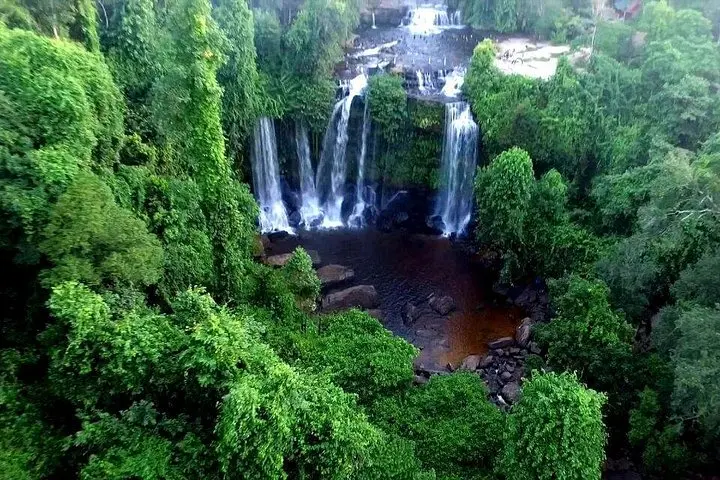
You step out of the minivan where the road thins and the forest sharpens: heat presses on the leaves, cicadas keep time, and the scent of damp limestone drifts from uphill. The first stretch is a drive through low jungle that rises quickly into the plateau of Phnom Kulen — a place Cambodians revere; the road curves, then opens onto spray and stone at the Kulen Waterfall.
You step out of the minivan where the road thins and the forest sharpens: heat presses on the leaves, cicadas keep time, and the scent of damp limestone drifts from uphill. The first stretch is a drive through low jungle that rises quickly into the plateau of Phnom Kulen — a place Cambodians revere; the road curves, then opens onto spray and stone at the Kulen Waterfall.
Phnom Kulen is the cradle of the Khmer Empire: in AD 802, Jayavarman II declared sovereignty here. Geologically it’s a sandstone massif whose streams have carved shallow channels across bedrock, perfect for the intricate Shiva Linga carvings at Kbal Spean. The River of a Thousand Lingas threads the forest, the carvings only visible in low water when the river dares you to step across and trace ancient symbols beneath your feet.
Culturally, you'll encounter small pagodas and a reclining Buddha that anchors local pilgrimage practices; vendors sell simple rice-and-fish lunches near the park entrance.
Practically: expect a half-day of mixed activity — short drives, paved and dirt walking, and a steeper 20–30 minute climb to the river and pagoda. Wear grippy shoes for wet rock, carry water and sunscreen, and budget time for slow photography at the falls. Guides typically explain the religious iconography and can arrange pickup from Siem Reap; park entry fees apply on-site. Humidity and sun matter here — start early to avoid crowds and to see the carvings with clearer water levels.