THE ADVENTURE COLLECTIVE® · Independent discovery and booking for outdoor travel

A four-day, three-night camping and trekking loop from Siem Reap that pairs river-carved Angkorian carvings at Phnom Kulen with the remote pyramid of Koh Ker. Expect jungle trails, sandstone slabs, and nights under open sky.
A four-day, three-night camping and trekking loop from Siem Reap that pairs river-carved Angkorian carvings at Phnom Kulen with the remote pyramid of Koh Ker. Expect jungle trails, sandstone slabs, and nights under open sky.
Dawn on the plains north of Siem Reap smells of wet earth and burning wood as your minivan climbs toward Phnom Kulen. The trail opens into bamboo corridors, the air thick with insect song and the staccato drip of leaves. You push uphill over rocky steps for the first 2 km, then drop into a riverbed where shallow, carved lingas run like a mapped prayer beneath clear water.
Verified experiences and guided adventures in the surrounding area.
Operated by Passion Indochina Travel · Siem Reap, Siem Reap Province
Dawn on the plains north of Siem Reap smells of wet earth and burning wood as your minivan climbs toward Phnom Kulen. The trail opens into bamboo corridors, the air thick with insect song and the staccato drip of leaves. You push uphill over rocky steps for the first 2 km, then drop into a riverbed where shallow, carved lingas run like a mapped prayer beneath clear water.
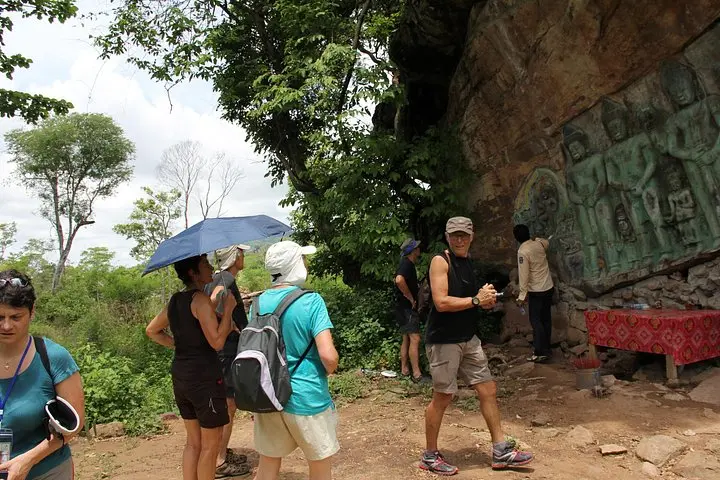
This route threads two archaeological stories: Phnom Kulen, sacred to the Khmer heartland and famous for its River of a Thousand Lingas and reclining Buddha, and Koh Ker, the brief 10th-century capital with a 36m stepped pyramid (Prasat Thom). Geology here is sandstone plateaus and quarry faces—ancient masons cut blocks from the same strata that now form eroded cliffs and natural pools. Cultural touchpoints are immediate: orange-robed monks at small pagodas, villagers who host campsite dinners, and temple ruins that reveal a linear rather than concentric plan distinct from Angkor.
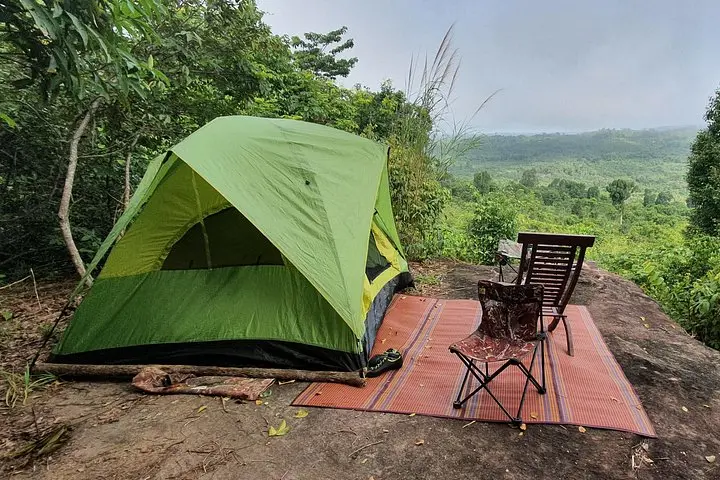
Expect mixed terrain—rocky ascents, slick stream crossings, muddy jungle tracks—and daily hikes of 3–6 km with cumulative elevation gains up to ~350–400 m on steeper sections. The trek is non-technical but physical; pack a sturdy pair of boots, rain protection, insect repellent, and a reliable headlamp for camp. Hydration and timing matter: start hikes early to avoid midday heat and monsoon downpours. Respect local customs at shrines, leave no trace at campsites, and listen to your guide; they navigate both trail and local logistics. This four-day loop delivers rainforest solitude, river-carved history, and a tangible sense of Khmer origins beyond the Angkor crowds.
Hikes run from moderate to brisk: expect several uphill stretches (short steep sections) and 3–5 hours of walking on days with mixed terrain; no technical climbing required.
Yes—this itinerary includes two nights camping with local support; basic sleeping mats and tents are typically provided, but check with the operator if you prefer your own sleeping bag.
The tour notes admission is included for key sites; confirm with the operator whether national park or temple ticket surcharges apply at time of booking.
Meals listed (breakfast, lunch, dinner) are provided; bottled water is supplied during transfers and at camps, but carry your refillable bottle for hikes.
Passion Indochina Travel operates guided outdoor trips and adventures with an emphasis on safety, stewardship, and memorable experiences.
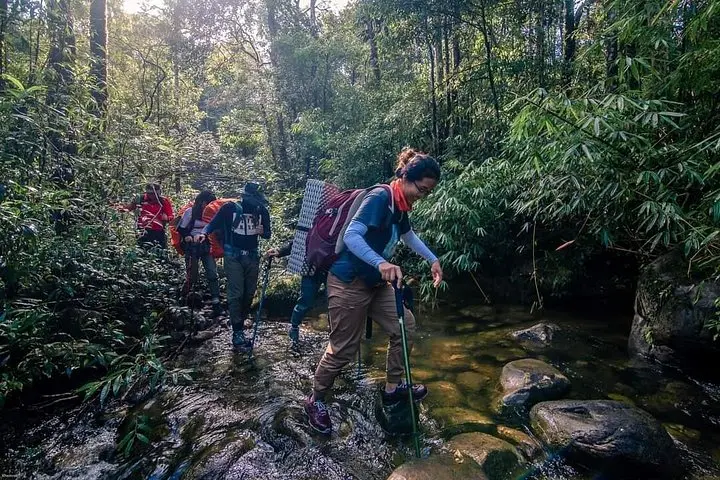
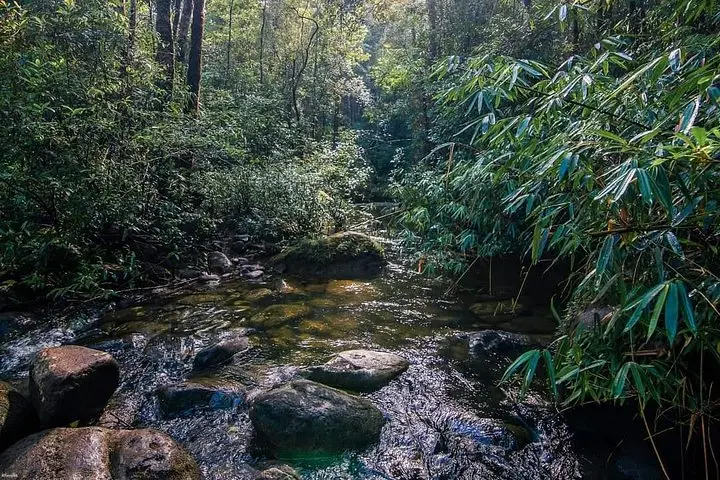
Dawn on the plains north of Siem Reap smells of wet earth and burning wood as your minivan climbs toward Phnom Kulen. The trail opens into bamboo corridors, the air thick with insect song and the staccato drip of leaves. You push uphill over rocky steps for the first 2 km, then drop into a riverbed where shallow, carved lingas run like a mapped prayer beneath clear water.
Dawn on the plains north of Siem Reap smells of wet earth and burning wood as your minivan climbs toward Phnom Kulen. The trail opens into bamboo corridors, the air thick with insect song and the staccato drip of leaves. You push uphill over rocky steps for the first 2 km, then drop into a riverbed where shallow, carved lingas run like a mapped prayer beneath clear water.
This route threads two archaeological stories: Phnom Kulen, sacred to the Khmer heartland and famous for its River of a Thousand Lingas and reclining Buddha, and Koh Ker, the brief 10th-century capital with a 36m stepped pyramid (Prasat Thom). Geology here is sandstone plateaus and quarry faces—ancient masons cut blocks from the same strata that now form eroded cliffs and natural pools. Cultural touchpoints are immediate: orange-robed monks at small pagodas, villagers who host campsite dinners, and temple ruins that reveal a linear rather than concentric plan distinct from Angkor.
Expect mixed terrain—rocky ascents, slick stream crossings, muddy jungle tracks—and daily hikes of 3–6 km with cumulative elevation gains up to ~350–400 m on steeper sections. The trek is non-technical but physical; pack a sturdy pair of boots, rain protection, insect repellent, and a reliable headlamp for camp. Hydration and timing matter: start hikes early to avoid midday heat and monsoon downpours. Respect local customs at shrines, leave no trace at campsites, and listen to your guide; they navigate both trail and local logistics. This four-day loop delivers rainforest solitude, river-carved history, and a tangible sense of Khmer origins beyond the Angkor crowds.