THE ADVENTURE COLLECTIVE® · Independent discovery and booking for outdoor travel

Head north from Siem Reap to Phnom Kulen for a private full-day tour that pairs riverbed carvings—known as the 1000 Lingas—with waterfalls and a sacred hilltop shrine. This guide outlines what to expect on trails, history you’ll encounter, and practical tips for the day.
Head north from Siem Reap to Phnom Kulen for a private full-day tour that pairs riverbed carvings—known as the 1000 Lingas—with waterfalls and a sacred hilltop shrine. This guide outlines what to expect on trails, history you’ll encounter, and practical tips for the day.
Dawn breaks over low hills and the road north from Siem Reap climbs into a cooler, greener zone—Phnom Kulen. Trees crowd the narrow road, and the air carries humidity and the distant rush of waterfalls; the mountain feels like a living ridge that dares you to climb higher.
Verified experiences and guided adventures in the surrounding area.
Operated by Bayon Tabi Tour · Phnom Kulen, Siem Reap Province
Dawn breaks over low hills and the road north from Siem Reap climbs into a cooler, greener zone—Phnom Kulen. Trees crowd the narrow road, and the air carries humidity and the distant rush of waterfalls; the mountain feels like a living ridge that dares you to climb higher.
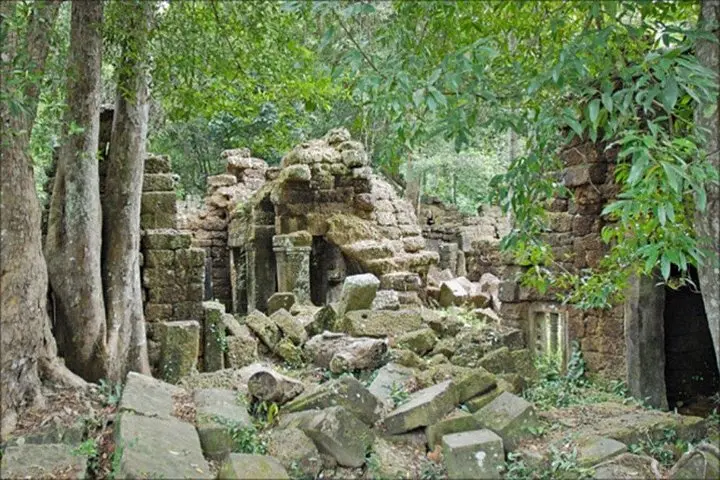
Phnom Kulen is more than a scenic stop: it’s the cradle of early Angkor. In the 9th century King Jayavarman II proclaimed the Khmer state here, and the mountain’s rivers were sanctified with thousands of carved lingas—phallic emblems for Shiva—cut directly into the sandstone riverbed to bless downstream irrigation. Geologically, Kulen is an uplifted sandstone plateau with shallow streams that expose smooth rock and the shallow basins where the lingas sit.
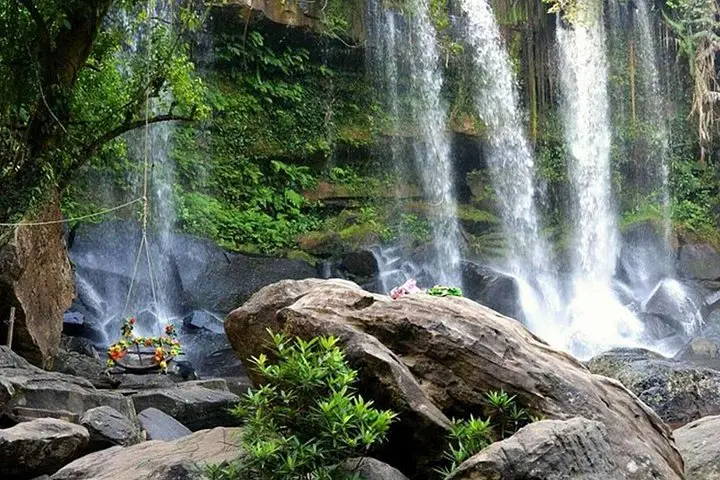
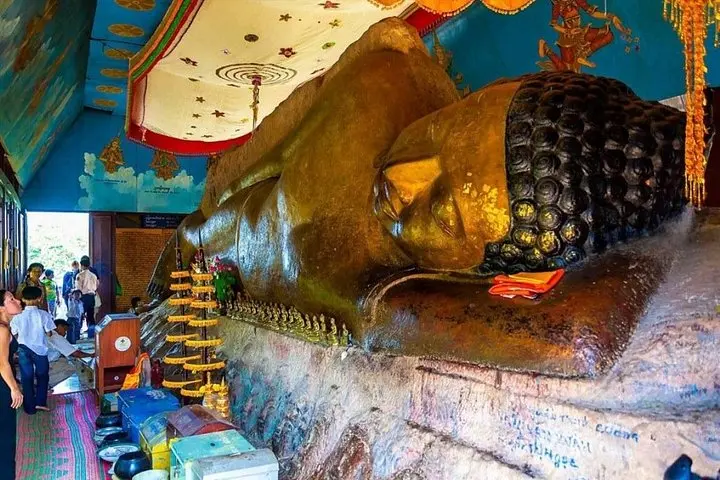
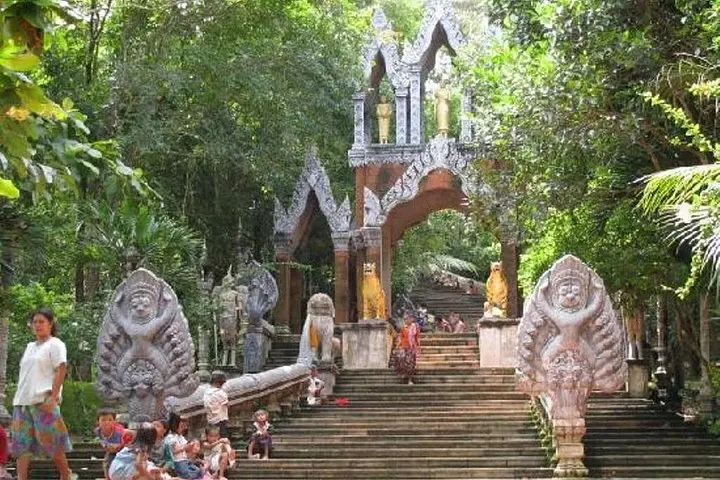
A private 8-hour tour typically combines a short drive, easy walks to viewpoints, a visit to the River (Valley) of the 1000 Lingas, and time at the waterfall and hilltop shrine. Trails are short but uneven—rocky riverbeds, damp forest tracks and some stepped paths up to the summit. Expect humid conditions, steep but brief stair sections, and the chance to see macaques and kingfishers along the water.
Practical guide: bring sturdy shoes with grip, a refillable water bottle, sun protection and a light rain layer in monsoon months. Allow 1–1.5 hours each way from Siem Reap depending on road conditions; park entrance and conservation fees are normally paid on-site. Respect sacred sites—no loud behavior or climbing on carvings—and plan your visit for morning to avoid the heat and crowds.
Most private tours include transportation and guide services but not the national park entrance fee or local conservation charges, which are usually paid on arrival.
Expect roughly 1–1.5 hours each way depending on road conditions and traffic; the whole itinerary runs about eight hours with stops.
No—the carved riverbed is reached via short, uneven walks over sandstone and shallow streams; footwear with good traction is recommended.
Yes—the tour is broadly accessible, though anyone with mobility concerns should note there are some stepped paths and slippery sections near water.
Bayon Tabi Tour operates guided outdoor trips and adventures with an emphasis on safety, stewardship, and memorable experiences.
Dawn breaks over low hills and the road north from Siem Reap climbs into a cooler, greener zone—Phnom Kulen. Trees crowd the narrow road, and the air carries humidity and the distant rush of waterfalls; the mountain feels like a living ridge that dares you to climb higher.
Dawn breaks over low hills and the road north from Siem Reap climbs into a cooler, greener zone—Phnom Kulen. Trees crowd the narrow road, and the air carries humidity and the distant rush of waterfalls; the mountain feels like a living ridge that dares you to climb higher.
Phnom Kulen is more than a scenic stop: it’s the cradle of early Angkor. In the 9th century King Jayavarman II proclaimed the Khmer state here, and the mountain’s rivers were sanctified with thousands of carved lingas—phallic emblems for Shiva—cut directly into the sandstone riverbed to bless downstream irrigation. Geologically, Kulen is an uplifted sandstone plateau with shallow streams that expose smooth rock and the shallow basins where the lingas sit.
A private 8-hour tour typically combines a short drive, easy walks to viewpoints, a visit to the River (Valley) of the 1000 Lingas, and time at the waterfall and hilltop shrine. Trails are short but uneven—rocky riverbeds, damp forest tracks and some stepped paths up to the summit. Expect humid conditions, steep but brief stair sections, and the chance to see macaques and kingfishers along the water.
Practical guide: bring sturdy shoes with grip, a refillable water bottle, sun protection and a light rain layer in monsoon months. Allow 1–1.5 hours each way from Siem Reap depending on road conditions; park entrance and conservation fees are normally paid on-site. Respect sacred sites—no loud behavior or climbing on carvings—and plan your visit for morning to avoid the heat and crowds.