THE ADVENTURE COLLECTIVE® · Independent discovery and booking for outdoor travel

Climb Phnom Kulen for carved riverbed lingas, a natural reclining Buddha and a cool waterfall swim. This full-day uphill trek from Siem Reap mixes jungle hiking with cultural archaeology and seasonal swimming.
Climb Phnom Kulen for carved riverbed lingas, a natural reclining Buddha and a cool waterfall swim. This full-day uphill trek from Siem Reap mixes jungle hiking with cultural archaeology and seasonal swimming.
You climb through humid lowland forest until the canopy thins and the air opens onto ridgelines—sunlight slashes through Dipterocarp branches and the river below seems to dare you toward the carved bedrock. The path pushes upward, sometimes slick with leaf mulch, sometimes cut into red laterite, and each bend reveals a different face of Phnom Kulen: sacred river carvings, jungle ruins, and a waterfall that invites a cooling plunge.
Verified experiences and guided adventures in the surrounding area.
Operated by Angkor Friendly tour · Phnom Kulen, Siem Reap Province
You climb through humid lowland forest until the canopy thins and the air opens onto ridgelines—sunlight slashes through Dipterocarp branches and the river below seems to dare you toward the carved bedrock. The path pushes upward, sometimes slick with leaf mulch, sometimes cut into red laterite, and each bend reveals a different face of Phnom Kulen: sacred river carvings, jungle ruins, and a waterfall that invites a cooling plunge.
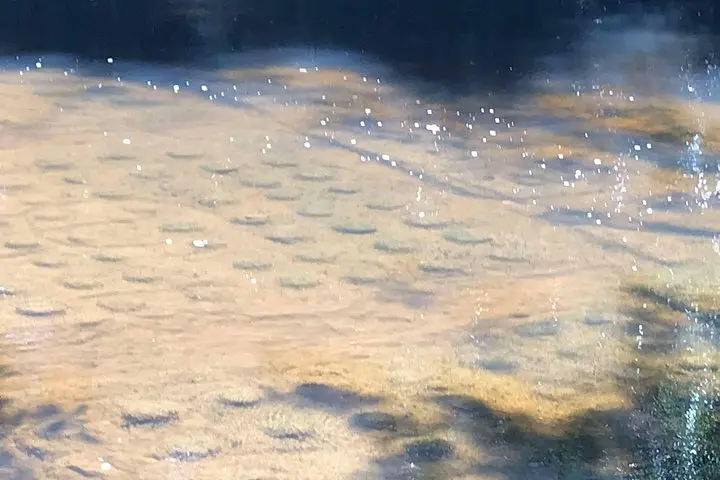
Phnom Kulen has long been a spiritual high point for Khmer kings. In the 9th century the mountain was part of the early Angkor polity; along its river bed artisans carved thousands of lingas—phallic symbols of Shiva—directly into the sandstone to sanctify the water. Later layers of carving and a natural reclining Buddha hewn from a boulder add religious texture to the site. Geologically, the mountain is an uplift of sandstone and laterite that channels seasonal flows into stepped cascades and clear pools.
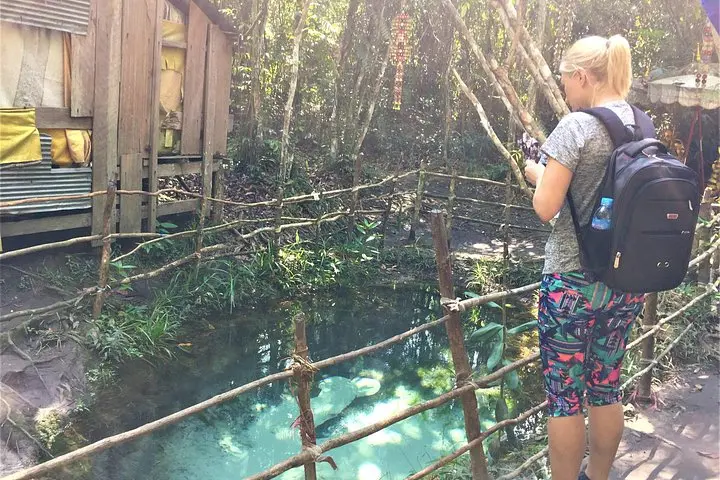
Expect roughly 2–3 km of uphill walking from the parking area to the main sites with an elevation gain of about 200–300 m over uneven jungle trails, boardwalks and river crossings. You’ll visit the thousand lingas on the riverbed, the carved reclining Buddha, forested ruin galleries and a cascade for a swim. Guides typically include bottled water, towels and vehicle pickup from Siem Reap; bring a copy of passports for children and modest clothing for temple areas.
Practical advice: start early to avoid heat, use sturdy shoes with grip, apply insect repellent, and carry enough water for an 8-hour day. Respect carvings and stay on marked paths—the park is both sacred and ecologically sensitive.
The full excursion is about 8 hours door-to-door with roughly 2–3 km of uphill walking to the main sites and about 200–300 m of elevation gain; it’s moderate but involves uneven ground and some steep sections.
Yes—there are designated pools for swimming. Always check with your guide about currents and depth before entering and avoid swimming near the top edge of cascades.
Phnom Kulen is managed as a protected park with local access arrangements; your tour usually covers site access and transport, but bring some local currency for small fees or donations if required.
Children over 12 can typically join without a pass according to operator notes; younger children may be allowed but should be closely supervised on slippery trails and near water.
Angkor Friendly tour operates guided outdoor trips and adventures with an emphasis on safety, stewardship, and memorable experiences.
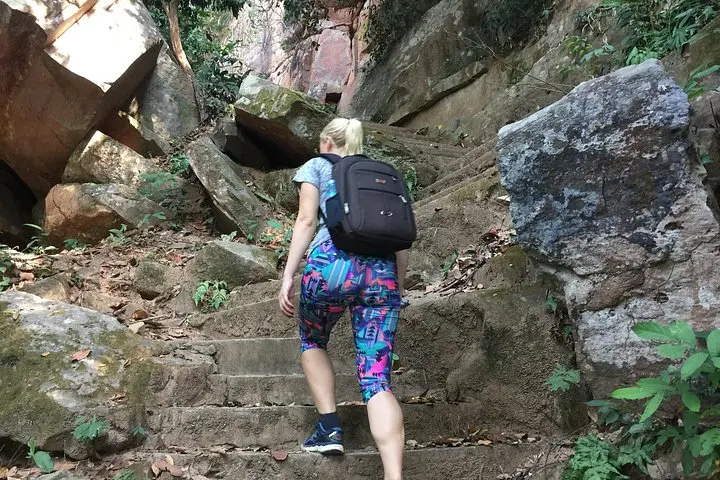
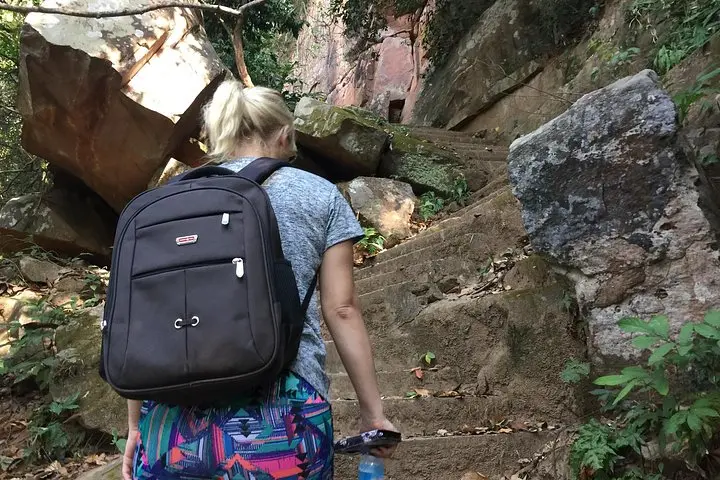
You climb through humid lowland forest until the canopy thins and the air opens onto ridgelines—sunlight slashes through Dipterocarp branches and the river below seems to dare you toward the carved bedrock. The path pushes upward, sometimes slick with leaf mulch, sometimes cut into red laterite, and each bend reveals a different face of Phnom Kulen: sacred river carvings, jungle ruins, and a waterfall that invites a cooling plunge.
You climb through humid lowland forest until the canopy thins and the air opens onto ridgelines—sunlight slashes through Dipterocarp branches and the river below seems to dare you toward the carved bedrock. The path pushes upward, sometimes slick with leaf mulch, sometimes cut into red laterite, and each bend reveals a different face of Phnom Kulen: sacred river carvings, jungle ruins, and a waterfall that invites a cooling plunge.
Phnom Kulen has long been a spiritual high point for Khmer kings. In the 9th century the mountain was part of the early Angkor polity; along its river bed artisans carved thousands of lingas—phallic symbols of Shiva—directly into the sandstone to sanctify the water. Later layers of carving and a natural reclining Buddha hewn from a boulder add religious texture to the site. Geologically, the mountain is an uplift of sandstone and laterite that channels seasonal flows into stepped cascades and clear pools.
Expect roughly 2–3 km of uphill walking from the parking area to the main sites with an elevation gain of about 200–300 m over uneven jungle trails, boardwalks and river crossings. You’ll visit the thousand lingas on the riverbed, the carved reclining Buddha, forested ruin galleries and a cascade for a swim. Guides typically include bottled water, towels and vehicle pickup from Siem Reap; bring a copy of passports for children and modest clothing for temple areas.
Practical advice: start early to avoid heat, use sturdy shoes with grip, apply insect repellent, and carry enough water for an 8-hour day. Respect carvings and stay on marked paths—the park is both sacred and ecologically sensitive.