THE ADVENTURE COLLECTIVE® · Independent discovery and booking for outdoor travel

In a single day from Siem Reap you can visit Phnom Kulen’s sacred plateau: swim beneath a powerful waterfall, walk the River of 1000 Lingas with its ancient carvings, and climb to a sandstone reclining Buddha. This private tour pairs natural highlights with cultural context.
In a single day from Siem Reap you can visit Phnom Kulen’s sacred plateau: swim beneath a powerful waterfall, walk the River of 1000 Lingas with its ancient carvings, and climb to a sandstone reclining Buddha. This private tour pairs natural highlights with cultural context.
Steam rises from the jungle as the road climbs away from Siem Reap, and by midmorning the air tastes of river rock and damp leaf mold. At Phnom Kulen the landscape flattens into a low, forested plateau; you step out of the vehicle and hear water before you see it — the waterfall tumbling over smooth sandstone into a broad, shallow pool that dares you to cool down.
Verified experiences and guided adventures in the surrounding area.
Operated by Green Era Travel · Siem Reap, Siem Reap Province
Steam rises from the jungle as the road climbs away from Siem Reap, and by midmorning the air tastes of river rock and damp leaf mold. At Phnom Kulen the landscape flattens into a low, forested plateau; you step out of the vehicle and hear water before you see it — the waterfall tumbling over smooth sandstone into a broad, shallow pool that dares you to cool down.
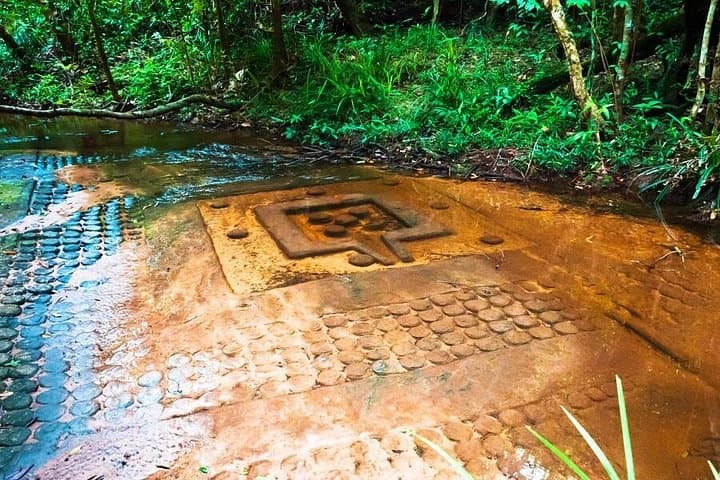
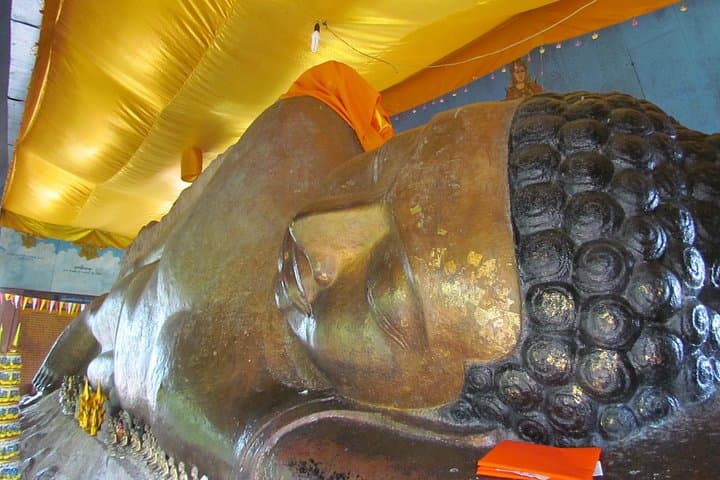
This day tour combines natural drama with deep cultural layers. Phnom Kulen is Cambodia’s most sacred mountain: a centre of Khmer spirituality where a giant reclining Buddha was carved into sandstone and where the River of 1000 Lingas bears hundreds of shallow carvings — phallic symbols and Hindu figures cut directly into the riverbed to sanctify the water. Geologically, the plateau is an erosion-resistant sandstone outcrop rising roughly 400–500 m above the plain, feeding clearstreams and short, steep cascades.
Expect brief hikes on uneven stone and forest trails, a climb of steps to the hilltop Buddha, and a short walk along the carved riverbed at Kbal Spean. Guides explain iconography and local pilgrimage practices while pointing out native hardwoods and limestone outcrops.
Practical notes: the trip runs 5–7 hours with about 2 hours’ drive each way; wear sturdy sandals or light hiking shoes, bring swimwear and quick-dry layers, and cover shoulders and knees at sacred sites. Aim for an early start to avoid the hottest midday sun and bring insect repellent and at least 1–2 liters of water. There’s a simple local lunch stop on the route; carry cash for meals and small purchases.
Expect about a 1.5–2 hour drive each way depending on traffic; roads are paved for much of the route but can be slower through villages.
Yes — the main pool is suitable for swimming but check for seasonal depth and follow your guide’s safety advice.
This tour’s description notes that admission is not included; bring local currency for any park or site entrance fees.
Children aged 3 and up can join, but uneven terrain and steps mean close supervision is required; it’s not recommended for travelers with serious mobility or heart issues.
Green Era Travel operates guided outdoor trips and adventures with an emphasis on safety, stewardship, and memorable experiences.
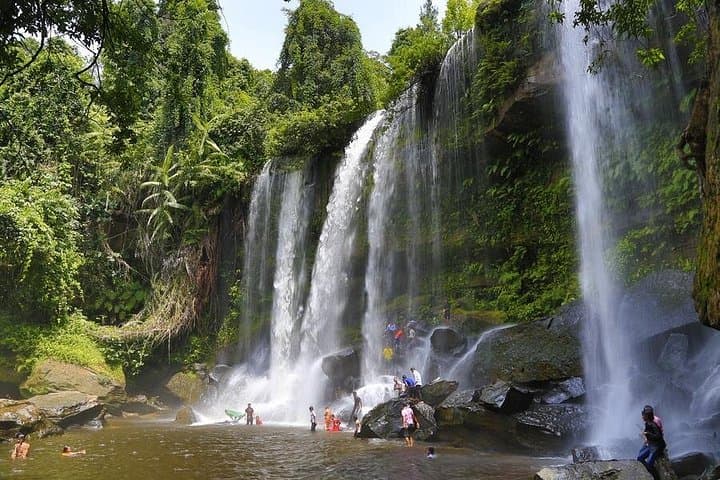
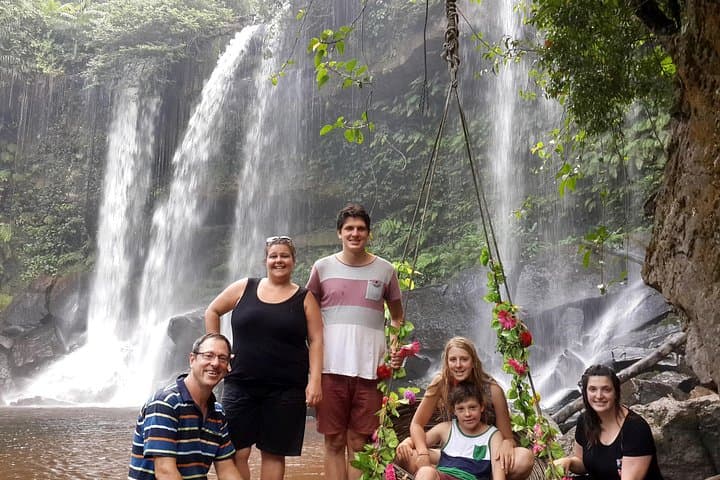
Steam rises from the jungle as the road climbs away from Siem Reap, and by midmorning the air tastes of river rock and damp leaf mold. At Phnom Kulen the landscape flattens into a low, forested plateau; you step out of the vehicle and hear water before you see it — the waterfall tumbling over smooth sandstone into a broad, shallow pool that dares you to cool down.
Steam rises from the jungle as the road climbs away from Siem Reap, and by midmorning the air tastes of river rock and damp leaf mold. At Phnom Kulen the landscape flattens into a low, forested plateau; you step out of the vehicle and hear water before you see it — the waterfall tumbling over smooth sandstone into a broad, shallow pool that dares you to cool down.
This day tour combines natural drama with deep cultural layers. Phnom Kulen is Cambodia’s most sacred mountain: a centre of Khmer spirituality where a giant reclining Buddha was carved into sandstone and where the River of 1000 Lingas bears hundreds of shallow carvings — phallic symbols and Hindu figures cut directly into the riverbed to sanctify the water. Geologically, the plateau is an erosion-resistant sandstone outcrop rising roughly 400–500 m above the plain, feeding clearstreams and short, steep cascades.
Expect brief hikes on uneven stone and forest trails, a climb of steps to the hilltop Buddha, and a short walk along the carved riverbed at Kbal Spean. Guides explain iconography and local pilgrimage practices while pointing out native hardwoods and limestone outcrops.
Practical notes: the trip runs 5–7 hours with about 2 hours’ drive each way; wear sturdy sandals or light hiking shoes, bring swimwear and quick-dry layers, and cover shoulders and knees at sacred sites. Aim for an early start to avoid the hottest midday sun and bring insect repellent and at least 1–2 liters of water. There’s a simple local lunch stop on the route; carry cash for meals and small purchases.