THE ADVENTURE COLLECTIVE® · Independent discovery and booking for outdoor travel

Ride north from Siem Reap into the buzz of village life, then hike through jungle to a powerful waterfall, carved Shiva lingams, and a reclining Buddha on Phnom Kulen. This full-day tour mixes light trekking with Khmer history and ruin photography.
Ride north from Siem Reap into the buzz of village life, then hike through jungle to a powerful waterfall, carved Shiva lingams, and a reclining Buddha on Phnom Kulen. This full-day tour mixes light trekking with Khmer history and ruin photography.
Morning light splits through rice-field haze as a small Honda pushes north from Siem Reap. The road tightens into village lanes, and the engine’s rumble falls away beneath insect calls and the distant cataract of water—Phnom Kulen’s falls daring you to come closer.
Verified experiences and guided adventures in the surrounding area.
Operated by Siem Reap Biking Tour · Siem Reap, Siem Reap Province
Morning light splits through rice-field haze as a small Honda pushes north from Siem Reap. The road tightens into village lanes, and the engine’s rumble falls away beneath insect calls and the distant cataract of water—Phnom Kulen’s falls daring you to come closer.
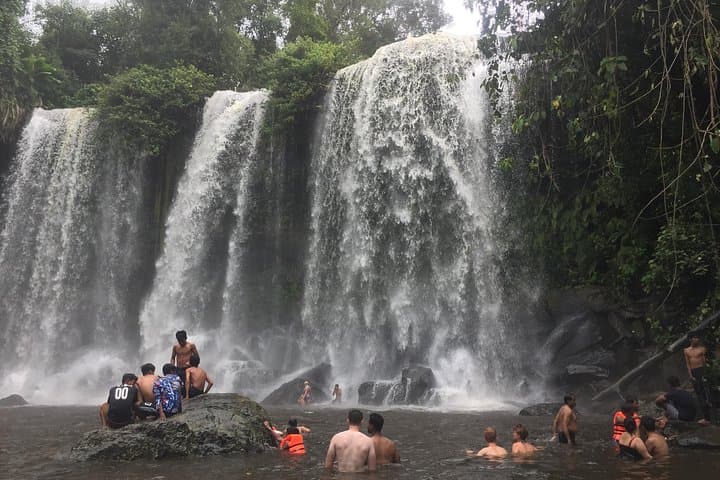
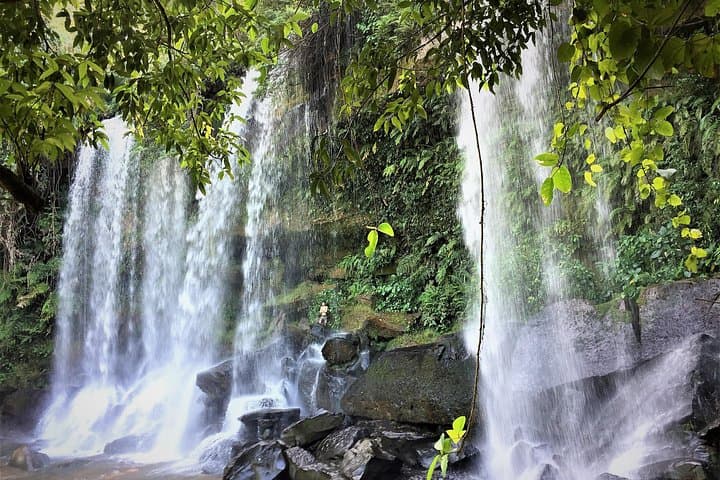
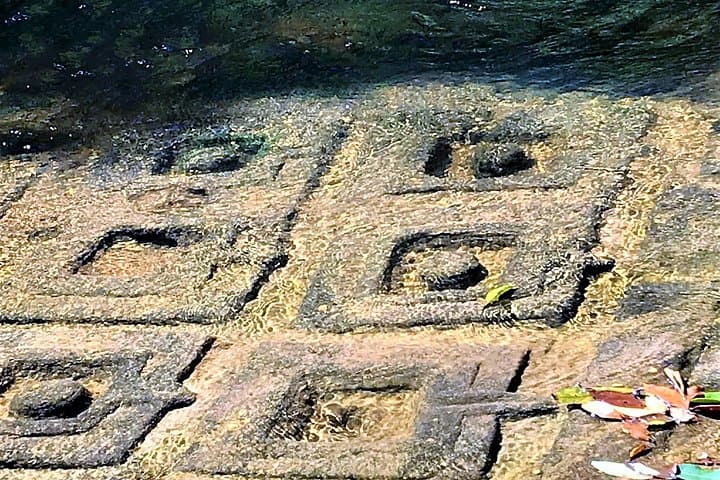
This mountain was more than a landscape for the early Khmer: it’s a cradle of empire. Kings performed rites here, and in the riverbed below the falls craftsmen once carved hundreds of lingams — offerings to Shiva that remain as low bas-reliefs in the sandstone. The geology is straightforward: an elevated sandstone plateau feeding seasonal streams that cut short, powerful falls and form a sacred pool where the lingams gather. Nearby Beng Mealea shows the other face of the region: temples surrendering to fig roots and vines, roofs collapsing into photogenic ruin.
On the ground you’ll hike roughly 5 km along uneven, often rocky jungle trails with short climbs and muddy steps in wet months. Expect humid heat, sudden shade under large foliage, and wildlife crossings—macaques are common around the water. The day is cultural and tactile: temple stones to touch, a reclining Buddha to view, and paddies to cross on the return.
Practical guidance: start early to avoid midday heat and maximize quiet at the sacred sites. Wear closed-toe shoes with grip, cover shoulders at religious spots, and bring 1–2 liters of water plus insect repellent and sun protection. Motorbike transfers make the route possible in a day, but keep passport copies for child admission rules, carry small local cash for park fees and tips, and respect signs—these are active conservation zones.
Plan for about 5 km of walking on mixed trail over the mountain with short climbs; the whole tour runs roughly 9 hours including transfers and temple stops.
Yes—drivers supply standard motorcycle helmets for passenger use; bring your own if you prefer a fitted option.
Children can join; under-12s often do not need separate passes but the operator requests a passport copy—bring ID and confirm age rules at booking.
Yes—temples and sacred pools request modest dress: shoulders covered and no revealing clothing is the respectful standard.
Siem Reap Biking Tour operates guided outdoor trips and adventures with an emphasis on safety, stewardship, and memorable experiences.

Morning light splits through rice-field haze as a small Honda pushes north from Siem Reap. The road tightens into village lanes, and the engine’s rumble falls away beneath insect calls and the distant cataract of water—Phnom Kulen’s falls daring you to come closer.
Morning light splits through rice-field haze as a small Honda pushes north from Siem Reap. The road tightens into village lanes, and the engine’s rumble falls away beneath insect calls and the distant cataract of water—Phnom Kulen’s falls daring you to come closer.
This mountain was more than a landscape for the early Khmer: it’s a cradle of empire. Kings performed rites here, and in the riverbed below the falls craftsmen once carved hundreds of lingams — offerings to Shiva that remain as low bas-reliefs in the sandstone. The geology is straightforward: an elevated sandstone plateau feeding seasonal streams that cut short, powerful falls and form a sacred pool where the lingams gather. Nearby Beng Mealea shows the other face of the region: temples surrendering to fig roots and vines, roofs collapsing into photogenic ruin.
On the ground you’ll hike roughly 5 km along uneven, often rocky jungle trails with short climbs and muddy steps in wet months. Expect humid heat, sudden shade under large foliage, and wildlife crossings—macaques are common around the water. The day is cultural and tactile: temple stones to touch, a reclining Buddha to view, and paddies to cross on the return.
Practical guidance: start early to avoid midday heat and maximize quiet at the sacred sites. Wear closed-toe shoes with grip, cover shoulders at religious spots, and bring 1–2 liters of water plus insect repellent and sun protection. Motorbike transfers make the route possible in a day, but keep passport copies for child admission rules, carry small local cash for park fees and tips, and respect signs—these are active conservation zones.