THE ADVENTURE COLLECTIVE® · Independent discovery and booking for outdoor travel

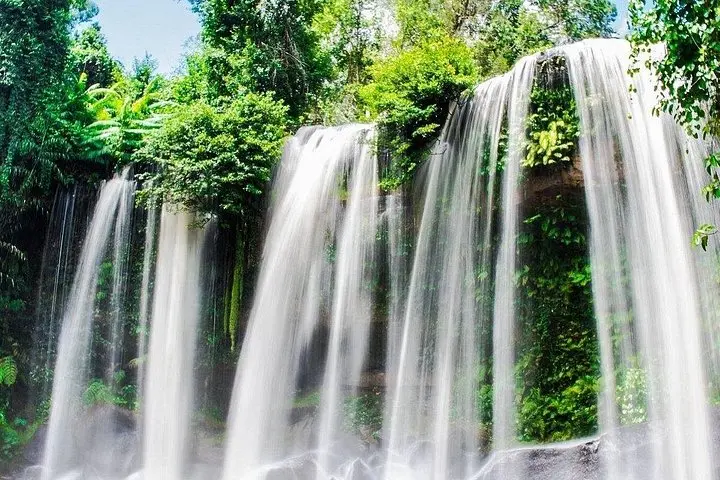
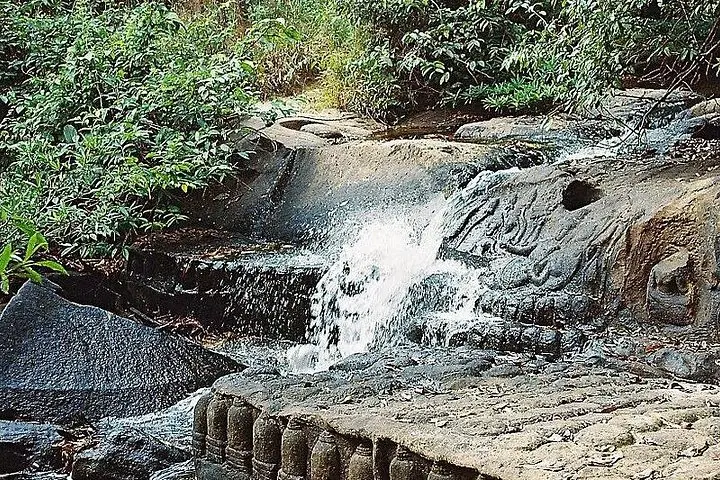
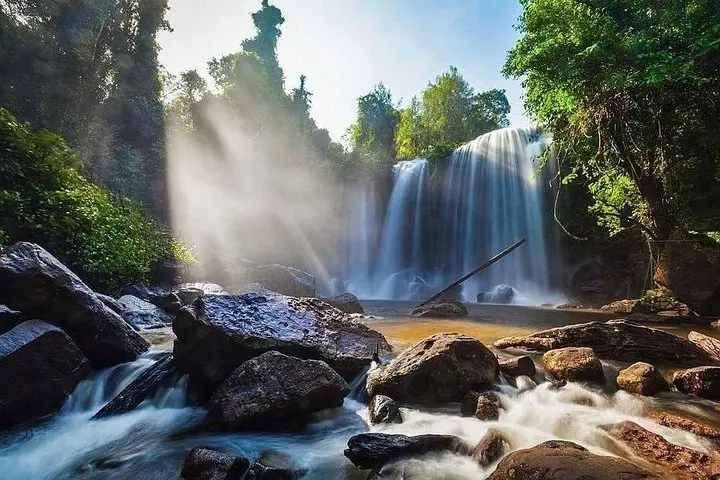
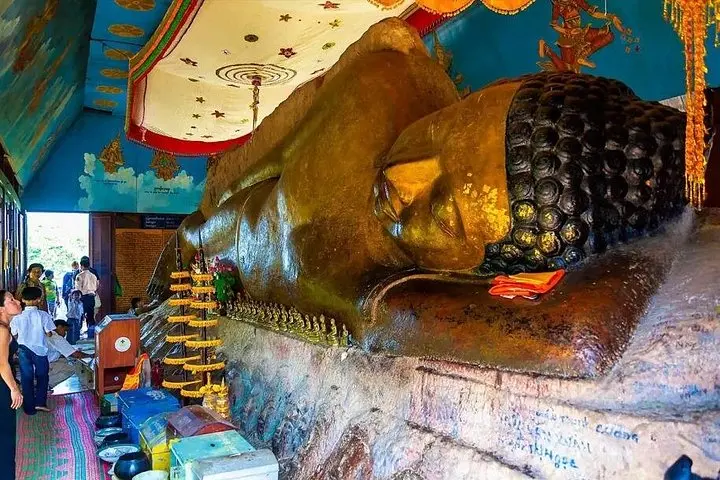
A full-day excursion from Siem Reap that pairs jungle trekking with sacred Angkorian sites — swim beneath Kulen Waterfall, walk the River of a Thousand Lingas, and visit the giant Reclining Buddha. Expect rocky trails, sacred river carvings, and a day of cultural insight.
A full-day excursion from Siem Reap that pairs jungle trekking with sacred Angkorian sites — swim beneath Kulen Waterfall, walk the River of a Thousand Lingas, and visit the giant Reclining Buddha. Expect rocky trails, sacred river carvings, and a day of cultural insight.
You start before dawn in Siem Reap, the road chewing north as rice paddies blur into a rising green shoulder of jungle. By mid-morning the air smells of wet stone and leaf mold; the trail climbs through dipterocarp and figs, and the sound of falling water draws you like a compass needle.
Verified experiences and guided adventures in the surrounding area.
Operated by Tiger Trail Travel · Phnom Kulen National Park, Siem Reap Province
You start before dawn in Siem Reap, the road chewing north as rice paddies blur into a rising green shoulder of jungle. By mid-morning the air smells of wet stone and leaf mold; the trail climbs through dipterocarp and figs, and the sound of falling water draws you like a compass needle.
Phnom Kulen is more than a waterfall — it’s where Jayavarman II declared Khmer independence and where Angkorian masons shaped devotion into rock. The River of a Thousand Lingas is a shallow sandstone stream carved with bas-relief lingas and naga channels; each incision is a deliberate act of faith and water management. Geologically the ridge is uplifted sandstone and lateritic plateaus, eroded into rocky valleys and plunge pools that invite a cool dip.
Culturally the mountaintop pagoda and the giant Reclining Buddha remain active sites of worship; you’ll observe local offerings and hear monks chant. Small-group tours keep the footprint light and guide interpretation of carvings and ruins.
Practical guidance: expect 3–4 km of walking on uneven, sometimes slippery rock with roughly 150–250 m cumulative ascent to the main viewpoints. Bring sturdy shoes, quick-dry swimwear and a change of clothes, and a reef- and river-safe sunscreen. Hydrate—the operator supplies water and cold towels—but also carry a light daypack for camera and insect repellent. Time your visit for morning or late afternoon to avoid peak heat and crowds. Respect sacred sites: remove shoes when required, keep noise low, and don’t climb on carvings. The waterfall will tempt you; the current is playful in pools but can push hard near the drop—use caution and follow your guide’s directions.
Yes, many visitors swim in the designated pools; follow your guide’s instructions and avoid strong currents near the drop.
Paths include uneven rock and short steep sections—suitable for most people with moderate fitness; allow steadier footing and extra time if you have mobility concerns.
This tour typically includes Phnom Kulen entrance fees and round-trip hotel transfers as well as bottled water and cold towels.
Wear modest clothing for pagodas (cover shoulders and knees) and remove shoes when entering temple platforms; guides will indicate when to do so.
Tiger Trail Travel operates guided outdoor trips and adventures with an emphasis on safety, stewardship, and memorable experiences.
You start before dawn in Siem Reap, the road chewing north as rice paddies blur into a rising green shoulder of jungle. By mid-morning the air smells of wet stone and leaf mold; the trail climbs through dipterocarp and figs, and the sound of falling water draws you like a compass needle.
You start before dawn in Siem Reap, the road chewing north as rice paddies blur into a rising green shoulder of jungle. By mid-morning the air smells of wet stone and leaf mold; the trail climbs through dipterocarp and figs, and the sound of falling water draws you like a compass needle.
Phnom Kulen is more than a waterfall — it’s where Jayavarman II declared Khmer independence and where Angkorian masons shaped devotion into rock. The River of a Thousand Lingas is a shallow sandstone stream carved with bas-relief lingas and naga channels; each incision is a deliberate act of faith and water management. Geologically the ridge is uplifted sandstone and lateritic plateaus, eroded into rocky valleys and plunge pools that invite a cool dip.
Culturally the mountaintop pagoda and the giant Reclining Buddha remain active sites of worship; you’ll observe local offerings and hear monks chant. Small-group tours keep the footprint light and guide interpretation of carvings and ruins.
Practical guidance: expect 3–4 km of walking on uneven, sometimes slippery rock with roughly 150–250 m cumulative ascent to the main viewpoints. Bring sturdy shoes, quick-dry swimwear and a change of clothes, and a reef- and river-safe sunscreen. Hydrate—the operator supplies water and cold towels—but also carry a light daypack for camera and insect repellent. Time your visit for morning or late afternoon to avoid peak heat and crowds. Respect sacred sites: remove shoes when required, keep noise low, and don’t climb on carvings. The waterfall will tempt you; the current is playful in pools but can push hard near the drop—use caution and follow your guide’s directions.