THE ADVENTURE COLLECTIVE® · Independent discovery and booking for outdoor travel

A half-day escape north of Siem Reap, Phnom Kulen combines sacred river carvings, a massive Reclining Buddha and a swim-ready waterfall. This guide outlines what to expect and how to prepare for the trip.
A half-day escape north of Siem Reap, Phnom Kulen combines sacred river carvings, a massive Reclining Buddha and a swim-ready waterfall. This guide outlines what to expect and how to prepare for the trip.
Morning light breaks across a tableland of dark sandstone and tropical forest as the road from Siem Reap climbs toward Phnom Kulen. The air shifts — humidity gives way to cooler gusts that push through tamarind and dipterocarp trees — and the sound of water grows louder until a tiered waterfall tumbles into a wide pool below.
Verified experiences and guided adventures in the surrounding area.
Operated by Green Era Travel · Phnom Kulen, Siem Reap Province
Morning light breaks across a tableland of dark sandstone and tropical forest as the road from Siem Reap climbs toward Phnom Kulen. The air shifts — humidity gives way to cooler gusts that push through tamarind and dipterocarp trees — and the sound of water grows louder until a tiered waterfall tumbles into a wide pool below.
This is Phnom Kulen: Cambodia’s sacred mountain where Jayavarman II is said to have declared the Khmer polity independent in 802 CE. Geologically the plateaus are carved sandstone; centuries of flow have etched hundreds of small lingas (phallic Shiva symbols) into the riverbed, and ancient reliefs of Hindu deities punctuate the rock.
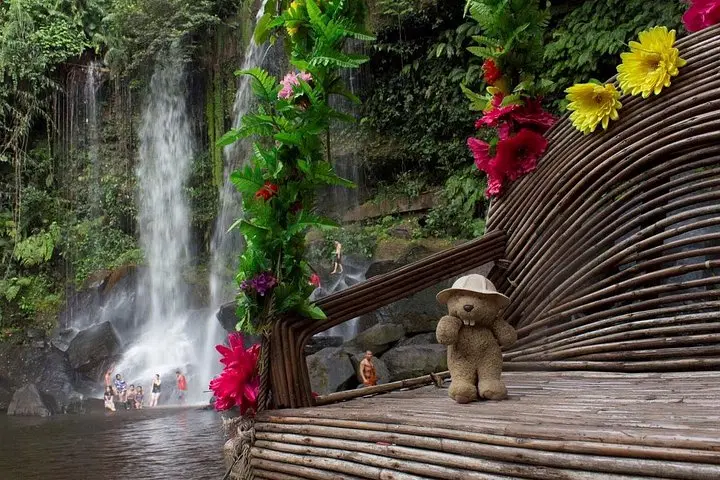
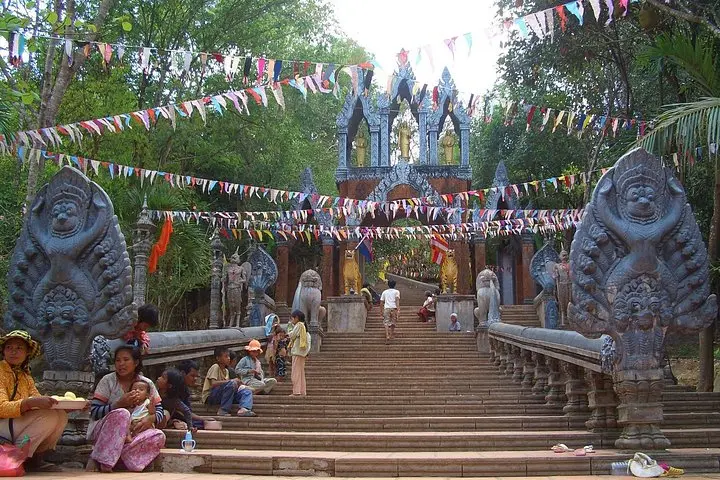
Culturally the site is both pilgrimage and playground: a stone Reclining Buddha perches on a cliff, worshippers leave offerings at shrines, and families come to wade in the waterfall’s plunge pool. Guides link the temple carvings to the shared Hindu-Buddhist history of the Angkor era while pointing out local village life seen on the drive north.
Practicalities: tours run as day trips (roughly 5–7 hours including 2-hour drive each way). Expect uneven stone, short stair climbs to the Reclining Buddha and muddy approaches to pools after rain. Bring reef-style water shoes for river walking, sun protection, and a towel; wear clothing that covers shoulders and knees for temple respect. Carry water, insect repellent, and cash for small offerings or drinks at stalls. Respect restricted areas around carvings; local guides and park rangers enforce rules to protect both culture and fragile rock art. Timing your visit for the cooler morning hours delivers clearer views and quieter sacred sites.
Approximately 1.5–2 hours each way depending on traffic and road conditions; tours typically include hotel pickup and drop-off.
Yes, there are designated swimming areas in the plunge pools, but avoid swimming near carved or fenced historic sections and follow guide instructions after heavy rain.
Yes — the carved lingas are ancient sandstone reliefs; visitors should not climb or walk directly over delicate carvings and must follow posted restrictions.
Children are allowed but must be accompanied by an adult; uneven terrain and water can be hazardous for very young kids.
Green Era Travel operates guided outdoor trips and adventures with an emphasis on safety, stewardship, and memorable experiences.
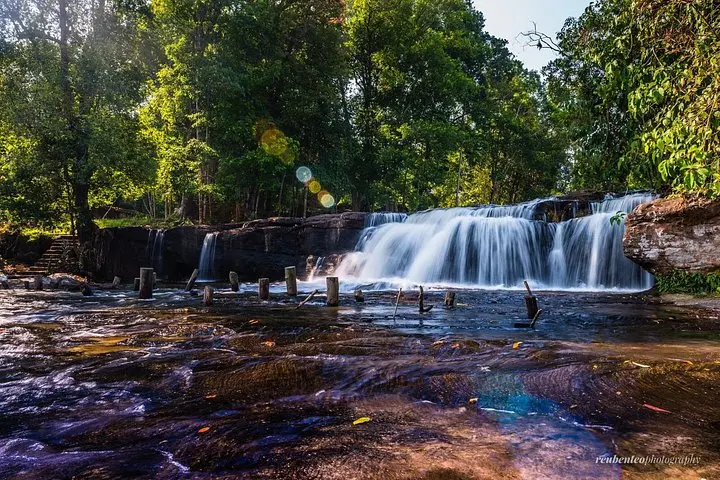
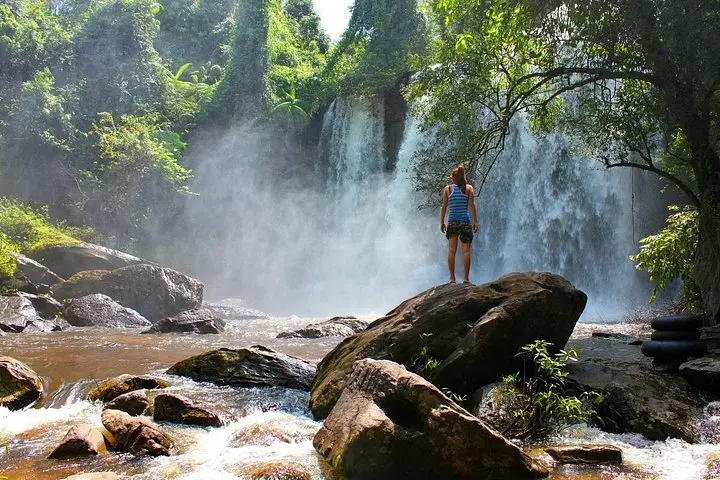
Morning light breaks across a tableland of dark sandstone and tropical forest as the road from Siem Reap climbs toward Phnom Kulen. The air shifts — humidity gives way to cooler gusts that push through tamarind and dipterocarp trees — and the sound of water grows louder until a tiered waterfall tumbles into a wide pool below.
Morning light breaks across a tableland of dark sandstone and tropical forest as the road from Siem Reap climbs toward Phnom Kulen. The air shifts — humidity gives way to cooler gusts that push through tamarind and dipterocarp trees — and the sound of water grows louder until a tiered waterfall tumbles into a wide pool below.
This is Phnom Kulen: Cambodia’s sacred mountain where Jayavarman II is said to have declared the Khmer polity independent in 802 CE. Geologically the plateaus are carved sandstone; centuries of flow have etched hundreds of small lingas (phallic Shiva symbols) into the riverbed, and ancient reliefs of Hindu deities punctuate the rock.
Culturally the site is both pilgrimage and playground: a stone Reclining Buddha perches on a cliff, worshippers leave offerings at shrines, and families come to wade in the waterfall’s plunge pool. Guides link the temple carvings to the shared Hindu-Buddhist history of the Angkor era while pointing out local village life seen on the drive north.
Practicalities: tours run as day trips (roughly 5–7 hours including 2-hour drive each way). Expect uneven stone, short stair climbs to the Reclining Buddha and muddy approaches to pools after rain. Bring reef-style water shoes for river walking, sun protection, and a towel; wear clothing that covers shoulders and knees for temple respect. Carry water, insect repellent, and cash for small offerings or drinks at stalls. Respect restricted areas around carvings; local guides and park rangers enforce rules to protect both culture and fragile rock art. Timing your visit for the cooler morning hours delivers clearer views and quieter sacred sites.