THE ADVENTURE COLLECTIVE® · Independent discovery and booking for outdoor travel

Experience sunrise at Angkor Wat and the floating villages of Tonle Sap on a focused 2-day private transfer from Phnom Penh. This itinerary pairs early-morning temple light with hands-on cultural encounters and scenic overland travel.
Experience sunrise at Angkor Wat and the floating villages of Tonle Sap on a focused 2-day private transfer from Phnom Penh. This itinerary pairs early-morning temple light with hands-on cultural encounters and scenic overland travel.
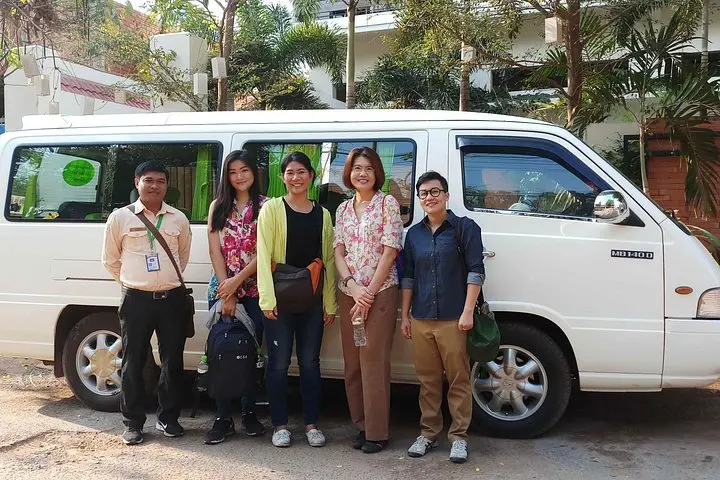
You step into the pre-dawn chill at your Phnom Penh hotel, the city slowly exhaling as the van eases north. The road rolls across Cambodia’s lowland floodplain—flat, green, and threaded by the Mekong—toward Siem Reap, where dawn will meet stone and water.
Verified experiences and guided adventures in the surrounding area.
Operated by Cambodia Taxi Services · Siem Reap, Siem Reap Province
You step into the pre-dawn chill at your Phnom Penh hotel, the city slowly exhaling as the van eases north. The road rolls across Cambodia’s lowland floodplain—flat, green, and threaded by the Mekong—toward Siem Reap, where dawn will meet stone and water.
This two-day route stitches together Khmer history and living river culture. The journey covers roughly 315–330 km (about 5–6 hours by private car) and crosses landscapes shaped by annual monsoon cycles rather than elevation—expect near sea-level terrain and long stretches of rice paddies and roadside markets. Angkor Wat, raised in the 12th century under Suryavarman II, anchors the itinerary; nearby Angkor Thom, Ta Prohm and Bayon tell stories of empire, religion and French-era restoration. Tonle Sap and Kompong Khleang reveal a very different heritage: floating villages, stilt houses that rise and fall with the seasons, and a unique freshwater ecology.
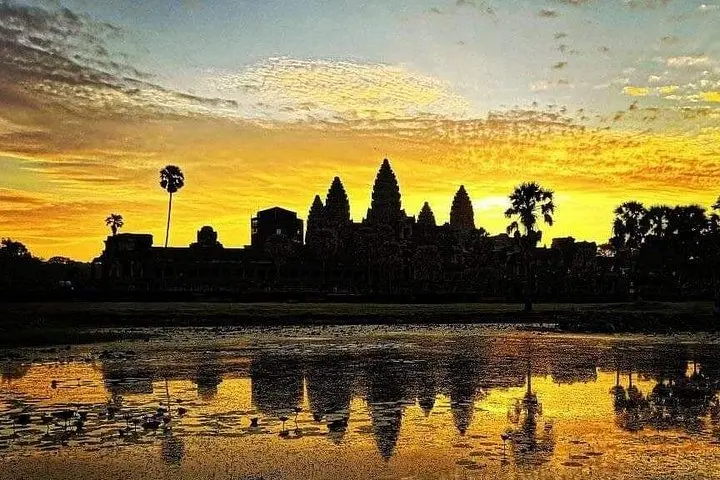
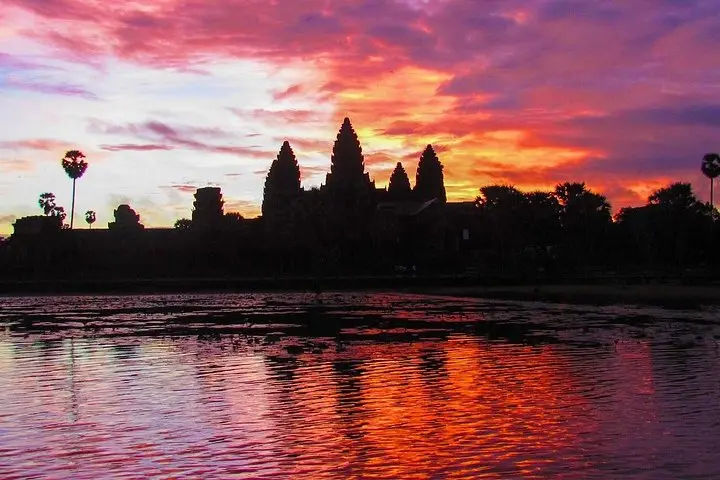
On day one, slow boat visits to Kompong Khleang and stops at Kampong Kdei’s Spean Praptos connect culture and engineering. Day two begins before sunrise at Angkor Wat—arrive early to avoid crowds—and continues by tuk‑tuk or car through the stone city of Angkor Thom and the vine-wrapped galleries of Ta Prohm.
Practical notes: bring modest clothing for temple entry, sun protection and enough water, and expect uneven stone steps and muddy paths after rain. Cash is essential for local vendors and tips. Plan for flexible timing—roads, weather and water levels can change the flow of the day—but the pairing of sunrise temples and Tonle Sap’s waterborne life makes for a compact, high-value introduction to Cambodia’s past and present.
Yes—Angkor Archaeological Park requires a timed entry pass, available at the official ticket center in Siem Reap; buy early for sunrise access.
Yes—water levels vary: the full lake and floating village experience is best during and right after the monsoon (roughly June–November), while dry-season visits expose stilt houses and mudflats.
This private tour typically includes airport, ferry port and hotel pickup/drop-off as listed, but confirm pickup location and time when booking.
Many sites have uneven steps and narrow galleries; some areas are wheelchair-accessible but overall access is limited—check specifics before booking.
Cambodia Taxi Services operates guided outdoor trips and adventures with an emphasis on safety, stewardship, and memorable experiences.

You step into the pre-dawn chill at your Phnom Penh hotel, the city slowly exhaling as the van eases north. The road rolls across Cambodia’s lowland floodplain—flat, green, and threaded by the Mekong—toward Siem Reap, where dawn will meet stone and water.
You step into the pre-dawn chill at your Phnom Penh hotel, the city slowly exhaling as the van eases north. The road rolls across Cambodia’s lowland floodplain—flat, green, and threaded by the Mekong—toward Siem Reap, where dawn will meet stone and water.
This two-day route stitches together Khmer history and living river culture. The journey covers roughly 315–330 km (about 5–6 hours by private car) and crosses landscapes shaped by annual monsoon cycles rather than elevation—expect near sea-level terrain and long stretches of rice paddies and roadside markets. Angkor Wat, raised in the 12th century under Suryavarman II, anchors the itinerary; nearby Angkor Thom, Ta Prohm and Bayon tell stories of empire, religion and French-era restoration. Tonle Sap and Kompong Khleang reveal a very different heritage: floating villages, stilt houses that rise and fall with the seasons, and a unique freshwater ecology.
On day one, slow boat visits to Kompong Khleang and stops at Kampong Kdei’s Spean Praptos connect culture and engineering. Day two begins before sunrise at Angkor Wat—arrive early to avoid crowds—and continues by tuk‑tuk or car through the stone city of Angkor Thom and the vine-wrapped galleries of Ta Prohm.
Practical notes: bring modest clothing for temple entry, sun protection and enough water, and expect uneven stone steps and muddy paths after rain. Cash is essential for local vendors and tips. Plan for flexible timing—roads, weather and water levels can change the flow of the day—but the pairing of sunrise temples and Tonle Sap’s waterborne life makes for a compact, high-value introduction to Cambodia’s past and present.