THE ADVENTURE COLLECTIVE® · Independent discovery and booking for outdoor travel

Make the most of a full-day private transfer between Phnom Penh and Siem Reap with guided stops at Oudong hill and the UNESCO-listed Sambor Prei Kuk. Expect temple walks, roadside markets, and long stretches through Cambodia’s river plain.
Make the most of a full-day private transfer between Phnom Penh and Siem Reap with guided stops at Oudong hill and the UNESCO-listed Sambor Prei Kuk. Expect temple walks, roadside markets, and long stretches through Cambodia’s river plain.
A long day on the road begins before sunrise as the van eases out of Phnom Penh and the highway opens into a patchwork of rice fields and slow-moving canals. Wind scours dust from the roadside and small villages slide by — fishermen hauling nets, water buffalo lifting their heads — while the driver keeps a steady pace toward Oudong’s temple-crowned ridge.
Verified experiences and guided adventures in the surrounding area.
Operated by Cambodia Taxi Driver · Phnom Penh, Phnom Penh
A long day on the road begins before sunrise as the van eases out of Phnom Penh and the highway opens into a patchwork of rice fields and slow-moving canals. Wind scours dust from the roadside and small villages slide by — fishermen hauling nets, water buffalo lifting their heads — while the driver keeps a steady pace toward Oudong’s temple-crowned ridge.
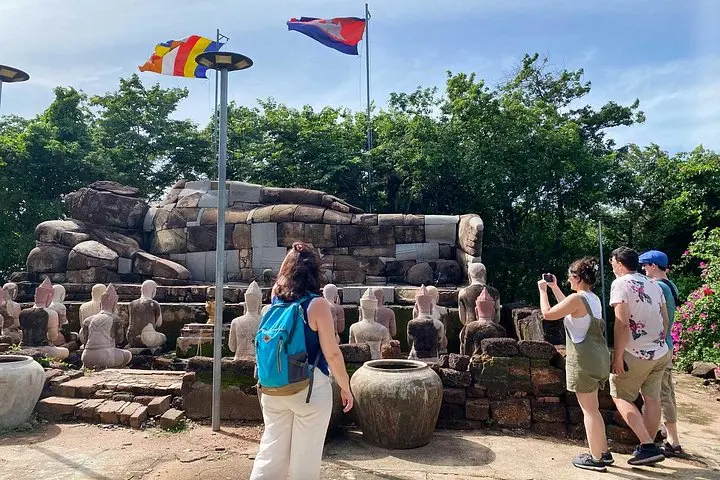
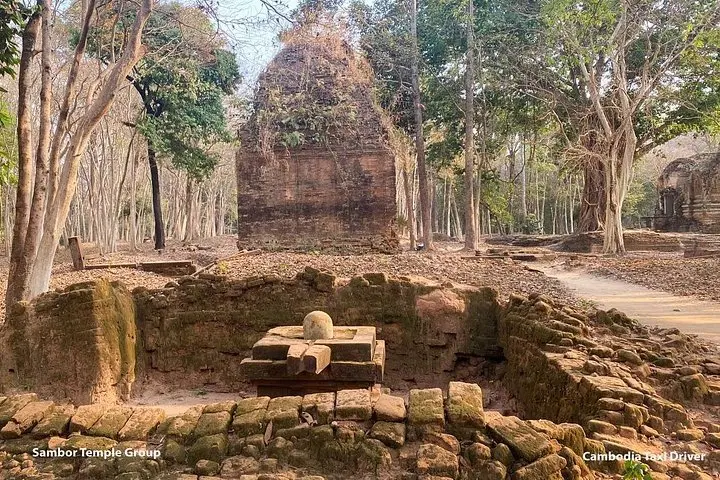
Oudong was Cambodia’s royal capital in the 17th–19th centuries; its hilltop stupas and monasteries trace recent dynastic history and offer wide views across the Tonle Sap floodplain. Further north, Sambor Prei Kuk (Isanapura) predates Angkor, a cluster of pre-Angkorian brick towers set among low woodland, their carved lintels and lotus motifs testifying to early Khmer architecture. The landscape between them is alluvial — clay and silt carried by the Mekong and Tonle Sap — which creates broad, flat horizons and fertile farmland.
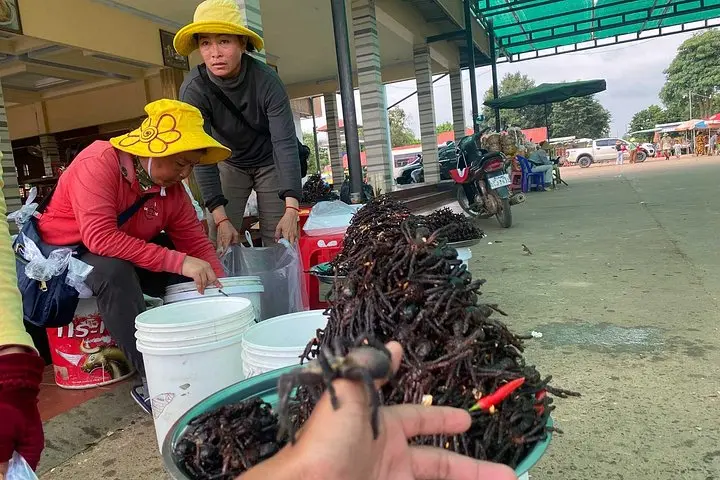
Cultural stops include the Skun market, where local flavor is literal: fried spiders and grilled river fish are on offer alongside woven goods. Expect short walks on uneven stone, dusty paths and limited facilities at rural sites.
Practical guide: the full transfer takes about 10–11 hours including stops (admission: ~US$3 for Oudong, US$10 for Sambor Prei Kuk). Bring cash, sunscreen, insect repellent and closed-toe shoes for temple exploration. Start early to avoid mid-day heat, keep hydrated with the provided bottled water, and leave extra time for traffic or local photo stops. Respect religious customs — cover shoulders and knees when entering sanctified areas — and pack out any litter to help protect these fragile ruins.
Plan on about 10–11 hours total door-to-door including the scheduled visits at Oudong and Sambor Prei Kuk, plus short market stops.
Entrance fees are not included in most bookings — expect roughly US$3 for Oudong and US$10 for Sambor Prei Kuk, payable on site, usually in cash.
Short walks at temples involve uneven ground and steps; it’s fine for children who can walk short distances but not recommended for travelers with serious mobility or spinal issues.
Skun market and small roadside stalls offer local snacks and drinks; for full meals plan to eat en route in towns or bring packed food.
Cambodia Taxi Driver operates guided outdoor trips and adventures with an emphasis on safety, stewardship, and memorable experiences.

A long day on the road begins before sunrise as the van eases out of Phnom Penh and the highway opens into a patchwork of rice fields and slow-moving canals. Wind scours dust from the roadside and small villages slide by — fishermen hauling nets, water buffalo lifting their heads — while the driver keeps a steady pace toward Oudong’s temple-crowned ridge.
A long day on the road begins before sunrise as the van eases out of Phnom Penh and the highway opens into a patchwork of rice fields and slow-moving canals. Wind scours dust from the roadside and small villages slide by — fishermen hauling nets, water buffalo lifting their heads — while the driver keeps a steady pace toward Oudong’s temple-crowned ridge.
Oudong was Cambodia’s royal capital in the 17th–19th centuries; its hilltop stupas and monasteries trace recent dynastic history and offer wide views across the Tonle Sap floodplain. Further north, Sambor Prei Kuk (Isanapura) predates Angkor, a cluster of pre-Angkorian brick towers set among low woodland, their carved lintels and lotus motifs testifying to early Khmer architecture. The landscape between them is alluvial — clay and silt carried by the Mekong and Tonle Sap — which creates broad, flat horizons and fertile farmland.
Cultural stops include the Skun market, where local flavor is literal: fried spiders and grilled river fish are on offer alongside woven goods. Expect short walks on uneven stone, dusty paths and limited facilities at rural sites.
Practical guide: the full transfer takes about 10–11 hours including stops (admission: ~US$3 for Oudong, US$10 for Sambor Prei Kuk). Bring cash, sunscreen, insect repellent and closed-toe shoes for temple exploration. Start early to avoid mid-day heat, keep hydrated with the provided bottled water, and leave extra time for traffic or local photo stops. Respect religious customs — cover shoulders and knees when entering sanctified areas — and pack out any litter to help protect these fragile ruins.