THE ADVENTURE COLLECTIVE® · Independent discovery and booking for outdoor travel

A short, coastal climb delivers you into Phraya Nakhon’s iconic sunlit chamber—home to the Kuha Karuhas pavilion and dramatic midday light shafts. This guided day trip blends coastal scenery, karst geology, and a steep final approach best timed for mid-day photography.
A short, coastal climb delivers you into Phraya Nakhon’s iconic sunlit chamber—home to the Kuha Karuhas pavilion and dramatic midday light shafts. This guided day trip blends coastal scenery, karst geology, and a steep final approach best timed for mid-day photography.
You step from the shaded trail and the sea-bent wind nudges you toward the cliff; the final ridge walk opens onto a narrow mouth where sunlight slices down and finds a royal pavilion sitting on the cave floor. Inside Phraya Nakhon, shafts of noon light dare the stagnant air to move, painting the hollow with warm, directional beams that make the tiny Kuha Karuhas pavilion feel intentionally placed for that moment.
Verified experiences and guided adventures in the surrounding area.
Operated by ZY TRAVEL · Sam Roi Yot, Prachuap Khiri Khan
You step from the shaded trail and the sea-bent wind nudges you toward the cliff; the final ridge walk opens onto a narrow mouth where sunlight slices down and finds a royal pavilion sitting on the cave floor. Inside Phraya Nakhon, shafts of noon light dare the stagnant air to move, painting the hollow with warm, directional beams that make the tiny Kuha Karuhas pavilion feel intentionally placed for that moment.
Geologically this is a limestone karst system carved by millennia of rain and tidal action; the cave’s two main chambers have collapsed ceilings that frame sky and sun. Culturally the pavilion—built for King Chulalongkorn’s 1890 visit—has turned the site into one of Thailand’s most photographed places and a quiet pilgrimage for local visitors.
The approach is a mix of coastal scrub, loose rock, and a final steep stair climb of roughly 500–700 vertical meters cumulative (including ups and downs from the beach approach). Expect a 30–45 minute uphill stretch from the park base and another 10–20 minutes across uneven shoreline path if you start from the boat landing.
Practical guidance: time your visit for late morning to midday to see the light shaft; wear grippy shoes and carry 1–2 liters of water; bring sun protection and a light rain layer during the monsoon. Photography is best in direct shafts—arrive early to avoid crowds.
A private guided tour typically includes park admission, boat transfer options, lunch, bottled water, and an English-speaking guide—confirm boat fees and meeting points when you book.
Expect roughly 30–45 minutes of steady uphill walking from the main park access point, plus additional time on shoreline paths if arriving by boat; total door-to-cave transit varies with your start point.
On this private tour the itinerary indicates admission and a boat fee are included, and lunch and bottled water are provided—confirm specifics with your operator at booking.
The final approach involves stairs and uneven terrain; infants can ride in strollers only on flat sections but the steep climb makes the cave unsuitable for people with spinal, heart, or serious mobility limitations.
Midday when the sun is high produces the strongest shafts of light that illuminate the pavilion—arrive early to get a clear shot before crowds build.
ZY TRAVEL operates guided outdoor trips and adventures with an emphasis on safety, stewardship, and memorable experiences.
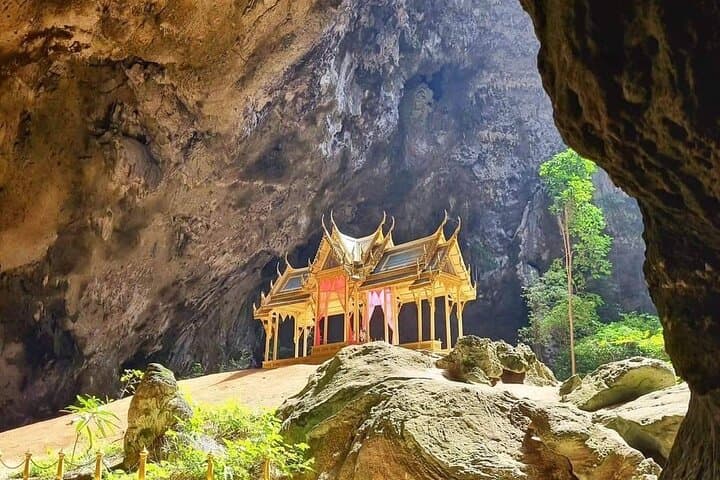


You step from the shaded trail and the sea-bent wind nudges you toward the cliff; the final ridge walk opens onto a narrow mouth where sunlight slices down and finds a royal pavilion sitting on the cave floor. Inside Phraya Nakhon, shafts of noon light dare the stagnant air to move, painting the hollow with warm, directional beams that make the tiny Kuha Karuhas pavilion feel intentionally placed for that moment.
You step from the shaded trail and the sea-bent wind nudges you toward the cliff; the final ridge walk opens onto a narrow mouth where sunlight slices down and finds a royal pavilion sitting on the cave floor. Inside Phraya Nakhon, shafts of noon light dare the stagnant air to move, painting the hollow with warm, directional beams that make the tiny Kuha Karuhas pavilion feel intentionally placed for that moment.
Geologically this is a limestone karst system carved by millennia of rain and tidal action; the cave’s two main chambers have collapsed ceilings that frame sky and sun. Culturally the pavilion—built for King Chulalongkorn’s 1890 visit—has turned the site into one of Thailand’s most photographed places and a quiet pilgrimage for local visitors.
The approach is a mix of coastal scrub, loose rock, and a final steep stair climb of roughly 500–700 vertical meters cumulative (including ups and downs from the beach approach). Expect a 30–45 minute uphill stretch from the park base and another 10–20 minutes across uneven shoreline path if you start from the boat landing.
Practical guidance: time your visit for late morning to midday to see the light shaft; wear grippy shoes and carry 1–2 liters of water; bring sun protection and a light rain layer during the monsoon. Photography is best in direct shafts—arrive early to avoid crowds.
A private guided tour typically includes park admission, boat transfer options, lunch, bottled water, and an English-speaking guide—confirm boat fees and meeting points when you book.