THE ADVENTURE COLLECTIVE® · Independent discovery and booking for outdoor travel

Climb Pico’s volcanic slopes by buggy and arrive at Casa da Montanha in two thrilling hours. Expect basalt tracks, crater rims and sweeping ocean views on an accessible off‑road route.
Climb Pico’s volcanic slopes by buggy and arrive at Casa da Montanha in two thrilling hours. Expect basalt tracks, crater rims and sweeping ocean views on an accessible off‑road route.
You feel the engine under you before the island opens up: a low murmur that becomes a playful growl as the buggy noses up the volcanic spine of Pico. Dust lifts from basalt tracks, wind pushes salt-scented air across crater edges, and the ocean drops away to reveal Faial and São Jorge like stenciled shapes on the horizon. In two hours you climb to Casa da Montanha — the 1,200 m gateway to Portugal’s highest summit — and ride through a landscape that seems to have been shaped for motion.
Verified experiences and guided adventures in the surrounding area.
Operated by Adega da Quinta Adventure · Madalena, Azores
You feel the engine under you before the island opens up: a low murmur that becomes a playful growl as the buggy noses up the volcanic spine of Pico. Dust lifts from basalt tracks, wind pushes salt-scented air across crater edges, and the ocean drops away to reveal Faial and São Jorge like stenciled shapes on the horizon. In two hours you climb to Casa da Montanha — the 1,200 m gateway to Portugal’s highest summit — and ride through a landscape that seems to have been shaped for motion.
Pico’s story is written in lava and labor. The island is a relatively young volcanic edifice whose flows created the stony plains and craters you cross; its human imprint includes centuries-old stone vineyards (Criação Velha) and a whaling past that shaped coastal settlements. You may pass basalt cones, collapsed pits, and the kind of rough, wind-scraped terrain that formed the island’s distinctive profile. Nearby attractions include Gruta das Torres, one of the Azores’ longest lava tubes, and the UNESCO-listed vineyard strips lower on the slopes.
Practically speaking, this is an off-road, motorized tour designed for all fitness levels — the buggy handles steep grades while guides manage navigation. Helmets and glasses are supplied; expect an active, bumpy ride and bring layers, sun protection, closed-toe shoes, and at least 1 L of water. Mornings often offer calmer winds and clearer views; afternoons can be windier and cooler.
The experience condenses Pico’s raw geology and wide ocean views into a brisk, accessible outing: part geology lesson, part adrenaline surge, and a fast way to reach the mountain’s doorstep before hikers carry on to the summit.
The buggy route is designed to be accessible and requires no special fitness; the vehicle handles steep and rough sections while passengers remain seated with supplied helmets.
Children can usually join if they meet the operator’s age and safety requirements — confirm minimum age and seat/seatbelt arrangements when booking.
Operators commonly cancel for high winds, heavy rain, or conditions that compromise trail safety; check the 24‑hour cancellation policy and the operator’s weather guidance.
The buggy brings you to Casa da Montanha, the typical starting point for the Mount Pico hike, but summiting requires a separate guided hike or individual preparation and permits as needed.
Adega da Quinta Adventure operates guided outdoor trips and adventures with an emphasis on safety, stewardship, and memorable experiences.
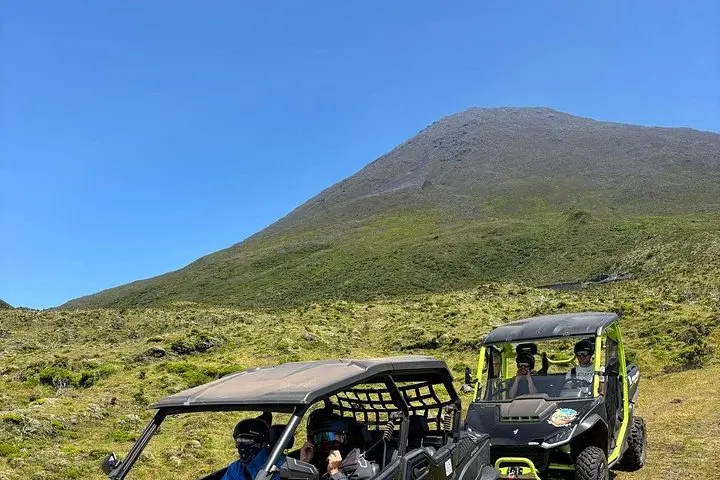
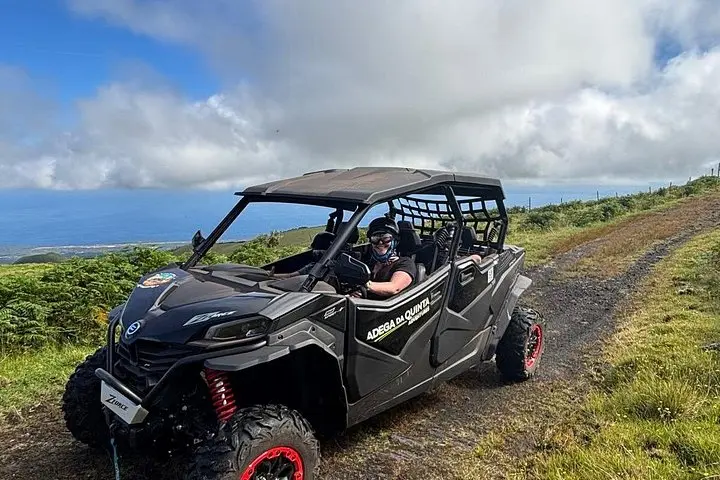
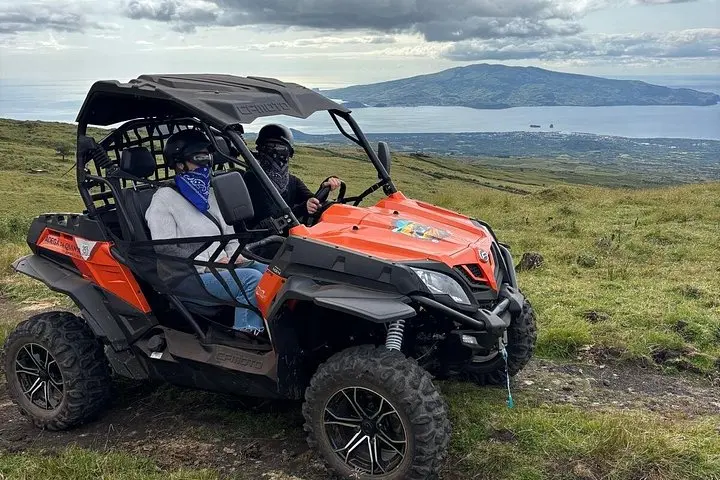
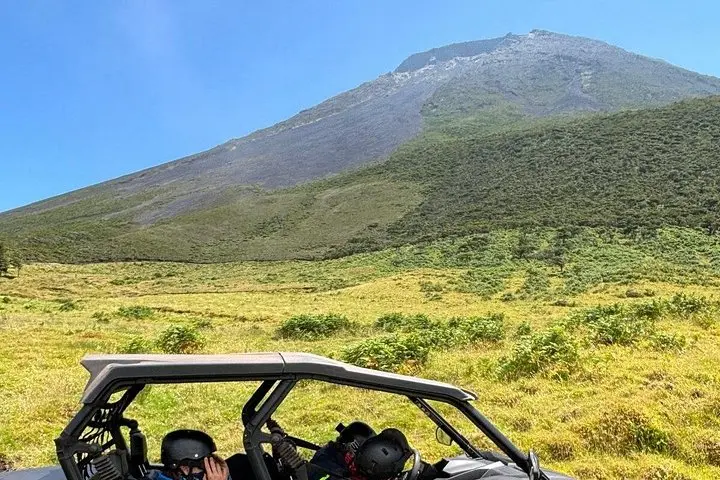
You feel the engine under you before the island opens up: a low murmur that becomes a playful growl as the buggy noses up the volcanic spine of Pico. Dust lifts from basalt tracks, wind pushes salt-scented air across crater edges, and the ocean drops away to reveal Faial and São Jorge like stenciled shapes on the horizon. In two hours you climb to Casa da Montanha — the 1,200 m gateway to Portugal’s highest summit — and ride through a landscape that seems to have been shaped for motion.
You feel the engine under you before the island opens up: a low murmur that becomes a playful growl as the buggy noses up the volcanic spine of Pico. Dust lifts from basalt tracks, wind pushes salt-scented air across crater edges, and the ocean drops away to reveal Faial and São Jorge like stenciled shapes on the horizon. In two hours you climb to Casa da Montanha — the 1,200 m gateway to Portugal’s highest summit — and ride through a landscape that seems to have been shaped for motion.
Pico’s story is written in lava and labor. The island is a relatively young volcanic edifice whose flows created the stony plains and craters you cross; its human imprint includes centuries-old stone vineyards (Criação Velha) and a whaling past that shaped coastal settlements. You may pass basalt cones, collapsed pits, and the kind of rough, wind-scraped terrain that formed the island’s distinctive profile. Nearby attractions include Gruta das Torres, one of the Azores’ longest lava tubes, and the UNESCO-listed vineyard strips lower on the slopes.
Practically speaking, this is an off-road, motorized tour designed for all fitness levels — the buggy handles steep grades while guides manage navigation. Helmets and glasses are supplied; expect an active, bumpy ride and bring layers, sun protection, closed-toe shoes, and at least 1 L of water. Mornings often offer calmer winds and clearer views; afternoons can be windier and cooler.
The experience condenses Pico’s raw geology and wide ocean views into a brisk, accessible outing: part geology lesson, part adrenaline surge, and a fast way to reach the mountain’s doorstep before hikers carry on to the summit.