THE ADVENTURE COLLECTIVE® · Independent discovery and booking for outdoor travel

Short on time but hungry for coastline and colonial history? This private half-day tour on Pigeon Island pairs a brisk Fort Rodney hike with a beachside lunch—perfect for combining views, ruins, and a swim in one outing.
Short on time but hungry for coastline and colonial history? This private half-day tour on Pigeon Island pairs a brisk Fort Rodney hike with a beachside lunch—perfect for combining views, ruins, and a swim in one outing.
You step off the air-conditioned shuttle onto sun-warmed coral rock; the Atlantic slides a cool contrast along the park's edge and palms lean toward the sea as if to point the way. From the parking area a short trail climbs toward Fort Rodney, where rusted cannon and stone walls keep watch over the channel to Martinique. The hike is compact but lively: rocky steps, scrubby coastal forest, and open viewpoints that give sweeping panoramas of bays and reef.
Verified experiences and guided adventures in the surrounding area.
Operated by Jays758Tours · Gros Islet, Gros Islet District
You step off the air-conditioned shuttle onto sun-warmed coral rock; the Atlantic slides a cool contrast along the park's edge and palms lean toward the sea as if to point the way. From the parking area a short trail climbs toward Fort Rodney, where rusted cannon and stone walls keep watch over the channel to Martinique. The hike is compact but lively: rocky steps, scrubby coastal forest, and open viewpoints that give sweeping panoramas of bays and reef.
Pigeon Island was once two islets joined by a man-made causeway and served as a British signal and defense post in the 18th and 19th centuries; Fort Rodney’s ruins recall naval rivalry and colonial trade routes. The geology is volcanic—dark basalt outcrops smoothed by salt and wind—and the shoreline alternates between shelly sand and jagged rock ledges. Local culture is visible in fishing boats bobbing offshore and vendors in Gros Islet selling fresh juices after market days.
Practically speaking, expect a guided, private 4-hour loop: 1–2 km of walking with roughly 80–120 m cumulative elevation gain on uneven ground, followed by time to relax on a sheltered beach and enjoy lunch. Wear supportive shoes for rocky steps, bring reef-safe sunscreen and a refillable water bottle, and plan for mid-morning or late-afternoon light for the best photos. The trail’s short length makes it accessible to many, but those with joint or heart conditions should assess effort levels beforehand. With history, coastal views, and a cooling beach finale, this half-day tour balances story and scenery in close quarters.
The hike is short (about 1–2 km total) with some steep steps and uneven rock; it’s moderate—suitable for most people who can manage short climbs.
Yes—this private tour includes a post-hike lunch provided at the beach or a nearby picnic spot.
Yes—there is a sheltered beach for swimming; snorkeling may be possible in calm conditions—bring swimwear and reef-safe sunscreen.
Parts of the park and causeway are stroller-friendly, but the Fort Rodney ascent involves steps and uneven surfaces and is not wheelchair accessible.
Jays758Tours operates guided outdoor trips and adventures with an emphasis on safety, stewardship, and memorable experiences.

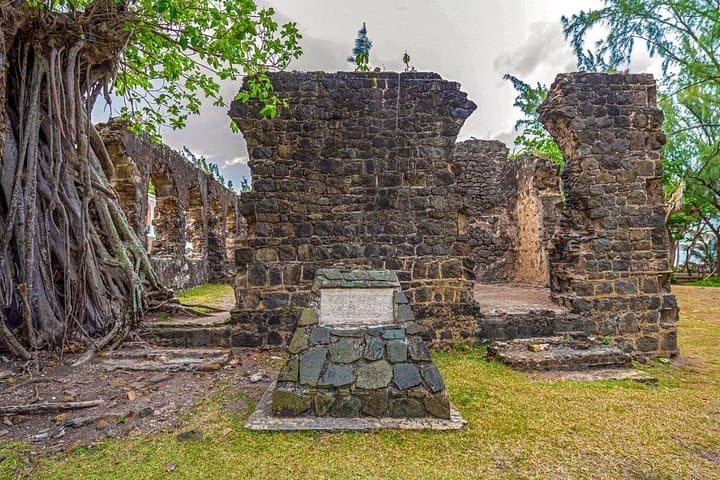


You step off the air-conditioned shuttle onto sun-warmed coral rock; the Atlantic slides a cool contrast along the park's edge and palms lean toward the sea as if to point the way. From the parking area a short trail climbs toward Fort Rodney, where rusted cannon and stone walls keep watch over the channel to Martinique. The hike is compact but lively: rocky steps, scrubby coastal forest, and open viewpoints that give sweeping panoramas of bays and reef.
You step off the air-conditioned shuttle onto sun-warmed coral rock; the Atlantic slides a cool contrast along the park's edge and palms lean toward the sea as if to point the way. From the parking area a short trail climbs toward Fort Rodney, where rusted cannon and stone walls keep watch over the channel to Martinique. The hike is compact but lively: rocky steps, scrubby coastal forest, and open viewpoints that give sweeping panoramas of bays and reef.
Pigeon Island was once two islets joined by a man-made causeway and served as a British signal and defense post in the 18th and 19th centuries; Fort Rodney’s ruins recall naval rivalry and colonial trade routes. The geology is volcanic—dark basalt outcrops smoothed by salt and wind—and the shoreline alternates between shelly sand and jagged rock ledges. Local culture is visible in fishing boats bobbing offshore and vendors in Gros Islet selling fresh juices after market days.
Practically speaking, expect a guided, private 4-hour loop: 1–2 km of walking with roughly 80–120 m cumulative elevation gain on uneven ground, followed by time to relax on a sheltered beach and enjoy lunch. Wear supportive shoes for rocky steps, bring reef-safe sunscreen and a refillable water bottle, and plan for mid-morning or late-afternoon light for the best photos. The trail’s short length makes it accessible to many, but those with joint or heart conditions should assess effort levels beforehand. With history, coastal views, and a cooling beach finale, this half-day tour balances story and scenery in close quarters.