THE ADVENTURE COLLECTIVE® · Independent discovery and booking for outdoor travel

Drive the broad, crater-formed plains of Pilanesberg where elephants move like slow weather and birds flash color through the trees. This guided wildlife tour focuses on efficient Big Five viewing inside an accessible, 550 km² park.
Drive the broad, crater-formed plains of Pilanesberg where elephants move like slow weather and birds flash color through the trees. This guided wildlife tour focuses on efficient Big Five viewing inside an accessible, 550 km² park.
A dust-scented morning lifts off the rim of a bowl-shaped plain as the first headlights thread through yellow grass. You feel the vehicle settle into a rhythm; the scrub and rocky kopjes slide past, each bend promising a new sighting. Pilanesberg’s terrain—broad savanna interrupted by volcanic outcrops—frames every view, and the park’s scale makes each encounter feel earned rather than staged.
Verified experiences and guided adventures in the surrounding area.
Operated by Eddy Shuttle · Rustenburg, North West
A dust-scented morning lifts off the rim of a bowl-shaped plain as the first headlights thread through yellow grass. You feel the vehicle settle into a rhythm; the scrub and rocky kopjes slide past, each bend promising a new sighting. Pilanesberg’s terrain—broad savanna interrupted by volcanic outcrops—frames every view, and the park’s scale makes each encounter feel earned rather than staged.
The park occupies an eroded volcanic crater formed roughly 1.2 billion years ago, its ridges and valleys shaping habitats that support the Big Five and over 360 bird species. Historically the region is part of Tswana lands; nearby settlements and Sun City reflect a modern layer of culture and tourism that grew around these protected landscapes.
Expect rolling gravel tracks, open pans, and shaded riverine corridors. Wildlife here is deliberate: elephants move like slow weather systems, lions linger on cool rocks, and birdlife provides bright punctuation. Guided drives use air-conditioned vehicles and local trackers who read spoor and seasonal water patterns. Photographers will prefer early light or late afternoon when animals are active and shadows add depth.
Practical matters matter: arrive with layers for chilly starts, a water bottle, and insect repellent; binoculars speed sightings, and shutter etiquette keeps animals undisturbed. Morning or late-afternoon departures maximize activity; midday is best for lodge downtime. Entrance fees and bottled water are usually included on organized tours, and guides will brief on park rules and safety around wildlife. Pilanesberg delivers concentrated safari time—accessible, vivid, and rooted in the volcanic landscape that still shapes its rhythms.
Scheduled drives range from 1 hour to half-day (3–5 hours); private tours can be tailored within those windows.
Many organized tours include entrance fees; confirm at booking—this particular tour lists entrance fee and bottled water in its inclusions.
Pilanesberg hosts all Big Five species, but sightings cannot be guaranteed; morning and late drives increase the odds.
Yes—drives are family-friendly and the park accommodates children, but check age restrictions and seat requirements with the operator.
Eddy Shuttle operates guided outdoor trips and adventures with an emphasis on safety, stewardship, and memorable experiences.


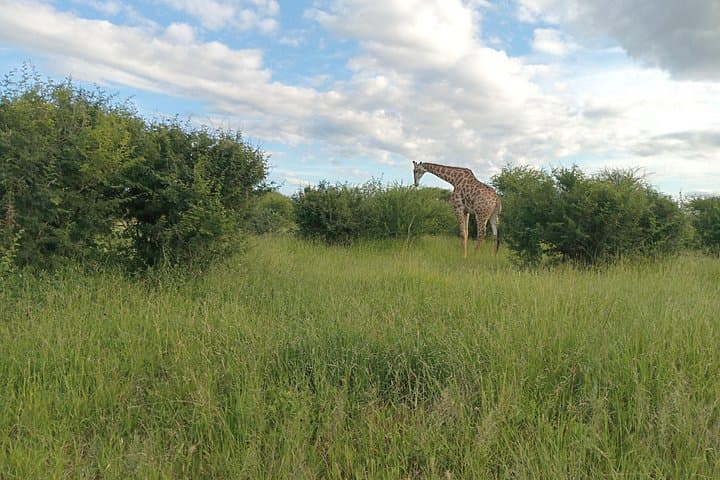

A dust-scented morning lifts off the rim of a bowl-shaped plain as the first headlights thread through yellow grass. You feel the vehicle settle into a rhythm; the scrub and rocky kopjes slide past, each bend promising a new sighting. Pilanesberg’s terrain—broad savanna interrupted by volcanic outcrops—frames every view, and the park’s scale makes each encounter feel earned rather than staged.
A dust-scented morning lifts off the rim of a bowl-shaped plain as the first headlights thread through yellow grass. You feel the vehicle settle into a rhythm; the scrub and rocky kopjes slide past, each bend promising a new sighting. Pilanesberg’s terrain—broad savanna interrupted by volcanic outcrops—frames every view, and the park’s scale makes each encounter feel earned rather than staged.
The park occupies an eroded volcanic crater formed roughly 1.2 billion years ago, its ridges and valleys shaping habitats that support the Big Five and over 360 bird species. Historically the region is part of Tswana lands; nearby settlements and Sun City reflect a modern layer of culture and tourism that grew around these protected landscapes.
Expect rolling gravel tracks, open pans, and shaded riverine corridors. Wildlife here is deliberate: elephants move like slow weather systems, lions linger on cool rocks, and birdlife provides bright punctuation. Guided drives use air-conditioned vehicles and local trackers who read spoor and seasonal water patterns. Photographers will prefer early light or late afternoon when animals are active and shadows add depth.
Practical matters matter: arrive with layers for chilly starts, a water bottle, and insect repellent; binoculars speed sightings, and shutter etiquette keeps animals undisturbed. Morning or late-afternoon departures maximize activity; midday is best for lodge downtime. Entrance fees and bottled water are usually included on organized tours, and guides will brief on park rules and safety around wildlife. Pilanesberg delivers concentrated safari time—accessible, vivid, and rooted in the volcanic landscape that still shapes its rhythms.