THE ADVENTURE COLLECTIVE® · Independent discovery and booking for outdoor travel

Ride through Pisgah National Forest in an open-air jeep to visit 2–3 waterfalls—iconic roadside cascades and a secluded fall reached by a short hike. This three-hour tour balances easy access with off-the-beaten-path moments and expert natural-history narration.
Ride through Pisgah National Forest in an open-air jeep to visit 2–3 waterfalls—iconic roadside cascades and a secluded fall reached by a short hike. This three-hour tour balances easy access with off-the-beaten-path moments and expert natural-history narration.
The jeep shudders into low gear and the forest leans in closer: a green corridor of rhododendron and hemlock that smells faintly of wet stone. Your guide cuts the engine at a roadside pullout and the first thing you hear is water—an immediate, announcing roar. Looking Glass Falls spills from an old mountain lip, the cascade throwing silver sheets into a shaded pool while visitors cross the small bridge to feel the spray. For three hours this open-air jeep tour threads old logging roads and paved scenic byways through Pisgah National Forest, dropping you at two to three waterfalls—each with its own character, from roadside drama to secret, moss-slick cascades reached by a gentle half-mile hike.
Verified experiences and guided adventures in the surrounding area.
Operated by Asheville Tours and Excursions · Asheville, North Carolina
The jeep shudders into low gear and the forest leans in closer: a green corridor of rhododendron and hemlock that smells faintly of wet stone. Your guide cuts the engine at a roadside pullout and the first thing you hear is water—an immediate, announcing roar. Looking Glass Falls spills from an old mountain lip, the cascade throwing silver sheets into a shaded pool while visitors cross the small bridge to feel the spray. For three hours this open-air jeep tour threads old logging roads and paved scenic byways through Pisgah National Forest, dropping you at two to three waterfalls—each with its own character, from roadside drama to secret, moss-slick cascades reached by a gentle half-mile hike.
The Blue Ridge here is not dramatic alpine peak but a long, worn ridge of ancient metamorphic rock folded by eons of uplift. Streams have become artists, carving slots and ledges into the bedrock and creating the falls that drew early settlers, millers, and later the recreational boom. Pisgah itself was one of the first national forests in the eastern United States, a landscape reshaped by both extraction and conservation over the last century. Guides on the tour weave that history into the ride, pointing out old logging scars now healing into second-growth forest and noting how geology controls where waterfalls form.
Ecologically, the route runs through a high-elevation mixed hardwood forest that supports black bears, white-tailed deer, and an array of songbirds. In spring, ephemeral wildflowers crowd the roadside; in fall, the mountains trade green for a sudden, saturated palette. Local communities—Brevard to the south and Asheville to the northwest—built up around mills and mountain crafts; today outfitters, breweries, and farmstands intersect with backpackers at trailheads.
Practical guide: the tour lasts roughly three hours with light hiking options, including a half-mile out-and-back that gains minimal elevation (roughly 100–200 feet) on uneven forest trail. Trails are often damp and rocky; rain ponchos and hiking poles are provided, but bring sturdy, water-resistant shoes. Cameras and phones will get saturated near some falls—pack a dry bag and a polarizing filter if you want better water detail. Expect roadside crowds at iconic falls like Looking Glass; the guide times stops to avoid peak congestion when possible.
Plan to arrive in Asheville with layered clothing for quickly changing mountain weather, and allow a morning or late-afternoon slot to catch softer light and lighter crowds. This is an accessible way to experience Pisgah’s waterfalls: no long approaches, but plenty of intimate encounters with the forest, its geology, and the relentless, shaping action of water.
Tours meet at the Weevil Outdoors meeting point in Asheville; exact address and pickup details are provided on booking confirmation.
Hiking is light—a peaceful half-mile out-and-back to a secluded cascade with minimal elevation gain, plus short walks at other roadside falls.
Yes—infants and small children can use strollers on accessible sections, and guides tailor stops for mixed-ability groups; not recommended for pregnant travelers.
Service animals are permitted, but pets are not generally advised due to vehicle space and trail conditions—check with the operator before bringing animals.
A waterproof case or dry bag for gear, a polarizing filter to reduce glare, and a lens cloth for misty conditions will improve results.
Full refunds are issued if you cancel at least 24 hours before departure; late cancellations within 24 hours are not refundable.
Asheville Tours and Excursions operates guided outdoor trips and adventures with an emphasis on safety, stewardship, and memorable experiences.
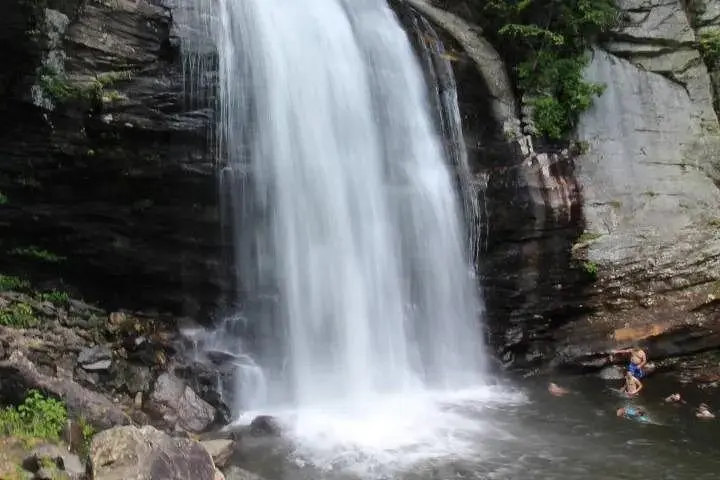
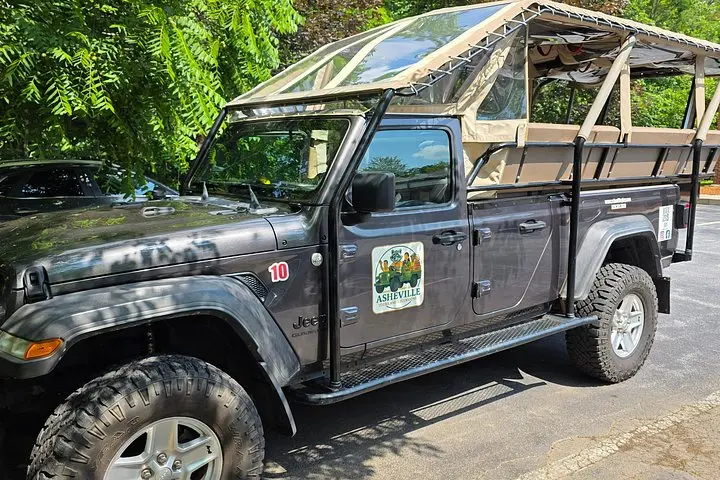
The jeep shudders into low gear and the forest leans in closer: a green corridor of rhododendron and hemlock that smells faintly of wet stone. Your guide cuts the engine at a roadside pullout and the first thing you hear is water—an immediate, announcing roar. Looking Glass Falls spills from an old mountain lip, the cascade throwing silver sheets into a shaded pool while visitors cross the small bridge to feel the spray. For three hours this open-air jeep tour threads old logging roads and paved scenic byways through Pisgah National Forest, dropping you at two to three waterfalls—each with its own character, from roadside drama to secret, moss-slick cascades reached by a gentle half-mile hike.
The jeep shudders into low gear and the forest leans in closer: a green corridor of rhododendron and hemlock that smells faintly of wet stone. Your guide cuts the engine at a roadside pullout and the first thing you hear is water—an immediate, announcing roar. Looking Glass Falls spills from an old mountain lip, the cascade throwing silver sheets into a shaded pool while visitors cross the small bridge to feel the spray. For three hours this open-air jeep tour threads old logging roads and paved scenic byways through Pisgah National Forest, dropping you at two to three waterfalls—each with its own character, from roadside drama to secret, moss-slick cascades reached by a gentle half-mile hike.
The Blue Ridge here is not dramatic alpine peak but a long, worn ridge of ancient metamorphic rock folded by eons of uplift. Streams have become artists, carving slots and ledges into the bedrock and creating the falls that drew early settlers, millers, and later the recreational boom. Pisgah itself was one of the first national forests in the eastern United States, a landscape reshaped by both extraction and conservation over the last century. Guides on the tour weave that history into the ride, pointing out old logging scars now healing into second-growth forest and noting how geology controls where waterfalls form.
Ecologically, the route runs through a high-elevation mixed hardwood forest that supports black bears, white-tailed deer, and an array of songbirds. In spring, ephemeral wildflowers crowd the roadside; in fall, the mountains trade green for a sudden, saturated palette. Local communities—Brevard to the south and Asheville to the northwest—built up around mills and mountain crafts; today outfitters, breweries, and farmstands intersect with backpackers at trailheads.
Practical guide: the tour lasts roughly three hours with light hiking options, including a half-mile out-and-back that gains minimal elevation (roughly 100–200 feet) on uneven forest trail. Trails are often damp and rocky; rain ponchos and hiking poles are provided, but bring sturdy, water-resistant shoes. Cameras and phones will get saturated near some falls—pack a dry bag and a polarizing filter if you want better water detail. Expect roadside crowds at iconic falls like Looking Glass; the guide times stops to avoid peak congestion when possible.
Plan to arrive in Asheville with layered clothing for quickly changing mountain weather, and allow a morning or late-afternoon slot to catch softer light and lighter crowds. This is an accessible way to experience Pisgah’s waterfalls: no long approaches, but plenty of intimate encounters with the forest, its geology, and the relentless, shaping action of water.