THE ADVENTURE COLLECTIVE® · Independent discovery and booking for outdoor travel

Follow a 52 km loop around Piva Lake that threads villages, tunnels and dam overlooks. This challenging day ride mixes steep descents, karst scenery and a slice of Montenegro’s relocated cultural heritage.
Follow a 52 km loop around Piva Lake that threads villages, tunnels and dam overlooks. This challenging day ride mixes steep descents, karst scenery and a slice of Montenegro’s relocated cultural heritage.
The ride begins on a ridge above a glassy stretch of Piva Lake, where wind shears across the water and cliffs lean in as if to listen. Cyclists push off from the village of Rudinice and almost immediately lose altitude: the first descent drops into a carved corridor of road, past the Gagović brothers’ bridge and toward the lake’s raw, karst-edged shoreline.
Verified experiences and guided adventures in the surrounding area.
Operated by Monte Mare Travel · Plužine, Plužine Municipality
The ride begins on a ridge above a glassy stretch of Piva Lake, where wind shears across the water and cliffs lean in as if to listen. Cyclists push off from the village of Rudinice and almost immediately lose altitude: the first descent drops into a carved corridor of road, past the Gagović brothers’ bridge and toward the lake’s raw, karst-edged shoreline.
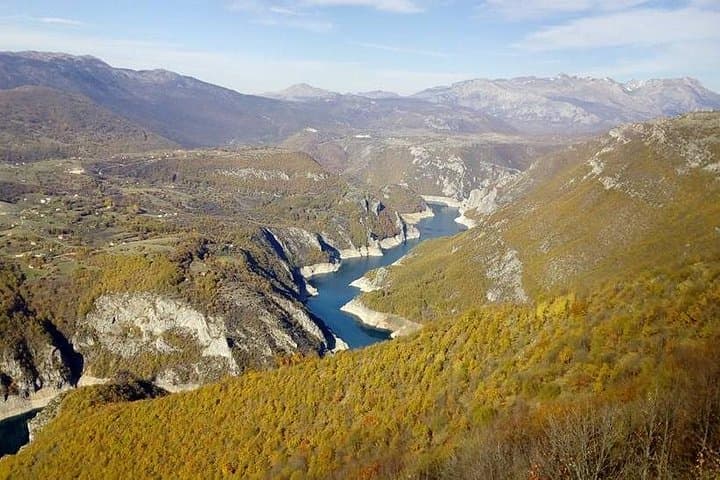
The route traces history and geology side by side. Piva Lake is man-made, filled in the 1970s when the Mratinje Dam drowned a narrow canyon and the original town of Plužine; the old monastery was painstakingly moved stone by stone between 1969 and 1982. Karst limestone and steep gorges define the slopes here, creating abrupt climbs and exposed viewpoints where you can see the reservoir plunge to depths of more than 200 meters.
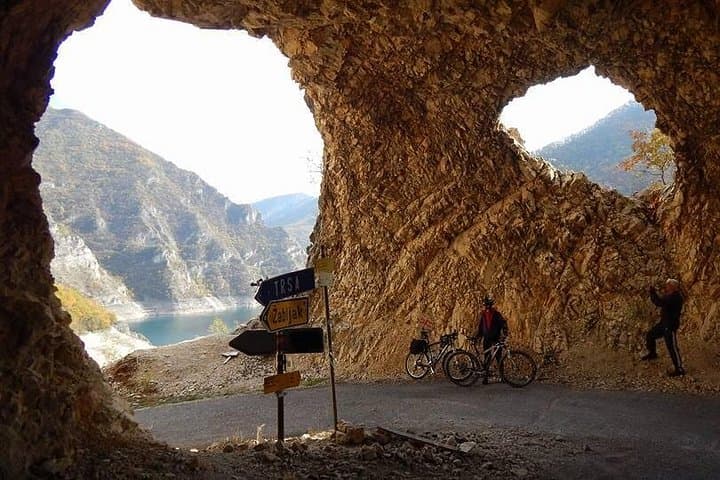
Culturally, the area still carries highland customs—small ethno-villages, sheep tracks, and a handful of Orthodox chapels. The cycling line links villages (Dubljevići, Borkovići, Boričje) and offers short macadam sections and tunnel cuttings near Kruška before winding to Plužine and finishing in Goransko.
Practical guide: expect a 52 km circuit with up to 1,700 m of ascent possible over the day depending on variations; the ride itself takes about 5–6 hours and is physically demanding with technical descents. Operators supply bicycles, helmets and gloves and provide transfers to and from accommodation. Ride with a mid-layer, puncture kit and a full water supply—services are sparse between villages. Aim for morning starts to beat heat and use the included guide to navigate tunnel sections and variable surfaces safely.
Yes—standard bicycles, helmets and gloves are provided by the operator; you may bring personal gear for fit and comfort.
This is a physically demanding route with significant elevation changes; regular cyclists who train on hills should manage it comfortably.
Mixed surfaces: mostly paved roads, short macadam/gravel sections, and some tunnel approaches—robust tires are recommended.
You can visit the relocated Piva Monastery (near Plužine) as a short detour; the operator can advise on timing and route adjustments.
Monte Mare Travel operates guided outdoor trips and adventures with an emphasis on safety, stewardship, and memorable experiences.
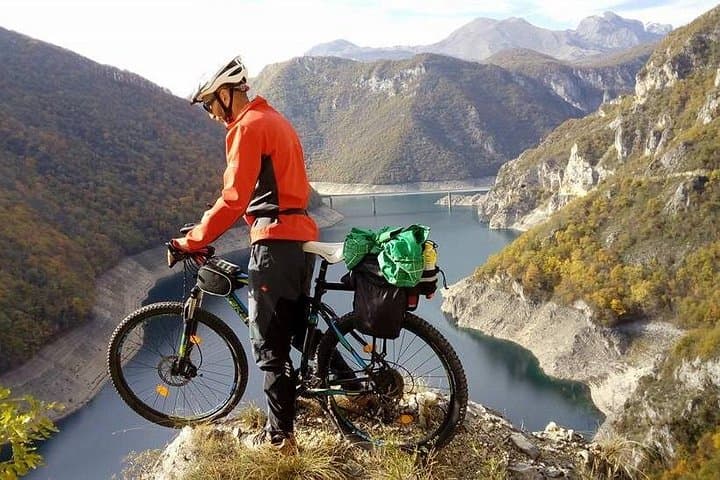
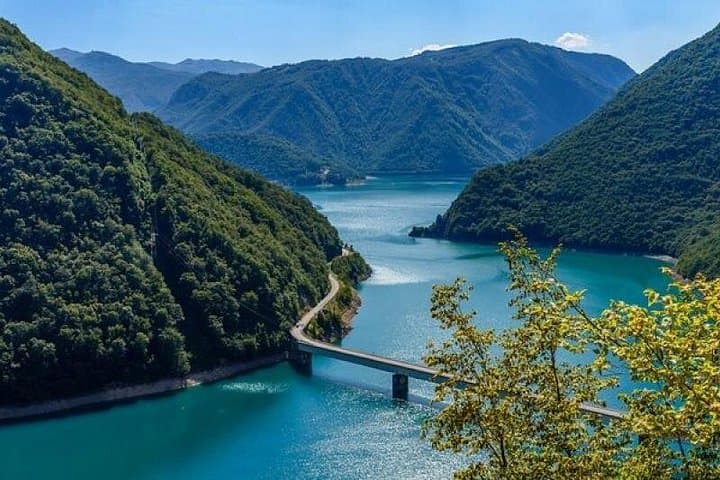
The ride begins on a ridge above a glassy stretch of Piva Lake, where wind shears across the water and cliffs lean in as if to listen. Cyclists push off from the village of Rudinice and almost immediately lose altitude: the first descent drops into a carved corridor of road, past the Gagović brothers’ bridge and toward the lake’s raw, karst-edged shoreline.
The ride begins on a ridge above a glassy stretch of Piva Lake, where wind shears across the water and cliffs lean in as if to listen. Cyclists push off from the village of Rudinice and almost immediately lose altitude: the first descent drops into a carved corridor of road, past the Gagović brothers’ bridge and toward the lake’s raw, karst-edged shoreline.
The route traces history and geology side by side. Piva Lake is man-made, filled in the 1970s when the Mratinje Dam drowned a narrow canyon and the original town of Plužine; the old monastery was painstakingly moved stone by stone between 1969 and 1982. Karst limestone and steep gorges define the slopes here, creating abrupt climbs and exposed viewpoints where you can see the reservoir plunge to depths of more than 200 meters.
Culturally, the area still carries highland customs—small ethno-villages, sheep tracks, and a handful of Orthodox chapels. The cycling line links villages (Dubljevići, Borkovići, Boričje) and offers short macadam sections and tunnel cuttings near Kruška before winding to Plužine and finishing in Goransko.
Practical guide: expect a 52 km circuit with up to 1,700 m of ascent possible over the day depending on variations; the ride itself takes about 5–6 hours and is physically demanding with technical descents. Operators supply bicycles, helmets and gloves and provide transfers to and from accommodation. Ride with a mid-layer, puncture kit and a full water supply—services are sparse between villages. Aim for morning starts to beat heat and use the included guide to navigate tunnel sections and variable surfaces safely.