THE ADVENTURE COLLECTIVE® · Independent discovery and booking for outdoor travel

Explore Costa Rican culture and wildlife in one compact visit: hands-on demonstrations at a traditional house, a botanical garden full of medicinal plants, and an animal sanctuary where guides explain rehabilitation and conservation. Perfect for travelers seeking accessible, educational nature experiences.
Explore Costa Rican culture and wildlife in one compact visit: hands-on demonstrations at a traditional house, a botanical garden full of medicinal plants, and an animal sanctuary where guides explain rehabilitation and conservation. Perfect for travelers seeking accessible, educational nature experiences.
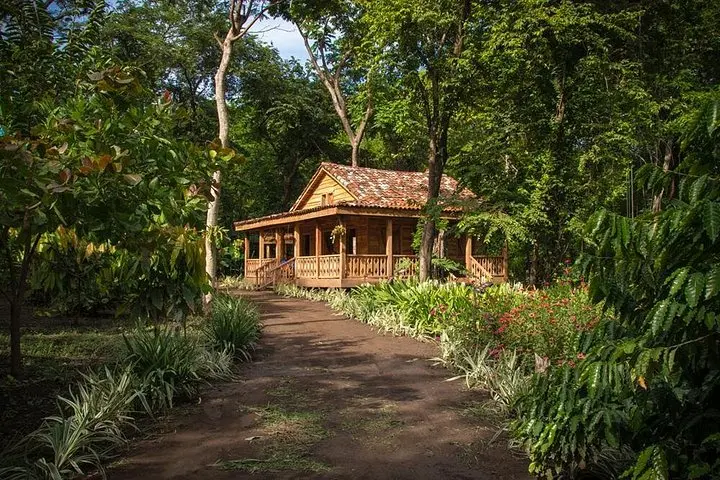
You step out of the coastal heat into a shaded path where the air tastes of coffee and fresh-cut sugar cane. Birds gossip overhead and a guide falls into easy English and Spanish, leading you toward a traditional house where hands-on demonstrations make crops and customs tactile. The animal sanctuary waits beyond a stand of fruit trees; a lazy three-toed sloth blinks at the slow business of its day while toucans call like punctuation.
Verified experiences and guided adventures in the surrounding area.
Operated by Diamante Eco Adventure Park · Playa Hermosa, Guanacaste
You step out of the coastal heat into a shaded path where the air tastes of coffee and fresh-cut sugar cane. Birds gossip overhead and a guide falls into easy English and Spanish, leading you toward a traditional house where hands-on demonstrations make crops and customs tactile. The animal sanctuary waits beyond a stand of fruit trees; a lazy three-toed sloth blinks at the slow business of its day while toucans call like punctuation.
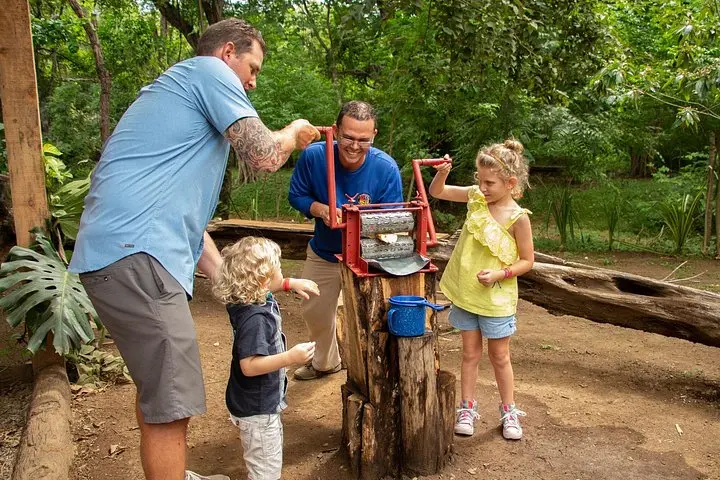
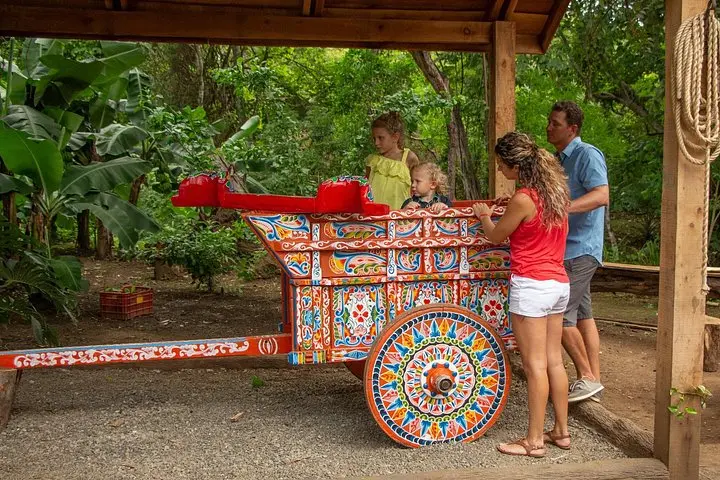
The program threads local history and natural science: coffee and sugar cane shaped rural economies here, while medicinal plants sustained households long before tourism arrived. The garden sits on volcanic soils common to Guanacaste—well-draining, mineral-rich earth that favors both fruit trees and flowering ornamentals. Cultural context is practical and present: the traditional house recreates domestic techniques—grinding cacao, pressing cane—so visitors understand production, not just product.
Expect an educational rhythm more than a strenuous hike. Guides emphasize wildlife rehabilitation work at the sanctuary and how traditional plant knowledge survives in modern Costa Rica. Photographing animals is possible but respectful distances are enforced to protect recovering wildlife.
Practical guidance: plan for sun and bugs—shade is frequent but exposed spots occur between exhibits. Bring water, comfortable closed-toe shoes for uneven garden paths, and a camera with a zoom for birds. Tours run about 1–2 hours and are accessible to most fitness levels; check language needs if you prefer Spanish-only interpretation. This is a compact, immersive half-day that pairs cultural craft with local ecology—ideal for travelers seeking hands-on learning and close, responsible wildlife viewing.
The combined sanctuary and botanical garden visit runs approximately 1–2 hours depending on group size and demonstrations.
Yes — the site lists wheelchair-accessible paths and transportation options; contact the operator for specific access needs.
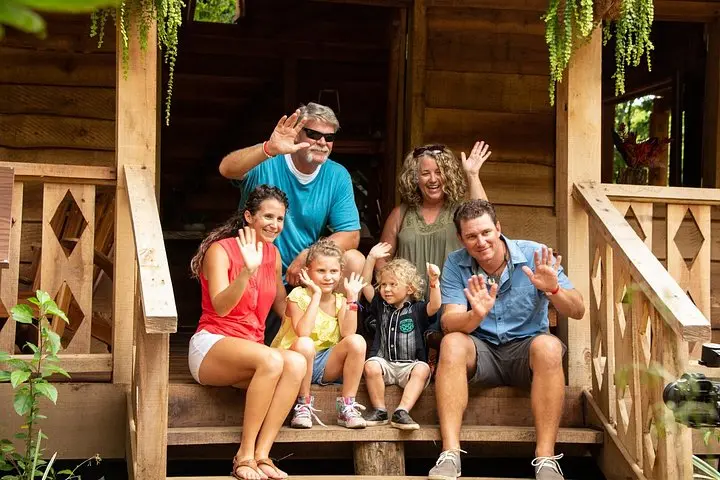
Yes — the program is family-friendly with hands-on demonstrations suitable for older children; strollers are also accommodated.
No standard meals are included; refreshments are not listed, so bring water and any personal snacks if desired.
Diamante Eco Adventure Park operates guided outdoor trips and adventures with an emphasis on safety, stewardship, and memorable experiences.
You step out of the coastal heat into a shaded path where the air tastes of coffee and fresh-cut sugar cane. Birds gossip overhead and a guide falls into easy English and Spanish, leading you toward a traditional house where hands-on demonstrations make crops and customs tactile. The animal sanctuary waits beyond a stand of fruit trees; a lazy three-toed sloth blinks at the slow business of its day while toucans call like punctuation.
You step out of the coastal heat into a shaded path where the air tastes of coffee and fresh-cut sugar cane. Birds gossip overhead and a guide falls into easy English and Spanish, leading you toward a traditional house where hands-on demonstrations make crops and customs tactile. The animal sanctuary waits beyond a stand of fruit trees; a lazy three-toed sloth blinks at the slow business of its day while toucans call like punctuation.
The program threads local history and natural science: coffee and sugar cane shaped rural economies here, while medicinal plants sustained households long before tourism arrived. The garden sits on volcanic soils common to Guanacaste—well-draining, mineral-rich earth that favors both fruit trees and flowering ornamentals. Cultural context is practical and present: the traditional house recreates domestic techniques—grinding cacao, pressing cane—so visitors understand production, not just product.
Expect an educational rhythm more than a strenuous hike. Guides emphasize wildlife rehabilitation work at the sanctuary and how traditional plant knowledge survives in modern Costa Rica. Photographing animals is possible but respectful distances are enforced to protect recovering wildlife.
Practical guidance: plan for sun and bugs—shade is frequent but exposed spots occur between exhibits. Bring water, comfortable closed-toe shoes for uneven garden paths, and a camera with a zoom for birds. Tours run about 1–2 hours and are accessible to most fitness levels; check language needs if you prefer Spanish-only interpretation. This is a compact, immersive half-day that pairs cultural craft with local ecology—ideal for travelers seeking hands-on learning and close, responsible wildlife viewing.