THE ADVENTURE COLLECTIVE® · Independent discovery and booking for outdoor travel

Spend a full day away from the Dalmatian coast exploring Plitvice’s turquoise lakes, travertine falls, and forested boardwalks. This shared transfer day trip from Makarska gives about five hours inside the UNESCO park — enough time to see the highlights and feel the geology underfoot.
Spend a full day away from the Dalmatian coast exploring Plitvice’s turquoise lakes, travertine falls, and forested boardwalks. This shared transfer day trip from Makarska gives about five hours inside the UNESCO park — enough time to see the highlights and feel the geology underfoot.
A minivan eases away from the Adriatic coast and the light changes from glittering sea to dense beech forest; by midmorning you’re stepping onto wooden boardwalks that thread across aquamarine pools and beneath curtains of falling water.
Verified experiences and guided adventures in the surrounding area.
Operated by Exploro · Plitvička Jezera, Lika-Senj County
A minivan eases away from the Adriatic coast and the light changes from glittering sea to dense beech forest; by midmorning you’re stepping onto wooden boardwalks that thread across aquamarine pools and beneath curtains of falling water.
Plitvice Lakes National Park is a chain of 16 terraced lakes linked by travertine waterfalls, carved where karst limestone and mineral‑rich water build new rock as they flow. The area was protected as Croatia’s first national park in 1949 and earned UNESCO World Heritage status for its geological processes and rich biodiversity.
Culturally the park sits in Lika, a region known for shepherding and simple mountain fare; villages carry that slow‑paced character. Geologically, expect stepped tufa dams, emerald pools, and the deeper Kozjak Lake fed by underground karst channels.
Practically: the included shared transfer from Makarska takes roughly 2.5–3 hours each way, leaving about five free hours inside the park. Bring sturdy, non‑slippery shoes for boardwalks and stair sections, a waterproof layer for spray near major falls, and a refillable water bottle — fountains and kiosks are available but lines form in high season.
Timing matters: arrive early or late in the day to avoid the largest cruise‑bus crowds. Park admission rules and path closures change with season, so confirm entry details before you go. This is a full‑day outing built around walking and photography rather than long hikes; pace yourself, respect wayfinding signs, and let the lakes pull you from one view to the next.
The minivan transfer typically takes about 2.5–3 hours each way depending on traffic and stops, which is included in the advertised 12‑hour duration.
The tour listing does not explicitly include admission; verify at booking — many operators require guests to pay the park fee on arrival or add it to the booking.
Yes — the main routes use wide boardwalks and are classified easy, but there are stairs and some uneven sections; bring children and seniors appropriate footwear and allow a relaxed pace.
No — swimming is prohibited to protect the travertine formations and water quality; stick to marked paths and viewing areas.
Exploro operates guided outdoor trips and adventures with an emphasis on safety, stewardship, and memorable experiences.
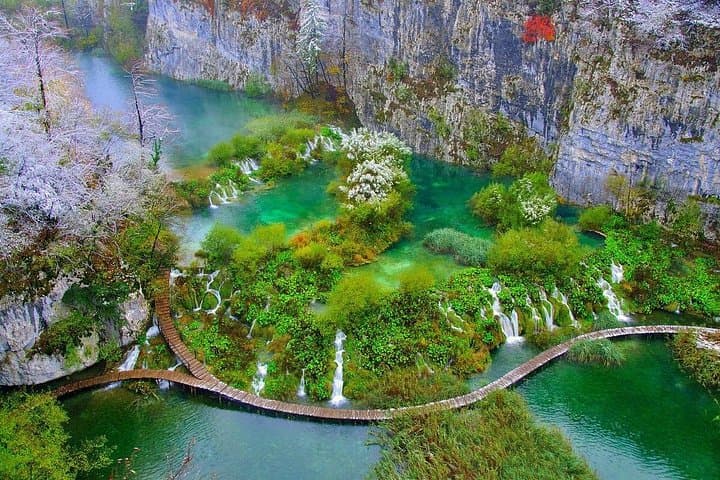

A minivan eases away from the Adriatic coast and the light changes from glittering sea to dense beech forest; by midmorning you’re stepping onto wooden boardwalks that thread across aquamarine pools and beneath curtains of falling water.
A minivan eases away from the Adriatic coast and the light changes from glittering sea to dense beech forest; by midmorning you’re stepping onto wooden boardwalks that thread across aquamarine pools and beneath curtains of falling water.
Plitvice Lakes National Park is a chain of 16 terraced lakes linked by travertine waterfalls, carved where karst limestone and mineral‑rich water build new rock as they flow. The area was protected as Croatia’s first national park in 1949 and earned UNESCO World Heritage status for its geological processes and rich biodiversity.
Culturally the park sits in Lika, a region known for shepherding and simple mountain fare; villages carry that slow‑paced character. Geologically, expect stepped tufa dams, emerald pools, and the deeper Kozjak Lake fed by underground karst channels.
Practically: the included shared transfer from Makarska takes roughly 2.5–3 hours each way, leaving about five free hours inside the park. Bring sturdy, non‑slippery shoes for boardwalks and stair sections, a waterproof layer for spray near major falls, and a refillable water bottle — fountains and kiosks are available but lines form in high season.
Timing matters: arrive early or late in the day to avoid the largest cruise‑bus crowds. Park admission rules and path closures change with season, so confirm entry details before you go. This is a full‑day outing built around walking and photography rather than long hikes; pace yourself, respect wayfinding signs, and let the lakes pull you from one view to the next.