THE ADVENTURE COLLECTIVE® · Independent discovery and booking for outdoor travel

This private day trip from Split delivers Plitvice Lakes’ cascading waterfalls and turquoise pools in a single, expertly guided day. Learn when to arrive, what to pack, and how to navigate park tickets and boardwalks for the best experience.
This private day trip from Split delivers Plitvice Lakes’ cascading waterfalls and turquoise pools in a single, expertly guided day. Learn when to arrive, what to pack, and how to navigate park tickets and boardwalks for the best experience.
You leave Split before dawn, the Adriatic slipping away in the rearview as karst-dusted hills and pine-scrubbed inland roads unfurl toward Lika. By midmorning the bus slows into a forested hollow and the air turns cooler and mineral-bright — the first scent of Plitvice. Your guide hands out bottled water, points to a hand-drawn map, and the group steps onto the boardwalks that stitch the park together, where water insists on moving: down tiers, over ledges, and into mirror-still pools that hold the sky.
Verified experiences and guided adventures in the surrounding area.
Operated by Click2Shuttle - Croatia Private Transfers & Tours · Plitvička Jezera, Lika-Senj
You leave Split before dawn, the Adriatic slipping away in the rearview as karst-dusted hills and pine-scrubbed inland roads unfurl toward Lika. By midmorning the bus slows into a forested hollow and the air turns cooler and mineral-bright — the first scent of Plitvice. Your guide hands out bottled water, points to a hand-drawn map, and the group steps onto the boardwalks that stitch the park together, where water insists on moving: down tiers, over ledges, and into mirror-still pools that hold the sky.
Plitvice Lakes National Park, proclaimed a national park in 1949 and named a UNESCO World Heritage Site in 1979, occupies a rugged karst plateau carved by travertine-depositing streams. Sixteen lakes — divided into upper and lower groups — cascade across limestone thresholds, building terraces of moss and mineral that keep the waterfalls singing. Historically the region was a crossroads of inland Croatia; villages dotting the approach road still trade in smoked meat, honey and folk stories.
The geology is the show: spring waters rich in calcium carbonate precipitate tufa and travertine, forming natural dams that raise and reroute streams over centuries. Human footsteps are carefully managed here — wooden boardwalks and designated trails protect the fragile travertine and the beech-fir forests that cloak the slopes.
Practically, this is a long day trip from Split — 10 to 12 hours door-to-door depending on traffic and stops. The operator provides private, air-conditioned transport with onboard Wi‑Fi and bottled water; a local guide accompanies you through the park but park admission is not included, and entrances have timed tickets in high season. Expect 6–8 kilometers of walking on mostly flat boardwalks with short stair sections and roughly 200–300 meters cumulative elevation change if you cover the main upper and lower circuits. Bring waterproof shoes—the boardwalks can be wet and boots give support on uneven steps.
Plan to arrive early or late afternoon to avoid the biggest crowds, buy park tickets online when visiting in summer, and reserve return pickup times to match your tempo. If you have mobility constraints ask about shorter routes or train rides inside the park; the electric train and boat crossing on Kozjak Lake can shorten distances but still require short walks. Respect the rules: stay on paths, pack out trash, and don’t feed wildlife. In return you’ll leave with photographs of tumbling falls, glassy emerald pools, and a clearer sense of how water and stone can keep remaking a landscape.
No — admission is not included. You should purchase Plitvice National Park tickets separately; timed entries are common in summer.
Expect 6–8 km of walking on boardwalks and trails for the main circuits; you can shorten the route using the park train and boat.
Yes—strollers can access many boardwalk sections, but some trails include steps; check with the operator for stroller-friendly route options.
Service animals are allowed, but domestic pets are generally not permitted in the park—confirm with your operator and park rules.
The park is open in most weather; the operator's cancellation policy may be strict, so bring rain gear and check local conditions.
No, guided tours are not required but a guide adds context, navigation and logistics—this private tour includes a local guide but not entrance fees.
Click2Shuttle - Croatia Private Transfers & Tours operates guided outdoor trips and adventures with an emphasis on safety, stewardship, and memorable experiences.



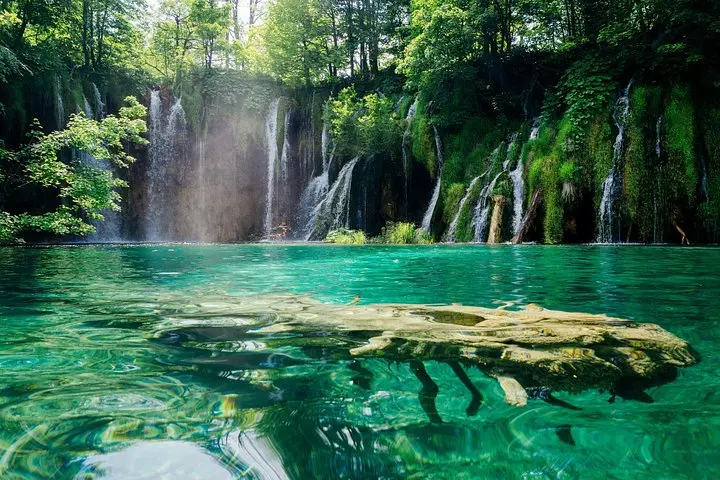
You leave Split before dawn, the Adriatic slipping away in the rearview as karst-dusted hills and pine-scrubbed inland roads unfurl toward Lika. By midmorning the bus slows into a forested hollow and the air turns cooler and mineral-bright — the first scent of Plitvice. Your guide hands out bottled water, points to a hand-drawn map, and the group steps onto the boardwalks that stitch the park together, where water insists on moving: down tiers, over ledges, and into mirror-still pools that hold the sky.
You leave Split before dawn, the Adriatic slipping away in the rearview as karst-dusted hills and pine-scrubbed inland roads unfurl toward Lika. By midmorning the bus slows into a forested hollow and the air turns cooler and mineral-bright — the first scent of Plitvice. Your guide hands out bottled water, points to a hand-drawn map, and the group steps onto the boardwalks that stitch the park together, where water insists on moving: down tiers, over ledges, and into mirror-still pools that hold the sky.
Plitvice Lakes National Park, proclaimed a national park in 1949 and named a UNESCO World Heritage Site in 1979, occupies a rugged karst plateau carved by travertine-depositing streams. Sixteen lakes — divided into upper and lower groups — cascade across limestone thresholds, building terraces of moss and mineral that keep the waterfalls singing. Historically the region was a crossroads of inland Croatia; villages dotting the approach road still trade in smoked meat, honey and folk stories.
The geology is the show: spring waters rich in calcium carbonate precipitate tufa and travertine, forming natural dams that raise and reroute streams over centuries. Human footsteps are carefully managed here — wooden boardwalks and designated trails protect the fragile travertine and the beech-fir forests that cloak the slopes.
Practically, this is a long day trip from Split — 10 to 12 hours door-to-door depending on traffic and stops. The operator provides private, air-conditioned transport with onboard Wi‑Fi and bottled water; a local guide accompanies you through the park but park admission is not included, and entrances have timed tickets in high season. Expect 6–8 kilometers of walking on mostly flat boardwalks with short stair sections and roughly 200–300 meters cumulative elevation change if you cover the main upper and lower circuits. Bring waterproof shoes—the boardwalks can be wet and boots give support on uneven steps.
Plan to arrive early or late afternoon to avoid the biggest crowds, buy park tickets online when visiting in summer, and reserve return pickup times to match your tempo. If you have mobility constraints ask about shorter routes or train rides inside the park; the electric train and boat crossing on Kozjak Lake can shorten distances but still require short walks. Respect the rules: stay on paths, pack out trash, and don’t feed wildlife. In return you’ll leave with photographs of tumbling falls, glassy emerald pools, and a clearer sense of how water and stone can keep remaking a landscape.