THE ADVENTURE COLLECTIVE® · Independent discovery and booking for outdoor travel

Walk Plitvice’s world-famous boardwalks, cross Lake Kozjak by ferry and visit the mill village of Rastoke on a single, full-day trip from Zadar. This guided, small-group route pairs dramatic waterfalls with local culture and practical logistics for a long but accessible day.
Walk Plitvice’s world-famous boardwalks, cross Lake Kozjak by ferry and visit the mill village of Rastoke on a single, full-day trip from Zadar. This guided, small-group route pairs dramatic waterfalls with local culture and practical logistics for a long but accessible day.
You step from the van and the air alters—cool, mineral-scented, and threaded with the constant hiss of falling water. Wooden boardwalks thread across milky-green basins while a canyon of limestone walls frames the view. Spend the morning circling upper and lower lakes, then push on to Rastoke where the Slunjčica and Korana rivers meet and historic watermills turn like clockwork.
Verified experiences and guided adventures in the surrounding area.
Operated by Roundabout Travel · Plitvička Jezera, Lika-Senj County
You step from the van and the air alters—cool, mineral-scented, and threaded with the constant hiss of falling water. Wooden boardwalks thread across milky-green basins while a canyon of limestone walls frames the view. Spend the morning circling upper and lower lakes, then push on to Rastoke where the Slunjčica and Korana rivers meet and historic watermills turn like clockwork.
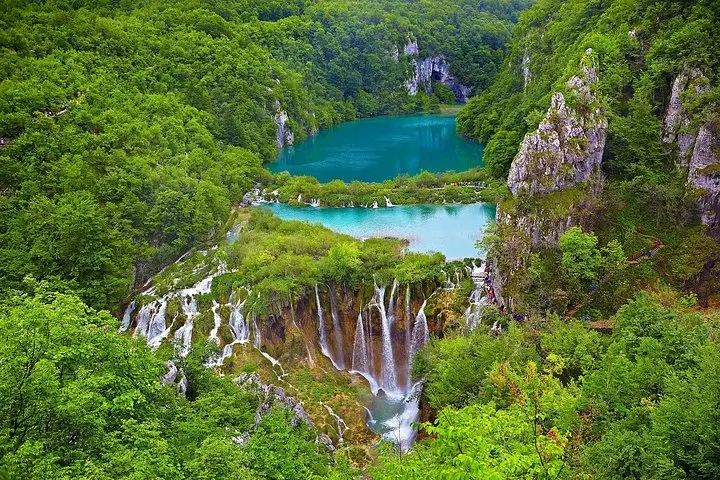
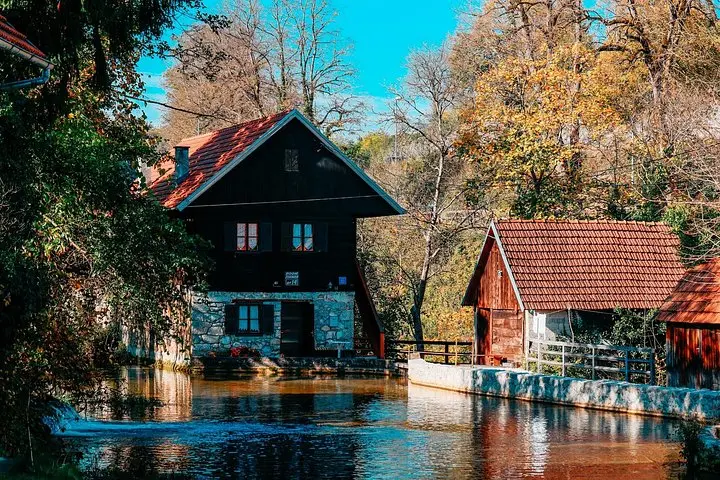
Plitvice Lakes National Park covers nearly 295 km² and is built on karst geology: travertine terraces and tufa dams create 16 terraced lakes connected by waterfalls, including Veliki Slap, a 78 m drop that commands the lower lakes. The park has been a UNESCO World Heritage site since 1979; its conservation-focused infrastructure — boardwalks, designated paths and a Kozjak ferry linking upper and lower lakes — keeps fragile travertine formations intact. Rastoke, sometimes called the “Small Lakes,” combines ethnographic wooden watermills and millraces that illustrate local rural life.
On a full-day from Zadar expect a 9–10 hour outing with roughly 3–4 hours of on-foot exploration inside the park. Trails range from flat boardwalks to sections of stone stairs and gravel; footwear with grip and good ankle support helps. Bring water, a packed lunch or plan to eat at the park café, and allow time for the Kozjak boat ride. Stay on marked routes, don’t swim in the lakes, and time your visit early or late in the day to avoid the busiest crowds. The reward is immediate: clear, kinetic water, moss-bright ledges and the steady choreography of cascading falls daring you to keep moving forward.
Entrance fees are typically not included in third-party tours unless stated—confirm with the operator and bring cash or card for the park ticket.
Expect about 3–4 hours of walking on the park routes you’ll visit, mixing boardwalks, stairs and short gravel sections; the tour pace is moderate.
Most full-day routes include the short ferry across Lake Kozjak as part of the internal transfer between upper and lower lakes—confirm with your guide.
Yes—children can join, but parents should consider stair sections and length of the day; infant seats are available for transport on request.
Roundabout Travel operates guided outdoor trips and adventures with an emphasis on safety, stewardship, and memorable experiences.


You step from the van and the air alters—cool, mineral-scented, and threaded with the constant hiss of falling water. Wooden boardwalks thread across milky-green basins while a canyon of limestone walls frames the view. Spend the morning circling upper and lower lakes, then push on to Rastoke where the Slunjčica and Korana rivers meet and historic watermills turn like clockwork.
You step from the van and the air alters—cool, mineral-scented, and threaded with the constant hiss of falling water. Wooden boardwalks thread across milky-green basins while a canyon of limestone walls frames the view. Spend the morning circling upper and lower lakes, then push on to Rastoke where the Slunjčica and Korana rivers meet and historic watermills turn like clockwork.
Plitvice Lakes National Park covers nearly 295 km² and is built on karst geology: travertine terraces and tufa dams create 16 terraced lakes connected by waterfalls, including Veliki Slap, a 78 m drop that commands the lower lakes. The park has been a UNESCO World Heritage site since 1979; its conservation-focused infrastructure — boardwalks, designated paths and a Kozjak ferry linking upper and lower lakes — keeps fragile travertine formations intact. Rastoke, sometimes called the “Small Lakes,” combines ethnographic wooden watermills and millraces that illustrate local rural life.
On a full-day from Zadar expect a 9–10 hour outing with roughly 3–4 hours of on-foot exploration inside the park. Trails range from flat boardwalks to sections of stone stairs and gravel; footwear with grip and good ankle support helps. Bring water, a packed lunch or plan to eat at the park café, and allow time for the Kozjak boat ride. Stay on marked routes, don’t swim in the lakes, and time your visit early or late in the day to avoid the busiest crowds. The reward is immediate: clear, kinetic water, moss-bright ledges and the steady choreography of cascading falls daring you to keep moving forward.