THE ADVENTURE COLLECTIVE® · Independent discovery and booking for outdoor travel

A single-day escape from Zagreb takes you from rustic watermills in Rastoke to the turquoise cascades of Plitvice Lakes National Park. Follow boardwalks, ride a short boat across Kozjak Lake, and learn the geology and local history that shaped this UNESCO-protected landscape.
A single-day escape from Zagreb takes you from rustic watermills in Rastoke to the turquoise cascades of Plitvice Lakes National Park. Follow boardwalks, ride a short boat across Kozjak Lake, and learn the geology and local history that shaped this UNESCO-protected landscape.
You step off the air-conditioned minibus into a cool, mist-soft morning and the sound arrives first: water, insistently working its way downhill. In Rastoke, centuries-old wooden watermills lean toward rushing channels that have carved the village out of bedrock. The guide gestures to the paddle wheels and old millhouses, and for a few moments the modern world feels as if it’s been put on hold by the river’s forward motion.
Verified experiences and guided adventures in the surrounding area.
Operated by pathfinder TOURS · Plitvička Jezera, Lika-Senj County
You step off the air-conditioned minibus into a cool, mist-soft morning and the sound arrives first: water, insistently working its way downhill. In Rastoke, centuries-old wooden watermills lean toward rushing channels that have carved the village out of bedrock. The guide gestures to the paddle wheels and old millhouses, and for a few moments the modern world feels as if it’s been put on hold by the river’s forward motion.
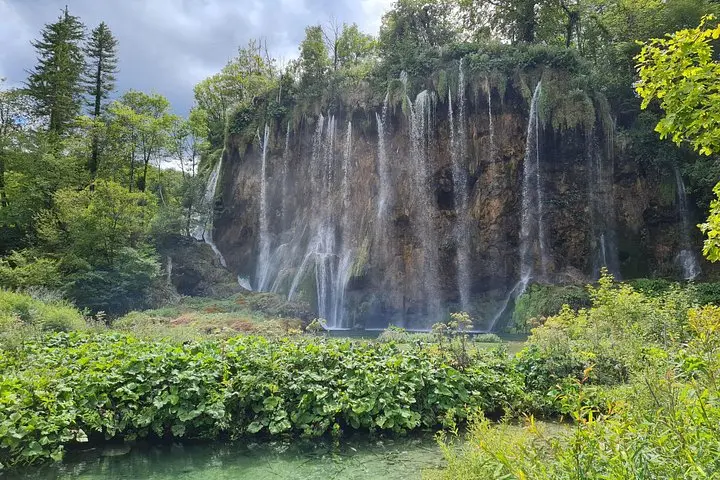
By mid-morning the tour moves inland toward Plitvice Lakes National Park, a dramatic shift from human-scale history to a landscape where geology writes its own story. Limestone and travertine have built natural dams over millennia, accumulating calcified terraces that bottle-clear water now flows across. The park’s 16 lakes fall into one another, each pool a different tone of turquoise, each cascade composing the next stanza. Your route follows a mix of boardwalks and gravel paths, with a short boat crossing across Kozjak Lake that separates the chain of Upper and Lower Lakes.
Plitvice has worn many labels — from Yugoslav picnic ground to UNESCO World Heritage site — but the park’s present-day script is about balance: tourism, science and strict protection. Rastoke’s mills speak to local culture; families in this region once harnessed rushing water to grind grain and saw timber, shaping the human footprint you see today.
Practicalities are part of the charm here. Expect around 8–9 kilometers of walking during the high-season itinerary, mostly flat with the odd stair or short incline. The guide will navigate the park’s routing and prebook entrance tickets, which change by season — summer rates and busier boardwalks, lower-season restrictions to the Lower Lakes only. Wear closed hiking shoes, bring a waterproof layer for spray near the waterfalls, and plan for early light if you want photos without crowds.
Conservation rules matter: stay on designated paths, don’t swim, and carry out any trash. If you time your visit for shoulder season (April–May or September–October) you’ll find softer light, fewer people, and vibrant foliage. For families and first-time visitors, this day tour is an efficient way to combine culture and nature without public transport hassles — you’ll leave with a clearer sense of how water shapes both the land and local life here.
The guided route covers approximately 8–9 km (5.3 miles) in high season, with flat boardwalks and short stair sections.
The operator prebooks park tickets for you, but seasonal pricing applies and is noted in your booking confirmation.
Children under 5 are not permitted; older children are welcome but the day involves sustained walking.
The tour operates in most weather conditions, though some areas and park vehicles may be restricted in winter or heavy weather.
You’ll have guided time on the highlights and short windows for personal photos or walking, but the route is structured to cover top viewpoints.
Meet at the bus stop across from the Ethnographic Museum in Zagreb; the tour returns to the same spot at the end of the day.
pathfinder TOURS operates guided outdoor trips and adventures with an emphasis on safety, stewardship, and memorable experiences.
You step off the air-conditioned minibus into a cool, mist-soft morning and the sound arrives first: water, insistently working its way downhill. In Rastoke, centuries-old wooden watermills lean toward rushing channels that have carved the village out of bedrock. The guide gestures to the paddle wheels and old millhouses, and for a few moments the modern world feels as if it’s been put on hold by the river’s forward motion.
You step off the air-conditioned minibus into a cool, mist-soft morning and the sound arrives first: water, insistently working its way downhill. In Rastoke, centuries-old wooden watermills lean toward rushing channels that have carved the village out of bedrock. The guide gestures to the paddle wheels and old millhouses, and for a few moments the modern world feels as if it’s been put on hold by the river’s forward motion.
By mid-morning the tour moves inland toward Plitvice Lakes National Park, a dramatic shift from human-scale history to a landscape where geology writes its own story. Limestone and travertine have built natural dams over millennia, accumulating calcified terraces that bottle-clear water now flows across. The park’s 16 lakes fall into one another, each pool a different tone of turquoise, each cascade composing the next stanza. Your route follows a mix of boardwalks and gravel paths, with a short boat crossing across Kozjak Lake that separates the chain of Upper and Lower Lakes.
Plitvice has worn many labels — from Yugoslav picnic ground to UNESCO World Heritage site — but the park’s present-day script is about balance: tourism, science and strict protection. Rastoke’s mills speak to local culture; families in this region once harnessed rushing water to grind grain and saw timber, shaping the human footprint you see today.
Practicalities are part of the charm here. Expect around 8–9 kilometers of walking during the high-season itinerary, mostly flat with the odd stair or short incline. The guide will navigate the park’s routing and prebook entrance tickets, which change by season — summer rates and busier boardwalks, lower-season restrictions to the Lower Lakes only. Wear closed hiking shoes, bring a waterproof layer for spray near the waterfalls, and plan for early light if you want photos without crowds.
Conservation rules matter: stay on designated paths, don’t swim, and carry out any trash. If you time your visit for shoulder season (April–May or September–October) you’ll find softer light, fewer people, and vibrant foliage. For families and first-time visitors, this day tour is an efficient way to combine culture and nature without public transport hassles — you’ll leave with a clearer sense of how water shapes both the land and local life here.