THE ADVENTURE COLLECTIVE® · Independent discovery and booking for outdoor travel

Swap Zagreb’s streets for boardwalks and cobalt pools on a full-day guided tour to Plitvice Lakes and the fairytale mills of Rastoke. Includes entry, boat cruise across Kozjak, and hotel pickup options—ideal for a single-day immersion in Croatia’s most iconic national park.
Swap Zagreb’s streets for boardwalks and cobalt pools on a full-day guided tour to Plitvice Lakes and the fairytale mills of Rastoke. Includes entry, boat cruise across Kozjak, and hotel pickup options—ideal for a single-day immersion in Croatia’s most iconic national park.
You step off the air-conditioned coach into a forest that seems to keep its own weather. Mist clings to firs and beech; the first cascade announces itself with a steady, patient roar. That sound is Plitvice—water always moving, always rearranging the land. On a full-day trip from Zagreb you move from urban rhythm to a landscape that literally carves its own paths: wooden boardwalks thread across turquoise pools, the Korana and Slunjčica rivers hurry and pause, and the village of Rastoke waits like a living postcard where mills still mark the current.
Verified experiences and guided adventures in the surrounding area.
Operated by Petros d.o.o · Plitvička Jezera, Lika-Senj
You step off the air-conditioned coach into a forest that seems to keep its own weather. Mist clings to firs and beech; the first cascade announces itself with a steady, patient roar. That sound is Plitvice—water always moving, always rearranging the land. On a full-day trip from Zagreb you move from urban rhythm to a landscape that literally carves its own paths: wooden boardwalks thread across turquoise pools, the Korana and Slunjčica rivers hurry and pause, and the village of Rastoke waits like a living postcard where mills still mark the current.
Plitvice Lakes National Park is a UNESCO World Heritage site for good reason. The park’s travertine barriers—calcium carbonate deposits built over centuries by plants and water—create the stepped lakes and waterfalls that define the place. Settlements like Rastoke developed where rivers met, using watermills for grinding grain as early as the 17th and 18th centuries; today the mills are part museum, part neighborhood, their wooden gears turning in shallow rapids.
Guided walks cover roughly 8.5 kilometers (about 5 miles), crossing both Lower and Upper Lakes when boats and the panoramic shuttle operate. In summer the electric boat cuts a quiet line across Kozjak, the park’s largest lake, and the shuttle bus shortens otherwise steep transitions. Outside the boating season—typically November through March—guides alter the route to focus on the Lower Lakes and steps, and the trip becomes a more pure walking experience.
Culturally, this route stitches natural history with rural life: at Rastoke you’ll feel the pulse of traditional wooden architecture, and in the park you’ll find signage and guides explaining the delicate travertine process and the park’s role in Croatian conservation since its establishment in 1949.
Practicalities are straightforward. Tours start from Zagreb (meeting point opposite the Ethnographic Museum or hotel pickup if selected) and last about six hours on site within a roughly 10-hour day including transport. Expect uneven boardwalks and steep sections—good footwear and a moderate fitness level help you enjoy the route without rushing. Bring a waterproof layer (sprays and mist are constant near falls), filled water bottle, and a camera with a polarizer to tame reflections. If you travel November–March, confirm with your operator whether boats and shuttles are running; the itinerary adapts when they do not.
The experience balances spectacle and accessibility: you get the park’s headline views without multi-day planning, plus a short stop at poetic Rastoke. For travelers based in Zagreb who want to trade a museum morning for primeval water and a walk that makes time feel slower, this day trip is a compact, practical way to meet one of Croatia’s elemental places.
The shared-bus meeting point is opposite the Ethnographic Museum at Trg Mažuranić 14; hotel pickup is available for select options and must be confirmed in advance.
Not recommended for children under three; uneven paths and long walking sections make it better for older, steady walkers.
Yes when they operate; from Nov 1–Mar 31 these may not run depending on conditions, and the route will be adjusted accordingly.
No—swimming is prohibited to protect the travertine formations and local ecology.
There are cafes and a restaurant at main park hubs, but bringing snacks is wise if you prefer flexible timing or have dietary needs.
Many boardwalks are not suitable for wheelchairs and steep sections exist; visitors with mobility issues should check specific access maps and contact the operator.
Petros d.o.o operates guided outdoor trips and adventures with an emphasis on safety, stewardship, and memorable experiences.
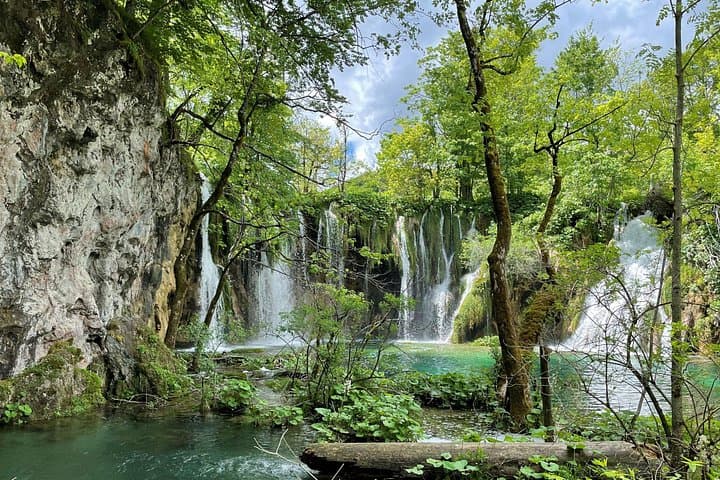


You step off the air-conditioned coach into a forest that seems to keep its own weather. Mist clings to firs and beech; the first cascade announces itself with a steady, patient roar. That sound is Plitvice—water always moving, always rearranging the land. On a full-day trip from Zagreb you move from urban rhythm to a landscape that literally carves its own paths: wooden boardwalks thread across turquoise pools, the Korana and Slunjčica rivers hurry and pause, and the village of Rastoke waits like a living postcard where mills still mark the current.
You step off the air-conditioned coach into a forest that seems to keep its own weather. Mist clings to firs and beech; the first cascade announces itself with a steady, patient roar. That sound is Plitvice—water always moving, always rearranging the land. On a full-day trip from Zagreb you move from urban rhythm to a landscape that literally carves its own paths: wooden boardwalks thread across turquoise pools, the Korana and Slunjčica rivers hurry and pause, and the village of Rastoke waits like a living postcard where mills still mark the current.
Plitvice Lakes National Park is a UNESCO World Heritage site for good reason. The park’s travertine barriers—calcium carbonate deposits built over centuries by plants and water—create the stepped lakes and waterfalls that define the place. Settlements like Rastoke developed where rivers met, using watermills for grinding grain as early as the 17th and 18th centuries; today the mills are part museum, part neighborhood, their wooden gears turning in shallow rapids.
Guided walks cover roughly 8.5 kilometers (about 5 miles), crossing both Lower and Upper Lakes when boats and the panoramic shuttle operate. In summer the electric boat cuts a quiet line across Kozjak, the park’s largest lake, and the shuttle bus shortens otherwise steep transitions. Outside the boating season—typically November through March—guides alter the route to focus on the Lower Lakes and steps, and the trip becomes a more pure walking experience.
Culturally, this route stitches natural history with rural life: at Rastoke you’ll feel the pulse of traditional wooden architecture, and in the park you’ll find signage and guides explaining the delicate travertine process and the park’s role in Croatian conservation since its establishment in 1949.
Practicalities are straightforward. Tours start from Zagreb (meeting point opposite the Ethnographic Museum or hotel pickup if selected) and last about six hours on site within a roughly 10-hour day including transport. Expect uneven boardwalks and steep sections—good footwear and a moderate fitness level help you enjoy the route without rushing. Bring a waterproof layer (sprays and mist are constant near falls), filled water bottle, and a camera with a polarizer to tame reflections. If you travel November–March, confirm with your operator whether boats and shuttles are running; the itinerary adapts when they do not.
The experience balances spectacle and accessibility: you get the park’s headline views without multi-day planning, plus a short stop at poetic Rastoke. For travelers based in Zagreb who want to trade a museum morning for primeval water and a walk that makes time feel slower, this day trip is a compact, practical way to meet one of Croatia’s elemental places.