THE ADVENTURE COLLECTIVE® · Independent discovery and booking for outdoor travel

Walk the Fiora valley to discover cliff-cut necropolises and 5,000 years of human history at Poggio Buco. This guided 2–3 hour trek pairs archaeological insight with coastal views toward Corsica.
Walk the Fiora valley to discover cliff-cut necropolises and 5,000 years of human history at Poggio Buco. This guided 2–3 hour trek pairs archaeological insight with coastal views toward Corsica.
Morning light washes the limestone overhangs at Poggio Buco and the Fiora seems to breathe—its current nudging you downstream as you start the loop from the ancient village base. Low scrub and olive trees give way to cut rock where tombs stare out like windows into another era; the path winds close enough for the stones to feel warm under your palm.
Verified experiences and guided adventures in the surrounding area.
Operated by The Red Road · Pitigliano, Tuscany
Morning light washes the limestone overhangs at Poggio Buco and the Fiora seems to breathe—its current nudging you downstream as you start the loop from the ancient village base. Low scrub and olive trees give way to cut rock where tombs stare out like windows into another era; the path winds close enough for the stones to feel warm under your palm.
This is a landscape written in human bones and river sediment. Archaeological layers here span from the Copper Age through Etruscan and Roman occupation, with necropolises carved into tuff and sandstone cliffs. Geologically, the Fiora carved terraces and viewpoints that open toward the Tyrrhenian, offering distant flashings of sea and the silhouette of Corsica on clear days. Local culture still reads from these stones—small farms, shepherd tracks, and hamlets that used ancient routes the river defined.
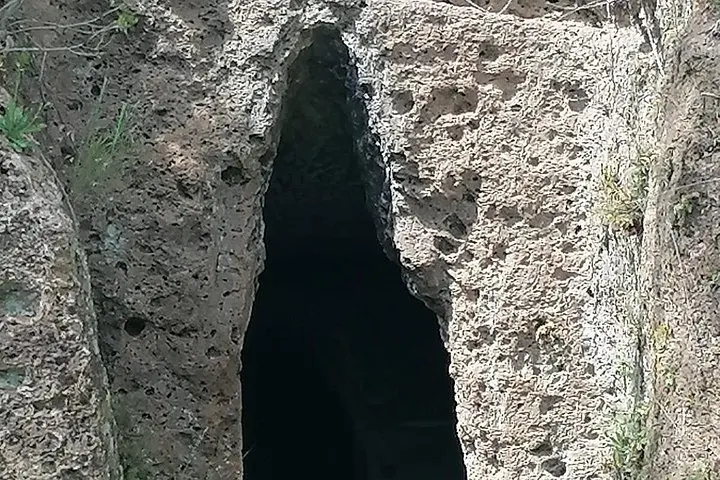
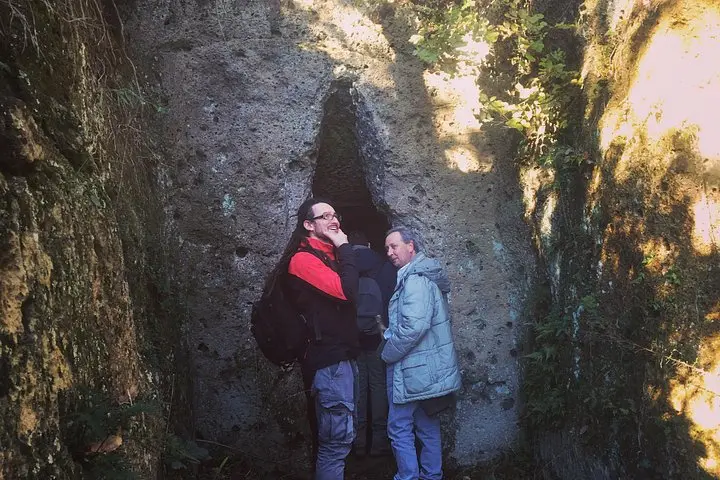
On the walk you’ll move across mixed trails: compact dirt, exposed bedrock, and short carved stairways leading to burial chambers. Expect uneven footing and short steep pitches; the route repays attention with quiet viewpoints and close examinations of carved funerary facades.
Practical guidance: bring water, sun protection, and sturdy footwear; plan for 2–3 hours with a licensed trekking guide who interprets the sites and manages delicate areas. Respect archaeological zones—no climbing on tomb faces—and time visits for morning or late afternoon light to avoid heat and appreciate the views. With basic fitness and good shoes, this hike is an accessible step into five millennia of human presence along a river that still remembers its traders.
Yes — a licensed trekking guide leads the excursion and interpretation is included; there are no separate admissions for the open necropolises.
The trail is family-friendly with supervision, but it involves uneven surfaces and short steep bits; families and older travelers should assess mobility and bring supportive footwear.
Most visitors stay in nearby Pitigliano or Manciano; reach the trailhead by local road—confirm meeting point with the operator, as public transport is limited.
Sites are protected archaeological areas—photography for personal use is generally allowed but avoid using tripods or touching the structures to prevent damage.
The Red Road operates guided outdoor trips and adventures with an emphasis on safety, stewardship, and memorable experiences.
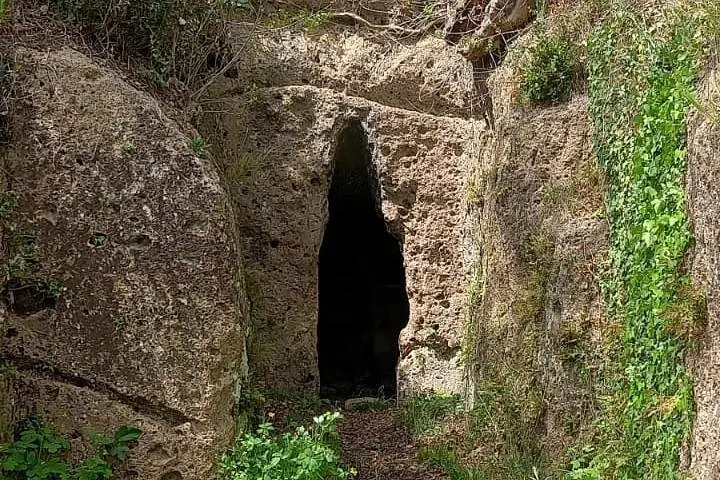
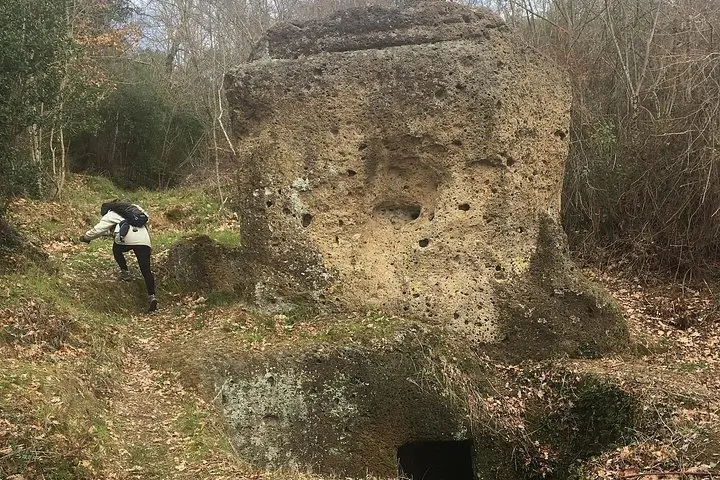
Morning light washes the limestone overhangs at Poggio Buco and the Fiora seems to breathe—its current nudging you downstream as you start the loop from the ancient village base. Low scrub and olive trees give way to cut rock where tombs stare out like windows into another era; the path winds close enough for the stones to feel warm under your palm.
Morning light washes the limestone overhangs at Poggio Buco and the Fiora seems to breathe—its current nudging you downstream as you start the loop from the ancient village base. Low scrub and olive trees give way to cut rock where tombs stare out like windows into another era; the path winds close enough for the stones to feel warm under your palm.
This is a landscape written in human bones and river sediment. Archaeological layers here span from the Copper Age through Etruscan and Roman occupation, with necropolises carved into tuff and sandstone cliffs. Geologically, the Fiora carved terraces and viewpoints that open toward the Tyrrhenian, offering distant flashings of sea and the silhouette of Corsica on clear days. Local culture still reads from these stones—small farms, shepherd tracks, and hamlets that used ancient routes the river defined.
On the walk you’ll move across mixed trails: compact dirt, exposed bedrock, and short carved stairways leading to burial chambers. Expect uneven footing and short steep pitches; the route repays attention with quiet viewpoints and close examinations of carved funerary facades.
Practical guidance: bring water, sun protection, and sturdy footwear; plan for 2–3 hours with a licensed trekking guide who interprets the sites and manages delicate areas. Respect archaeological zones—no climbing on tomb faces—and time visits for morning or late afternoon light to avoid heat and appreciate the views. With basic fitness and good shoes, this hike is an accessible step into five millennia of human presence along a river that still remembers its traders.