THE ADVENTURE COLLECTIVE® · Independent discovery and booking for outdoor travel

A full-day Pokhara hike that links the World Peace Stupa with the Pumdikot Shiva Idol, offering panoramic views of Phewa Lake and the Annapurna range. Expect village paths, stone steps, and cultural waypoints on a steady 6–7 hour loop.
A full-day Pokhara hike that links the World Peace Stupa with the Pumdikot Shiva Idol, offering panoramic views of Phewa Lake and the Annapurna range. Expect village paths, stone steps, and cultural waypoints on a steady 6–7 hour loop.
Early morning fog lifts off Phewa Lake as you step from Lakeside and load into a short drive toward Chhorepatan. The road gives way to a dirt trail; pine-scented air pushes at your face while terraced fields rise and fall like worked waves. The climb threads villages and bamboo groves before opening onto the white dome of the World Peace Stupa, where Pokhara, the lake, and the Annapurna range spread below.
Verified experiences and guided adventures in the surrounding area.
Operated by Worldwide Tourism Inc - Highly Recommended Travel Company · Pokhara, Gandaki Province
Early morning fog lifts off Phewa Lake as you step from Lakeside and load into a short drive toward Chhorepatan. The road gives way to a dirt trail; pine-scented air pushes at your face while terraced fields rise and fall like worked waves. The climb threads villages and bamboo groves before opening onto the white dome of the World Peace Stupa, where Pokhara, the lake, and the Annapurna range spread below.
The stupa was built by Japanese Buddhists in the late 20th century as a pilgrimage viewpoint and quieting place; the ridge itself is an exposed spur of the Lesser Himalaya with compacted clay soils and human-shaped terraces carved over generations. Culture here is pragmatic—offers of incense and small shrines, farmers tending millet and maize—so the hike is as much a cultural walk as a mountain approach.
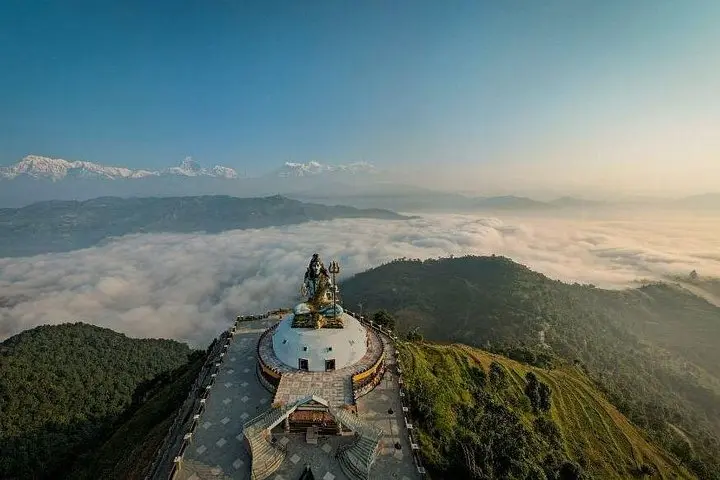
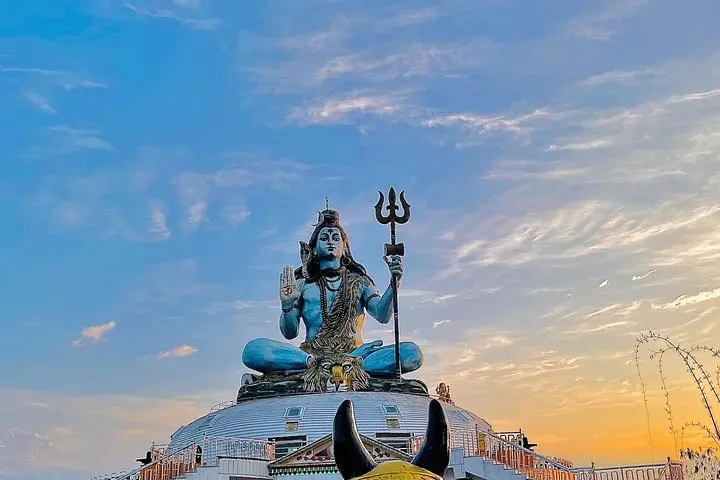
Expect well-worn stone steps, rooty singletrack, and short steep pitches that test the lungs but reward with wide views. Pumdikot’s Shiva Idol presides over the valley; villagers maintain small shrines and seasonal festivals give the place a local rhythm.
Practical guidance: start early to avoid midday heat and afternoon clouds, wear grippy footwear for mixed rock-and-soil sections, and carry 1–1.5 liters of water. The full loop, including stops, fits a solid 6–7 hour day. Mobile reception is intermittent; keep cash for tea houses and respect local customs when photographing shrines. This is a steady mountain walk—bring layers, pace yourself on stair sections, and leave no trace on terraces and village lanes.
The tour runs about 6–7 hours total with 2–3 hours ascending to the stupa and additional time to Pumdikot—moderate effort with some steep stone stair sections.
This tour includes an English-speaking trekking guide and private transfers—guides help with local navigation and cultural context.
Basic tea houses and pit toilets appear in villages near Chhorepatan and Lakeside; carry small change for snacks and drinks.
No special permits are required and altitudes are modest (under 1,500 m); standard precautions for anyone sensitive to exertion are advised.
Worldwide Tourism Inc - Highly Recommended Travel Company operates guided outdoor trips and adventures with an emphasis on safety, stewardship, and memorable experiences.
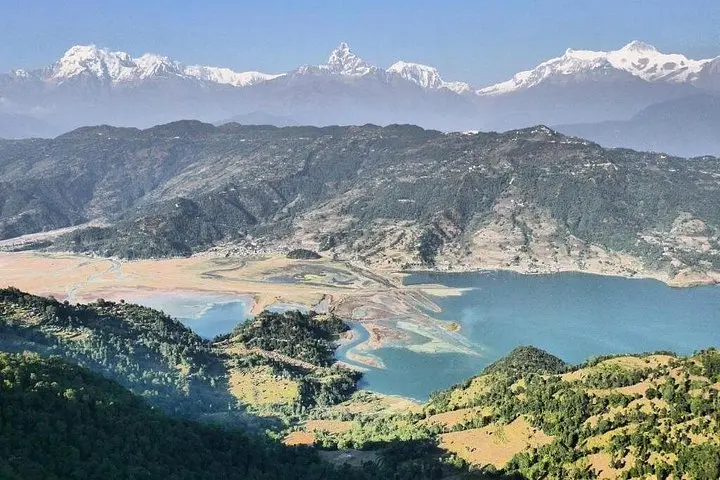
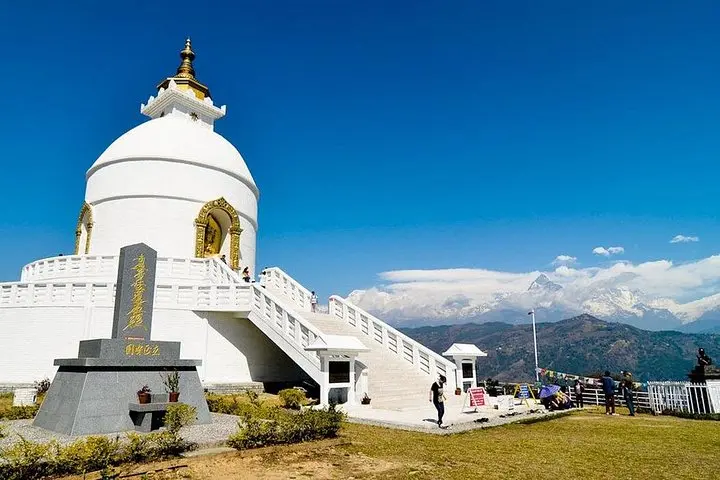
Early morning fog lifts off Phewa Lake as you step from Lakeside and load into a short drive toward Chhorepatan. The road gives way to a dirt trail; pine-scented air pushes at your face while terraced fields rise and fall like worked waves. The climb threads villages and bamboo groves before opening onto the white dome of the World Peace Stupa, where Pokhara, the lake, and the Annapurna range spread below.
Early morning fog lifts off Phewa Lake as you step from Lakeside and load into a short drive toward Chhorepatan. The road gives way to a dirt trail; pine-scented air pushes at your face while terraced fields rise and fall like worked waves. The climb threads villages and bamboo groves before opening onto the white dome of the World Peace Stupa, where Pokhara, the lake, and the Annapurna range spread below.
The stupa was built by Japanese Buddhists in the late 20th century as a pilgrimage viewpoint and quieting place; the ridge itself is an exposed spur of the Lesser Himalaya with compacted clay soils and human-shaped terraces carved over generations. Culture here is pragmatic—offers of incense and small shrines, farmers tending millet and maize—so the hike is as much a cultural walk as a mountain approach.
Expect well-worn stone steps, rooty singletrack, and short steep pitches that test the lungs but reward with wide views. Pumdikot’s Shiva Idol presides over the valley; villagers maintain small shrines and seasonal festivals give the place a local rhythm.
Practical guidance: start early to avoid midday heat and afternoon clouds, wear grippy footwear for mixed rock-and-soil sections, and carry 1–1.5 liters of water. The full loop, including stops, fits a solid 6–7 hour day. Mobile reception is intermittent; keep cash for tea houses and respect local customs when photographing shrines. This is a steady mountain walk—bring layers, pace yourself on stair sections, and leave no trace on terraces and village lanes.