THE ADVENTURE COLLECTIVE® · Independent discovery and booking for outdoor travel

A private half-day drive from Pokhara delivers two of the region’s most striking hilltop sites: the towering Mahadev statue at Pumdikot and the panoramic World Peace Pagoda overlooking Phewa Lake and the Annapurna range. Expect easy walks, dramatic views and a culturally rich, photo-ready route.
A private half-day drive from Pokhara delivers two of the region’s most striking hilltop sites: the towering Mahadev statue at Pumdikot and the panoramic World Peace Pagoda overlooking Phewa Lake and the Annapurna range. Expect easy walks, dramatic views and a culturally rich, photo-ready route.
Morning light lifts off Phewa Lake and the car eases up the valley road — you feel the city slip behind and the Annapurna ridgeline press forward, crisp and close. At the hilltop the 108-foot Mahadev Idol dominates the skyline, a modern devotional figure standing sentinel over terraces and villages; down another slope, the white dome of the World Peace Pagoda crowns the opposite ridge, watching the lake and city like a calm, surveying friend.
Verified experiences and guided adventures in the surrounding area.
Operated by CAN Travels · Pokhara, Gandaki Province
Morning light lifts off Phewa Lake and the car eases up the valley road — you feel the city slip behind and the Annapurna ridgeline press forward, crisp and close. At the hilltop the 108-foot Mahadev Idol dominates the skyline, a modern devotional figure standing sentinel over terraces and villages; down another slope, the white dome of the World Peace Pagoda crowns the opposite ridge, watching the lake and city like a calm, surveying friend.
Both sites sit where geology meets culture: glacial-born foothills, rivers cutting into softer rock, and a patchwork of farmland that shaped local settlement. The Peace Pagoda was built by Buddhist groups with international support as part of the post-war peace-pagoda movement; the Shiva statue at Pumdikot is a contemporary Hindu landmark that echoes older regional traditions. Local Gurung and Magar communities maintain village life below, and small lakeside temples add context to the visit.
Practically, this private four-hour route is a compact cultural outing with easy walking, some stepped paths and short uphill sections. Expect panoramic photo stops, short shrine visits, and a private-car transfer that handles all terrain between viewpoints. Bring sturdy shoes for uneven paths, sunscreen and water for exposed ridgelines, and a small amount of local currency for offerings or tea. Early morning gives the clearest mountain views and cooler air; monsoon months can make trails slippery. Guides typically include hotel pickup and entrance fees, making this a low-stress half-day escape that combines spiritual architecture with commanding mountain and lake scenery.
Yes — the tour notes that entrance fees to both sites are included in the price.
No — it’s suitable for most fitness levels with only short uphill walks and stair sections.
Yes — the private car service typically includes hotel pickup and drop-off within Pokhara.
Often yes — some itineraries include or can arrange a short boat ride to shorten the hike up to the Stupa; confirm when booking.
CAN Travels operates guided outdoor trips and adventures with an emphasis on safety, stewardship, and memorable experiences.

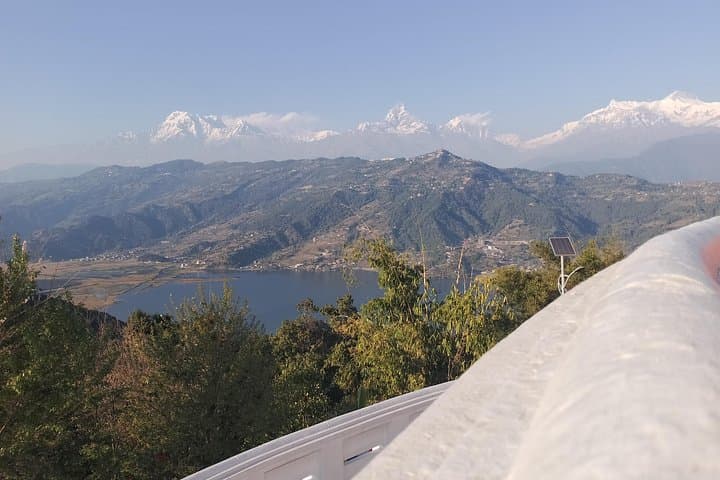

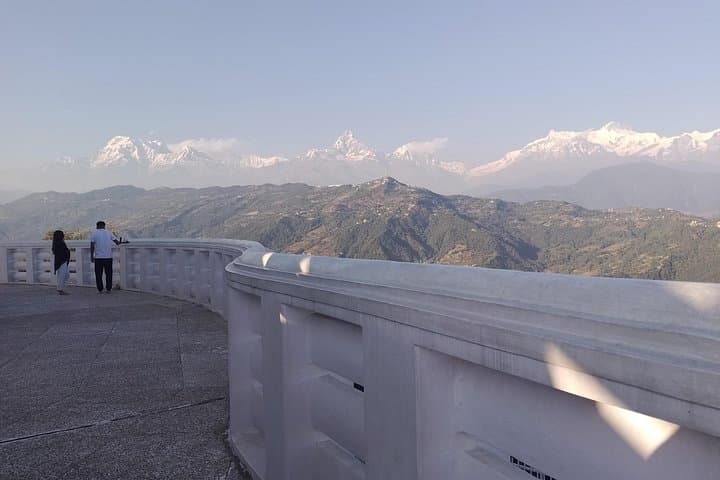
Morning light lifts off Phewa Lake and the car eases up the valley road — you feel the city slip behind and the Annapurna ridgeline press forward, crisp and close. At the hilltop the 108-foot Mahadev Idol dominates the skyline, a modern devotional figure standing sentinel over terraces and villages; down another slope, the white dome of the World Peace Pagoda crowns the opposite ridge, watching the lake and city like a calm, surveying friend.
Morning light lifts off Phewa Lake and the car eases up the valley road — you feel the city slip behind and the Annapurna ridgeline press forward, crisp and close. At the hilltop the 108-foot Mahadev Idol dominates the skyline, a modern devotional figure standing sentinel over terraces and villages; down another slope, the white dome of the World Peace Pagoda crowns the opposite ridge, watching the lake and city like a calm, surveying friend.
Both sites sit where geology meets culture: glacial-born foothills, rivers cutting into softer rock, and a patchwork of farmland that shaped local settlement. The Peace Pagoda was built by Buddhist groups with international support as part of the post-war peace-pagoda movement; the Shiva statue at Pumdikot is a contemporary Hindu landmark that echoes older regional traditions. Local Gurung and Magar communities maintain village life below, and small lakeside temples add context to the visit.
Practically, this private four-hour route is a compact cultural outing with easy walking, some stepped paths and short uphill sections. Expect panoramic photo stops, short shrine visits, and a private-car transfer that handles all terrain between viewpoints. Bring sturdy shoes for uneven paths, sunscreen and water for exposed ridgelines, and a small amount of local currency for offerings or tea. Early morning gives the clearest mountain views and cooler air; monsoon months can make trails slippery. Guides typically include hotel pickup and entrance fees, making this a low-stress half-day escape that combines spiritual architecture with commanding mountain and lake scenery.