THE ADVENTURE COLLECTIVE® · Independent discovery and booking for outdoor travel

Leap from 12,000 ft above Phewa Lake and the Annapurna foothills on a tandem skydive from Pame Danda. This half-day experience pairs technical safety with unmatched valley and mountain views—perfect for first-time jumpers who want well-captured memories.
Leap from 12,000 ft above Phewa Lake and the Annapurna foothills on a tandem skydive from Pame Danda. This half-day experience pairs technical safety with unmatched valley and mountain views—perfect for first-time jumpers who want well-captured memories.
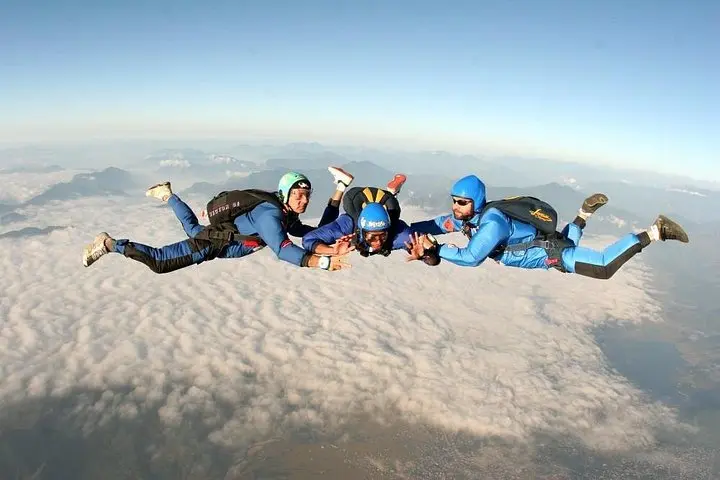
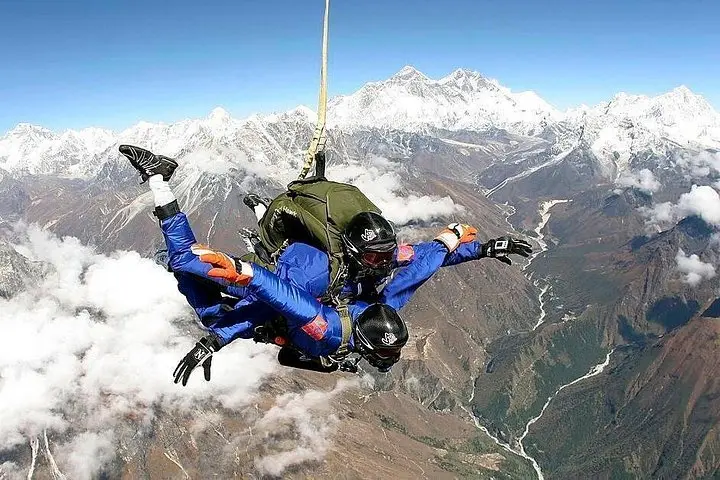
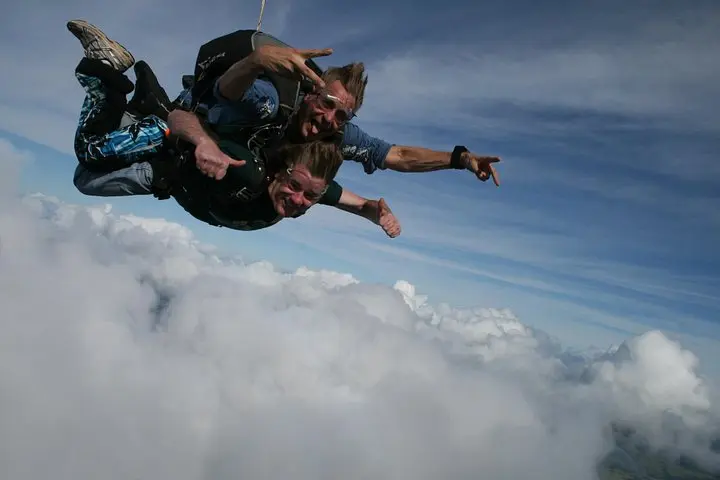
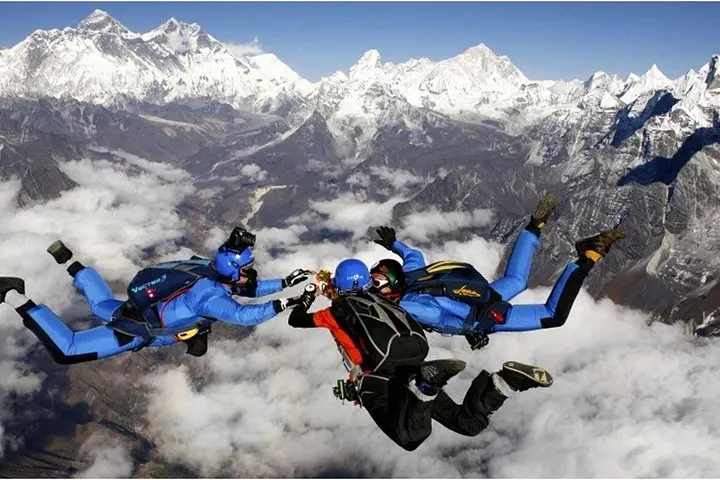
The morning at Pame Danda opens with a thin cold light across Phewa Lake and the jagged teeth of the Annapurna range beyond. You feel the rotor wash before you see the helicopter: a short drive from Lakeside, a quick safety briefing, then ascent—Pokhara shrinking beneath you while terraced hills and the lake’s glass patches slide by. At 12,000 ft the world simplifies to air, gravity, and the wide arc of the valley; the freefall lasts around 30–45 seconds before the canopy eases the pace and you glide toward the grassy landing strip.
Verified experiences and guided adventures in the surrounding area.
Operated by Shishu Tours & Travel · Pokhara, Gandaki Province
The morning at Pame Danda opens with a thin cold light across Phewa Lake and the jagged teeth of the Annapurna range beyond. You feel the rotor wash before you see the helicopter: a short drive from Lakeside, a quick safety briefing, then ascent—Pokhara shrinking beneath you while terraced hills and the lake’s glass patches slide by. At 12,000 ft the world simplifies to air, gravity, and the wide arc of the valley; the freefall lasts around 30–45 seconds before the canopy eases the pace and you glide toward the grassy landing strip.
Pokhara sits in the rain-shadow of the high Himalaya; the landscape is a product of uplift and glacial carving, with Phewa Lake occupying a basin fed by mountain runoff. The region’s Gurung and Magar communities have long been part of the valley’s identity, and aviation and aerial sports grew here alongside trekking tourism in the late 20th century.
Locally, pilots favor early mornings and late afternoons for clearer air and better light—those windows also give the best photos of Machapuchare and the Annapurnas. The jump is brief but intense: operators handle all equipment, and two in-air photographers commonly capture the descent.
Practical guidance: arrive with your government ID or passport, allow a half-day for pickup, briefing and debriefing, and disclose any medical conditions—pregnancy, spinal or heart issues rule out participation. Weather can cancel with short notice; operators typically offer refunds for storm days. Wear comfortable, close-toed shoes, avoid heavy jewelry, and keep layers handy—the temperature drops quickly with altitude. If you want crisp mountain shots, ask for a morning slot and confirm camera inclusion when booking.
Expect roughly 30–45 seconds of freefall depending on body position; the parachute ride that follows lasts several minutes as you steer to the landing zone.
Most operators include tandem camerawork as part of the package—confirm at booking and check delivery method for files.
Limits vary by operator; typical tandem weight cutoffs are enforced for safety—check the operator’s policy when you book and disclose any medical conditions.
Flights are commonly canceled for strong winds or low cloud; reputable operators will refund or reschedule if the jump is called off for safety.
Shishu Tours & Travel operates guided outdoor trips and adventures with an emphasis on safety, stewardship, and memorable experiences.
The morning at Pame Danda opens with a thin cold light across Phewa Lake and the jagged teeth of the Annapurna range beyond. You feel the rotor wash before you see the helicopter: a short drive from Lakeside, a quick safety briefing, then ascent—Pokhara shrinking beneath you while terraced hills and the lake’s glass patches slide by. At 12,000 ft the world simplifies to air, gravity, and the wide arc of the valley; the freefall lasts around 30–45 seconds before the canopy eases the pace and you glide toward the grassy landing strip.
The morning at Pame Danda opens with a thin cold light across Phewa Lake and the jagged teeth of the Annapurna range beyond. You feel the rotor wash before you see the helicopter: a short drive from Lakeside, a quick safety briefing, then ascent—Pokhara shrinking beneath you while terraced hills and the lake’s glass patches slide by. At 12,000 ft the world simplifies to air, gravity, and the wide arc of the valley; the freefall lasts around 30–45 seconds before the canopy eases the pace and you glide toward the grassy landing strip.
Pokhara sits in the rain-shadow of the high Himalaya; the landscape is a product of uplift and glacial carving, with Phewa Lake occupying a basin fed by mountain runoff. The region’s Gurung and Magar communities have long been part of the valley’s identity, and aviation and aerial sports grew here alongside trekking tourism in the late 20th century.
Locally, pilots favor early mornings and late afternoons for clearer air and better light—those windows also give the best photos of Machapuchare and the Annapurnas. The jump is brief but intense: operators handle all equipment, and two in-air photographers commonly capture the descent.
Practical guidance: arrive with your government ID or passport, allow a half-day for pickup, briefing and debriefing, and disclose any medical conditions—pregnancy, spinal or heart issues rule out participation. Weather can cancel with short notice; operators typically offer refunds for storm days. Wear comfortable, close-toed shoes, avoid heavy jewelry, and keep layers handy—the temperature drops quickly with altitude. If you want crisp mountain shots, ask for a morning slot and confirm camera inclusion when booking.