THE ADVENTURE COLLECTIVE® · Independent discovery and booking for outdoor travel

Catch the first light on the Annapurna Range from Sarangkot, take in a quieter panorama at Pumdikot, then descend to the serene World Peace Stupa overlooking Phewa Lake. This private half-day tour pairs dramatic mountain views with short, accessible walks and cultural stops.
Catch the first light on the Annapurna Range from Sarangkot, take in a quieter panorama at Pumdikot, then descend to the serene World Peace Stupa overlooking Phewa Lake. This private half-day tour pairs dramatic mountain views with short, accessible walks and cultural stops.
Before the sun clears the lip of the Annapurna Range, Sarangkot feels like a held breath — cool air pushing at your face, silhouettes of peaks sharpening from violet to gold. From a private vehicle the road climbs out of Pokhara’s lakeside calm to ridgelines where morning light makes Machapuchare’s cliffs look like carved bone.
Verified experiences and guided adventures in the surrounding area.
Operated by Crystal Holidays Nepal · Pokhara, Gandaki Province
Before the sun clears the lip of the Annapurna Range, Sarangkot feels like a held breath — cool air pushing at your face, silhouettes of peaks sharpening from violet to gold. From a private vehicle the road climbs out of Pokhara’s lakeside calm to ridgelines where morning light makes Machapuchare’s cliffs look like carved bone.
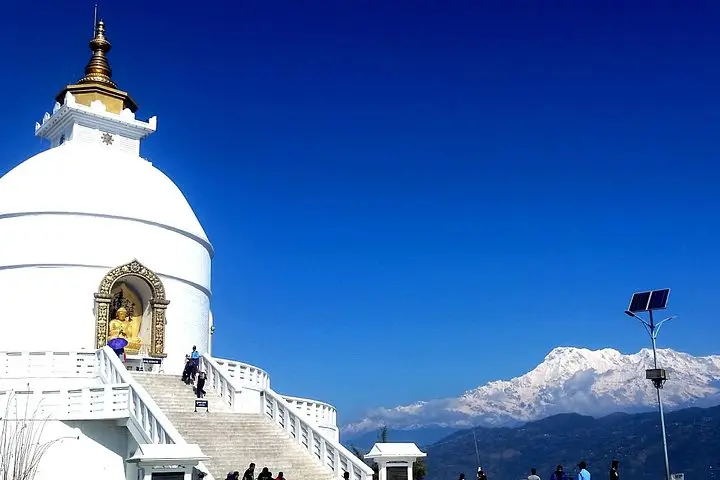
The route continues to Pumdikot, a lower, lesser-known ridge that opens a different frame of the valley: terraced fields, patchwork forest, and a horizon that flattens toward the Terai. The day closes at the World Peace Stupa, a whitewashed dome built by Japanese Buddhists that sits above Phewa Lake and watches over local villages. Geologically, visitors are viewing the southern flanks of the Greater Himalaya — heavily folded, steep faces that reveal how the Indian plate crumpled under Eurasia.
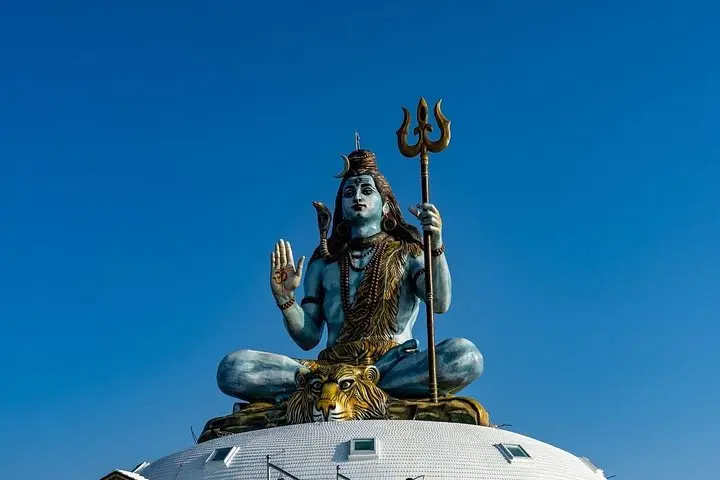
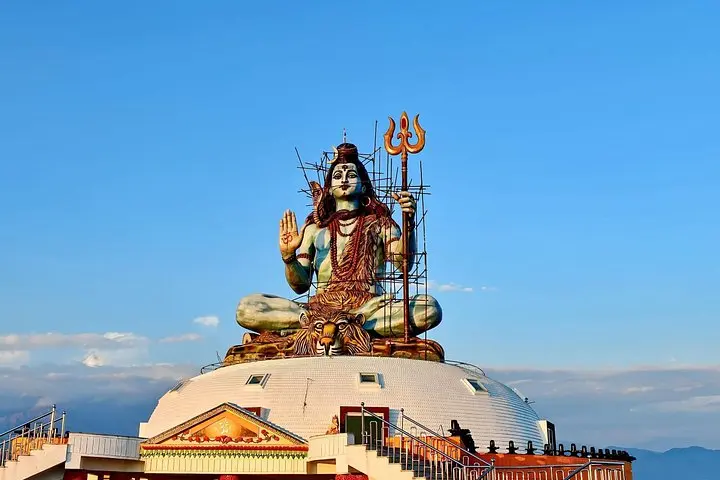
Culturally, stops include small shrines and a Shiva idol where routine prayers still mark village life; your guide will point out ritual customs and simple practices of respect.
Practically, the tour is a compact half-day drive-and-walk experience (4–5 hours). Expect short stair climbs, paved trails and roadside viewpoints rather than long hikes; light layers and sturdy walking shoes are sensible. Sunrise timing is everything — leave Pokhara before first light for the best window. Bring a camera with a zoom lens, drink water (a bottle is provided), and move mindfully around religious sites. The route is suitable for most fitness levels but not recommended for those with serious heart conditions. With private pickup and an English-speaking guide, it’s a straightforward introduction to the Pokhara basin’s dramatic mountain scenery.
Plan to leave Pokhara 45–60 minutes before local sunrise to allow for traffic and to secure a good viewing spot at Sarangkot.
No — the tour involves short walks and stairs at viewpoints but no long hikes; it’s rated easy and suitable for most fitness levels.
This private tour typically includes transfers and guide services; small local donations or voluntary offerings at temples are not usually included.
Clear, crisp mornings after a cool night offer the best visibility; post-monsoon (Oct–Nov) and spring (Mar–Apr) mornings are especially clear.
Crystal Holidays Nepal operates guided outdoor trips and adventures with an emphasis on safety, stewardship, and memorable experiences.
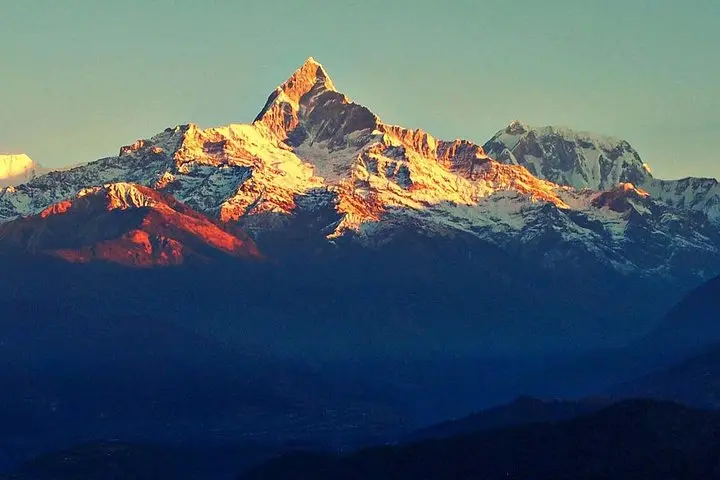
Before the sun clears the lip of the Annapurna Range, Sarangkot feels like a held breath — cool air pushing at your face, silhouettes of peaks sharpening from violet to gold. From a private vehicle the road climbs out of Pokhara’s lakeside calm to ridgelines where morning light makes Machapuchare’s cliffs look like carved bone.
Before the sun clears the lip of the Annapurna Range, Sarangkot feels like a held breath — cool air pushing at your face, silhouettes of peaks sharpening from violet to gold. From a private vehicle the road climbs out of Pokhara’s lakeside calm to ridgelines where morning light makes Machapuchare’s cliffs look like carved bone.
The route continues to Pumdikot, a lower, lesser-known ridge that opens a different frame of the valley: terraced fields, patchwork forest, and a horizon that flattens toward the Terai. The day closes at the World Peace Stupa, a whitewashed dome built by Japanese Buddhists that sits above Phewa Lake and watches over local villages. Geologically, visitors are viewing the southern flanks of the Greater Himalaya — heavily folded, steep faces that reveal how the Indian plate crumpled under Eurasia.
Culturally, stops include small shrines and a Shiva idol where routine prayers still mark village life; your guide will point out ritual customs and simple practices of respect.
Practically, the tour is a compact half-day drive-and-walk experience (4–5 hours). Expect short stair climbs, paved trails and roadside viewpoints rather than long hikes; light layers and sturdy walking shoes are sensible. Sunrise timing is everything — leave Pokhara before first light for the best window. Bring a camera with a zoom lens, drink water (a bottle is provided), and move mindfully around religious sites. The route is suitable for most fitness levels but not recommended for those with serious heart conditions. With private pickup and an English-speaking guide, it’s a straightforward introduction to the Pokhara basin’s dramatic mountain scenery.