
Pollino National Park Hiking: Serra Dolcedorme Trails, Pino Loricato & 360° Views
Traverse limestone ridges beneath wind-sculpted pines and reach panoramic summits of Pollino National Park. This guided hike combines high-elevation geology, shepherding history, and close-up views of the rare pino loricato.
An Adventure In Civita.
Traverse limestone ridges beneath wind-sculpted pines and reach panoramic summits of Pollino National Park. This guided hike combines high-elevation geology, shepherding history, and close-up views of the rare pino loricato.
Read the full experience
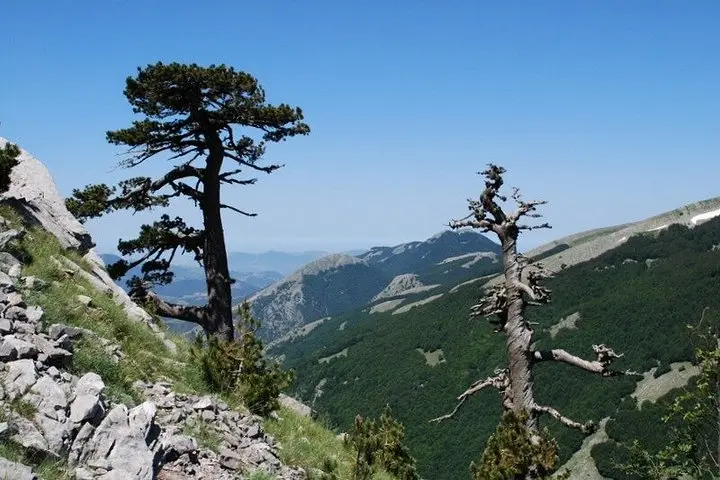
You start on a limestone ridge where the wind has been carving trees into weatherproof sculptures; the pino loricato leans like an old climber testing balance against the sky. Underfoot, karst paths roll away toward serras—Dolcedorme and Monte Pollino—while the valley below widens to reveal both the Ionian and Tyrrhenian coasts on clear days.
You start on a limestone ridge where the wind has been carving trees into weatherproof sculptures; the pino loricato leans like an old climber testing balance against the sky. Underfoot, karst paths roll away toward serras—Dolcedorme and Monte Pollino—while the valley below widens to reveal both the Ionian and Tyrrhenian coasts on clear days.
The Park straddles Calabria and Basilicata and preserves high-altitude plateaus, shepherding trails from historic transhumance routes. Geology here is pure carbonate: sinkholes, caves and exposed limestone that explain the sharp ridgelines and the sparse, hardy vegetation that clings to crevices. Cultural traces—stone huts, shepherd tracks and scattered chestnut groves—speak to centuries of seasonal grazing.
On guided hikes you follow classic routes such as the Colle dell'Impiso approaches: expect roughly 14+ km and 600–700 m of sustained elevation gain on full-day outings, with panoramic 360° views from summits around 2,200 m. Guides point out pino loricato, alpine orchids and glider thermals riding the ridges.
Practical guide: start early for stable weather and to avoid afternoon wind, carry 2–3 L of water and layered clothing for rapid temperature swings. Sturdy boots with ankle support are necessary on rocky, uneven ground; trekking poles help on prolonged ascents and descents. Bring a packed picnic of local specialties to enjoy at a summit saddle. Respect marked trails to protect fragile karst ecosystems and the park’s endemic trees. With preparation, this is a demanding but immensely rewarding highland hike in southern Italy.
Frequently asked questions
Typical guided hikes cover 14+ km with roughly 600–700 m of elevation gain; expect a full day of sustained effort suitable for fit hikers.
Trails follow classic park routes and are marked, but a professional guide improves navigation and interpretation and is included in this tour.
Look for raptors like golden eagles or griffon vultures overhead and mammals such as wild boar or roe deer in higher meadows and forest edges.
Yes—these ancient pines are protected; observe them from established paths and avoid stepping on exposed roots to prevent damage.
About This Experience
SilvioCarrieri operates guided outdoor trips and adventures with an emphasis on safety, stewardship, and memorable experiences.
Adventure tips
Recommended gear
- Sturdy hiking boots: Protects ankles and provides traction on rocky, karst terrain.
- Insulating layers and wind shell: Temperatures and wind can change rapidly above 2,000 m.
- 2–3 liters water and a hydration system: Necessary for long climbs and exposed ridgelines; potable water is limited on trail.
- Trekking poles: Help conserve energy on long ascents and stabilize descents on loose rock.
Photos of the experience
Related adventures & guides
Read the full experience
You start on a limestone ridge where the wind has been carving trees into weatherproof sculptures; the pino loricato leans like an old climber testing balance against the sky. Underfoot, karst paths roll away toward serras—Dolcedorme and Monte Pollino—while the valley below widens to reveal both the Ionian and Tyrrhenian coasts on clear days.
You start on a limestone ridge where the wind has been carving trees into weatherproof sculptures; the pino loricato leans like an old climber testing balance against the sky. Underfoot, karst paths roll away toward serras—Dolcedorme and Monte Pollino—while the valley below widens to reveal both the Ionian and Tyrrhenian coasts on clear days.
The Park straddles Calabria and Basilicata and preserves high-altitude plateaus, shepherding trails from historic transhumance routes. Geology here is pure carbonate: sinkholes, caves and exposed limestone that explain the sharp ridgelines and the sparse, hardy vegetation that clings to crevices. Cultural traces—stone huts, shepherd tracks and scattered chestnut groves—speak to centuries of seasonal grazing.
On guided hikes you follow classic routes such as the Colle dell'Impiso approaches: expect roughly 14+ km and 600–700 m of sustained elevation gain on full-day outings, with panoramic 360° views from summits around 2,200 m. Guides point out pino loricato, alpine orchids and glider thermals riding the ridges.
Practical guide: start early for stable weather and to avoid afternoon wind, carry 2–3 L of water and layered clothing for rapid temperature swings. Sturdy boots with ankle support are necessary on rocky, uneven ground; trekking poles help on prolonged ascents and descents. Bring a packed picnic of local specialties to enjoy at a summit saddle. Respect marked trails to protect fragile karst ecosystems and the park’s endemic trees. With preparation, this is a demanding but immensely rewarding highland hike in southern Italy.
Make a day of it nearby.
Verified experiences and guided adventures in the surrounding area.