THE ADVENTURE COLLECTIVE® · Independent discovery and booking for outdoor travel

Explore the compact grandeur of Polonnaruwa on a full‑day excursion from Negombo. Visit the Gal Vihara, Rankoth Vehera, and ancient reservoirs while learning how medieval kings engineered an empire.
Explore the compact grandeur of Polonnaruwa on a full‑day excursion from Negombo. Visit the Gal Vihara, Rankoth Vehera, and ancient reservoirs while learning how medieval kings engineered an empire.
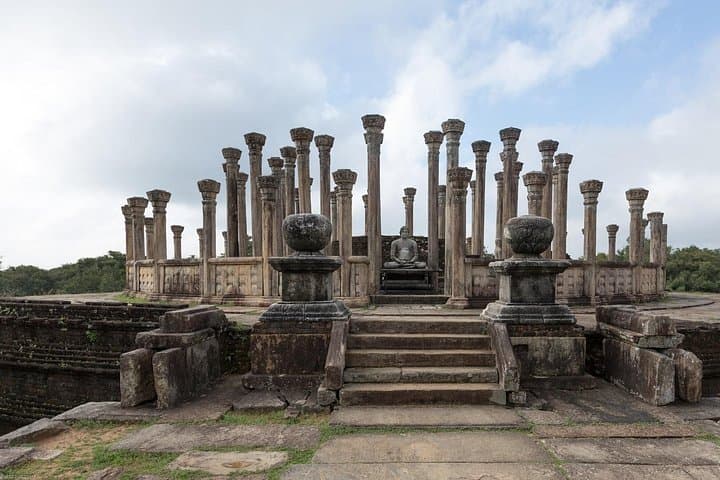
You step from an air‑conditioned vehicle into a flat, sunbaked plain where stone statues watch over a city that once ran an empire. Dust lifts from the packed earth as guidebooks of centuries ago—the stupas, image houses and carved ponds—come into view, each surface warmed by the tropical sun and heavy with history.
Verified experiences and guided adventures in the surrounding area.
Operated by Classical Lanka Tours · Polonnaruwa, North Central Province
You step from an air‑conditioned vehicle into a flat, sunbaked plain where stone statues watch over a city that once ran an empire. Dust lifts from the packed earth as guidebooks of centuries ago—the stupas, image houses and carved ponds—come into view, each surface warmed by the tropical sun and heavy with history.
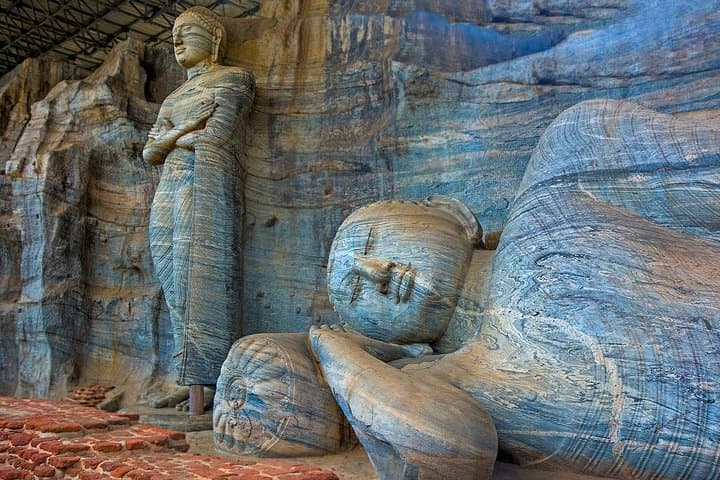
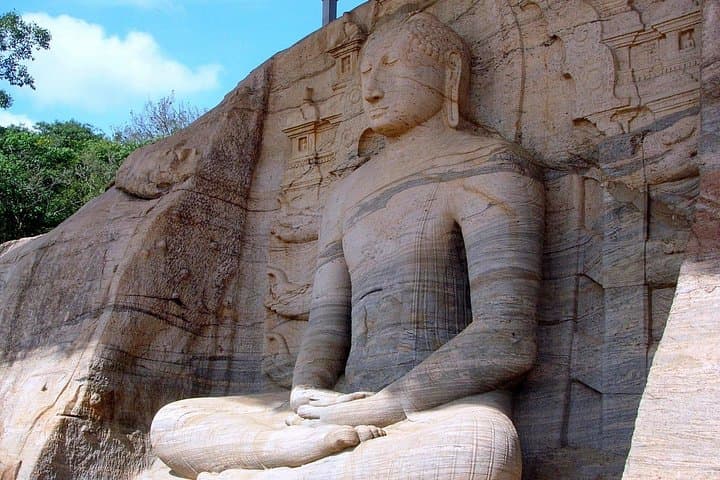
Polonnaruwa rose to prominence in the 11th–13th centuries as Sri Lanka’s second capital; its monuments reflect royal ambition and advanced hydraulic engineering. The Parakrama Samudraya reservoir still holds a broad sheet of water, reminding visitors that ancient kings planned agriculture and water storage with precision. The Gal Vihara’s four granite Buddhas, cut from a single rock, display a sculptural finesse unique to the Polonnaruwa period.
Geologically the site sits on Precambrian bedrock capped by ancient masonry; exposure and foot traffic have smoothened carved surfaces over time. Culturally, you'll encounter living crafts—woodcarving and gem trading—that link present livelihoods to the past.
Practical guidance: wear sturdy, flat shoes for walking on uneven stone, bring sun protection and a refillable water bottle, and plan for long stretches between shaded spots. The full‑day schedule means early departure from Negombo and a return late afternoon. Photography is allowed at most monuments but observe signs and refrain from climbing on relics. Expect flat terrain with intermittent steps; pace yourself, hydrate, and take breaks at the lotus pond and reservoir shore where the ruins meet open sky.
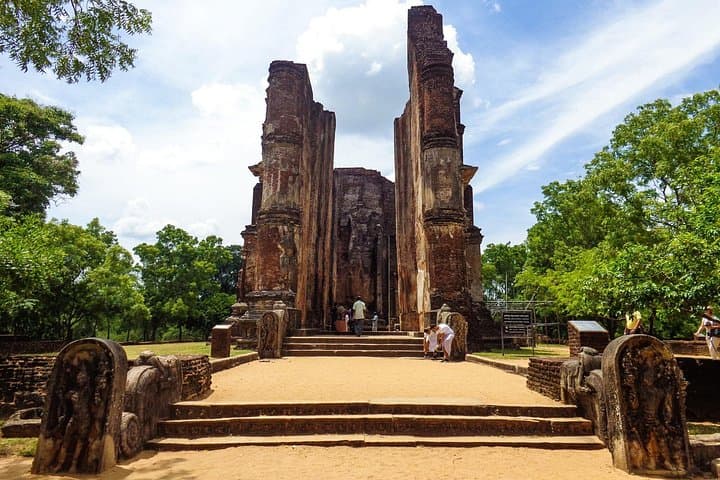
The tour runs about 8–10 hours and typically includes private transport from Negombo, entrance fees to key monuments, bottled water, and guided visits to Gal Vihara, Rankoth Vehera, Lankathilaka, the Lotus Pond and Parakrama Samudraya.
Some areas and newer walkways are accessible, but many original ruins have uneven ground and steps; check in advance for specific accessibility assistance.
Yes—there are craft centers, gem shops and small eateries near the site; budget time for a lunch stop if your itinerary includes one.
Photography for personal use is permitted at most monuments, but drones are generally restricted—ask the guide and follow site regulations to avoid fines.
Classical Lanka Tours operates guided outdoor trips and adventures with an emphasis on safety, stewardship, and memorable experiences.
You step from an air‑conditioned vehicle into a flat, sunbaked plain where stone statues watch over a city that once ran an empire. Dust lifts from the packed earth as guidebooks of centuries ago—the stupas, image houses and carved ponds—come into view, each surface warmed by the tropical sun and heavy with history.
You step from an air‑conditioned vehicle into a flat, sunbaked plain where stone statues watch over a city that once ran an empire. Dust lifts from the packed earth as guidebooks of centuries ago—the stupas, image houses and carved ponds—come into view, each surface warmed by the tropical sun and heavy with history.
Polonnaruwa rose to prominence in the 11th–13th centuries as Sri Lanka’s second capital; its monuments reflect royal ambition and advanced hydraulic engineering. The Parakrama Samudraya reservoir still holds a broad sheet of water, reminding visitors that ancient kings planned agriculture and water storage with precision. The Gal Vihara’s four granite Buddhas, cut from a single rock, display a sculptural finesse unique to the Polonnaruwa period.
Geologically the site sits on Precambrian bedrock capped by ancient masonry; exposure and foot traffic have smoothened carved surfaces over time. Culturally, you'll encounter living crafts—woodcarving and gem trading—that link present livelihoods to the past.
Practical guidance: wear sturdy, flat shoes for walking on uneven stone, bring sun protection and a refillable water bottle, and plan for long stretches between shaded spots. The full‑day schedule means early departure from Negombo and a return late afternoon. Photography is allowed at most monuments but observe signs and refrain from climbing on relics. Expect flat terrain with intermittent steps; pace yourself, hydrate, and take breaks at the lotus pond and reservoir shore where the ruins meet open sky.