THE ADVENTURE COLLECTIVE® · Independent discovery and booking for outdoor travel

Explore Polonnaruwa’s stone monuments and learn traditional Sri Lankan cooking in a single, well-paced day. This private tour combines guided archaeological highlights with a hands-on village cooking class and local refreshments.
Explore Polonnaruwa’s stone monuments and learn traditional Sri Lankan cooking in a single, well-paced day. This private tour combines guided archaeological highlights with a hands-on village cooking class and local refreshments.
You step out of an air-conditioned van into a sunlit plain where broken stone and shadowed Buddha faces hold court. Palmy trees run in rows beyond the site and the distant hum of village life threads through the ruins as your guide offers a chilled king coconut — a crisp, local welcome.
Verified experiences and guided adventures in the surrounding area.
Operated by Train Journeys in Sri Lanka · Polonnaruwa, North Central Province
You step out of an air-conditioned van into a sunlit plain where broken stone and shadowed Buddha faces hold court. Palmy trees run in rows beyond the site and the distant hum of village life threads through the ruins as your guide offers a chilled king coconut — a crisp, local welcome.
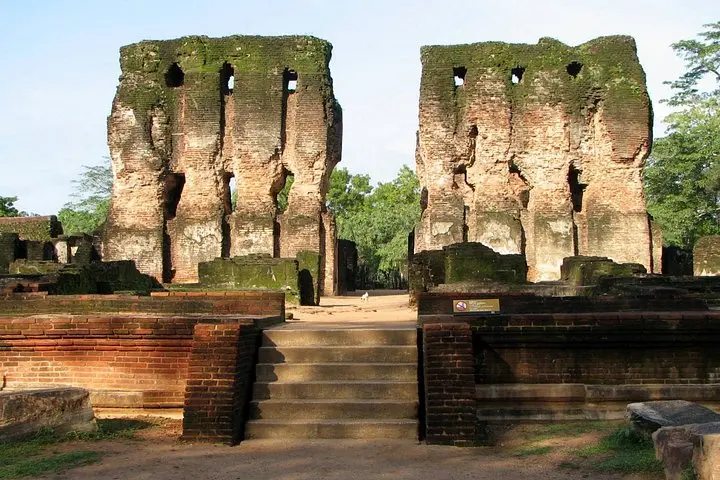
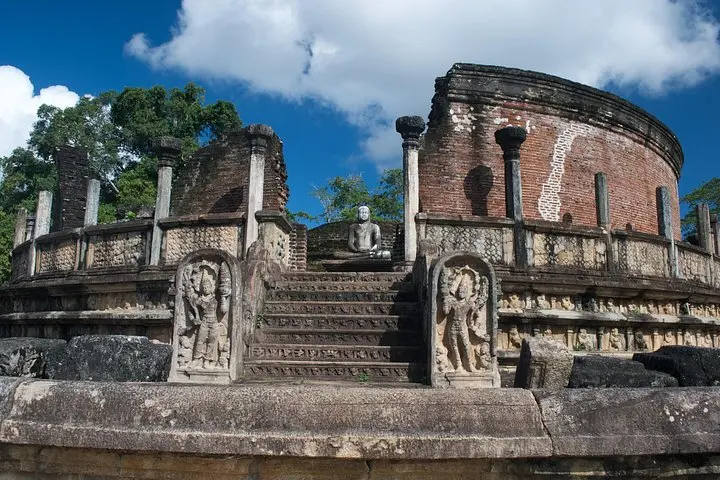
Polonnaruwa was Sri Lanka’s medieval capital (11th–13th centuries) and its masonry survives in large, well-preserved assemblies: the Royal Palace, the Vatadage, Gal Vihara’s monolithic Buddhas and the towering Rankot Vihara. The bedrock here is low-lying and mostly flat, so the ruins spread outward instead of climbing; many monuments were hewn and assembled of durable stone, which is why details still read clearly after centuries.
The tour pairs archaeology with a hands-on cooking class in a nearby village, where you learn to temper spices, grind coconut, and plate rice-and-curry under local instruction — the practical side of Sri Lankan culture. Expect 3–5 km of walking over uneven stone slabs and short steps between sites, punctuated by seated, interactive cooking time.
Practical guidance: this is a full-day excursion (about 10–11 hours door-to-door from Habarana), with AC transport, an English-speaking guide, lunch and one king coconut included. Wear sturdy shoes, sun protection and modest clothing for temples (shoulders and knees covered). Start early to beat the noon heat and carry a small daypack with water and a hat. The pace is unhurried but the terrain rewards careful footing and curiosity.
The tour lasts approximately 10–11 hours (600–660 minutes) including hotel pickup and drop-off around Habarana.
The tour description notes guided visits and transportation; check booking details — national archaeological site entry fees are often separate unless otherwise stated.
Guides are typically flexible; indicate allergies or dietary needs at booking so the host can adjust recipes or ingredients.
Yes — the itinerary covers key sites (Royal Palace, Gal Vihara, Vatadage, Rankot Vihara, Lankatilaka) with short stops at each and a longer block for the cooking class.
Train Journeys in Sri Lanka operates guided outdoor trips and adventures with an emphasis on safety, stewardship, and memorable experiences.
You step out of an air-conditioned van into a sunlit plain where broken stone and shadowed Buddha faces hold court. Palmy trees run in rows beyond the site and the distant hum of village life threads through the ruins as your guide offers a chilled king coconut — a crisp, local welcome.
You step out of an air-conditioned van into a sunlit plain where broken stone and shadowed Buddha faces hold court. Palmy trees run in rows beyond the site and the distant hum of village life threads through the ruins as your guide offers a chilled king coconut — a crisp, local welcome.
Polonnaruwa was Sri Lanka’s medieval capital (11th–13th centuries) and its masonry survives in large, well-preserved assemblies: the Royal Palace, the Vatadage, Gal Vihara’s monolithic Buddhas and the towering Rankot Vihara. The bedrock here is low-lying and mostly flat, so the ruins spread outward instead of climbing; many monuments were hewn and assembled of durable stone, which is why details still read clearly after centuries.
The tour pairs archaeology with a hands-on cooking class in a nearby village, where you learn to temper spices, grind coconut, and plate rice-and-curry under local instruction — the practical side of Sri Lankan culture. Expect 3–5 km of walking over uneven stone slabs and short steps between sites, punctuated by seated, interactive cooking time.
Practical guidance: this is a full-day excursion (about 10–11 hours door-to-door from Habarana), with AC transport, an English-speaking guide, lunch and one king coconut included. Wear sturdy shoes, sun protection and modest clothing for temples (shoulders and knees covered). Start early to beat the noon heat and carry a small daypack with water and a hat. The pace is unhurried but the terrain rewards careful footing and curiosity.