THE ADVENTURE COLLECTIVE® · Independent discovery and booking for outdoor travel

Walk among 11th–13th century stone Buddhas, sample a rice-and-curry lunch, and—if you choose—add an elephant-spotting stop on this private Polonnaruwa day tour. Practical logistics and local context make this a streamlined cultural outing.
Walk among 11th–13th century stone Buddhas, sample a rice-and-curry lunch, and—if you choose—add an elephant-spotting stop on this private Polonnaruwa day tour. Practical logistics and local context make this a streamlined cultural outing.
You step out of the vehicle into sun-baked stone and the low hum of cicadas; broken stupas and carved Buddhas occupy terraces like weathered guardians. The compact Polonnaruwa Archaeological Park lays its history in front of you—wide paths, shaded fig trees, and the echo of a civilization that ruled the island in the 11th–13th centuries.
Verified experiences and guided adventures in the surrounding area.
Operated by Mahaweli Tours and Holidays · Polonnaruwa, North Central Province
You step out of the vehicle into sun-baked stone and the low hum of cicadas; broken stupas and carved Buddhas occupy terraces like weathered guardians. The compact Polonnaruwa Archaeological Park lays its history in front of you—wide paths, shaded fig trees, and the echo of a civilization that ruled the island in the 11th–13th centuries.
Polonnaruwa replaced Anuradhapura as the medieval capital and is defined by granite-carved statues, brick stupas, and the vast Parakrama Samudra reservoir—an engineered lake that still speaks to sophisticated irrigation and hydraulic planning. The site sits on Sri Lanka’s dry plains; geology is mostly Precambrian crystalline rock with laterite and riverine alluvium nearby. Culturally, expect a living mixture of Buddhist monuments, active local shrines, and town life in Kaduruwela where markets and street food provide texture.
Practically, this private day tour includes hotel pickup, a Sri Lankan rice-and-curry lunch, bottled water and a driver-guide. Entrance fees to archaeological sites are usually paid on arrival, and much of the route involves uneven stone surfaces and short walks—plan for 2–4 km on foot across multiple temple complexes. Mornings are cooler and best for photography; afternoons bring heat. Optional stops may include a wildlife window to see elephants or a spice garden visit; tell your driver in advance.
Bring sun protection, comfortable walking shoes, cash for site tickets, and respect the sites by keeping to paths and removing hats inside temples. With practical planning, the day balances vivid ruins, local flavors, and the chance to spot Sri Lanka’s wildlife beyond the monuments.
No—entrance fees to the Polonnaruwa Archaeological Park are typically paid on arrival; bring local currency.
Some transport and portions of the itinerary are wheelchair accessible, but many temple areas have uneven ground and steps—check specifics with the operator before booking.
Wildlife sightings are never guaranteed, but optional visits to nearby reserves or viewing areas increase the chance of seeing elephants, especially in drier months.
The included Sri Lankan rice-and-curry can be adjusted on request; notify the operator in advance for vegetarian or allergy needs.
Mahaweli Tours and Holidays operates guided outdoor trips and adventures with an emphasis on safety, stewardship, and memorable experiences.
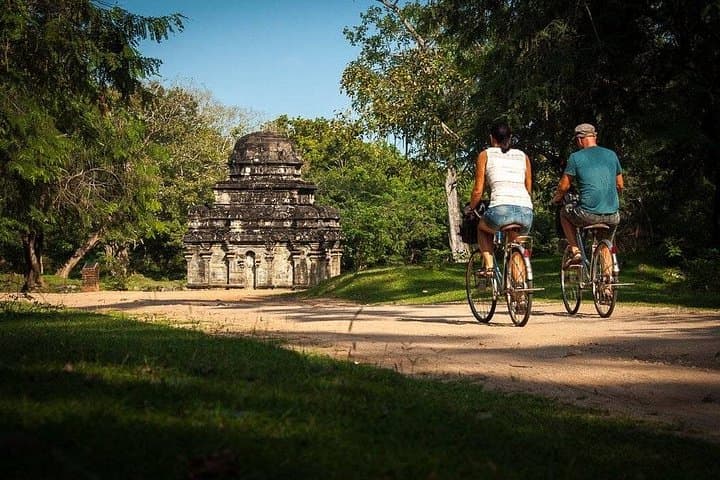
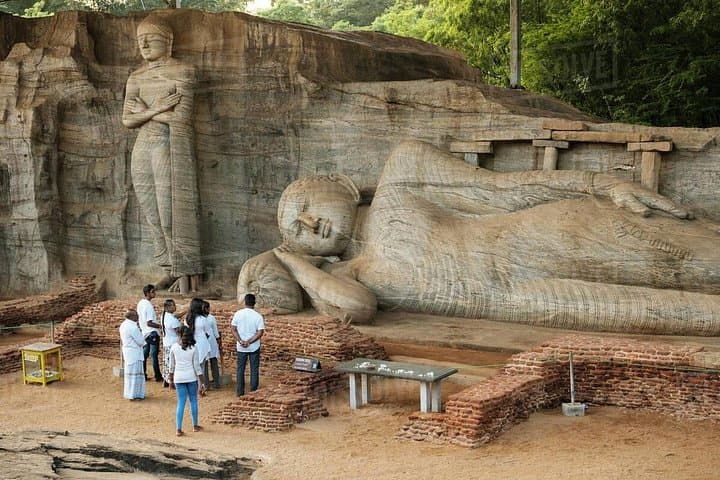
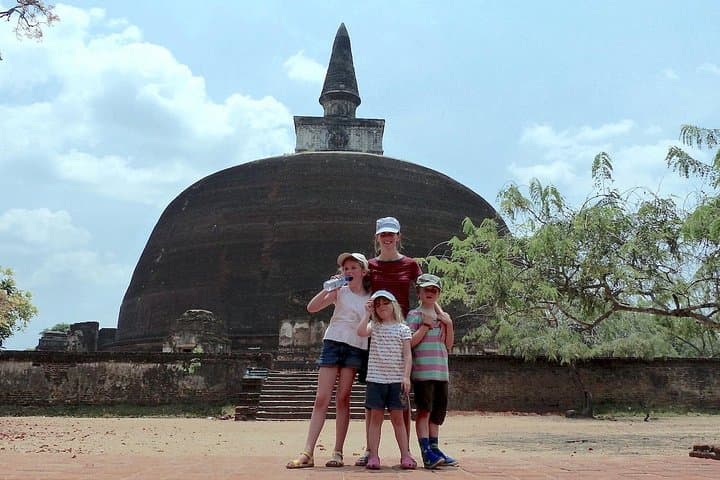
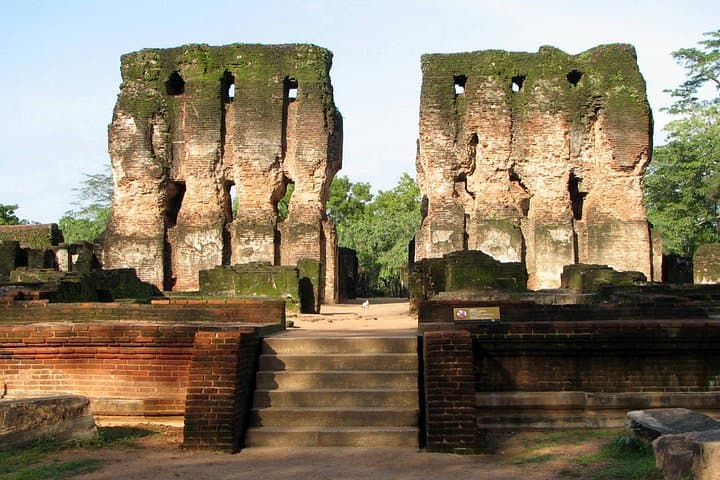
You step out of the vehicle into sun-baked stone and the low hum of cicadas; broken stupas and carved Buddhas occupy terraces like weathered guardians. The compact Polonnaruwa Archaeological Park lays its history in front of you—wide paths, shaded fig trees, and the echo of a civilization that ruled the island in the 11th–13th centuries.
You step out of the vehicle into sun-baked stone and the low hum of cicadas; broken stupas and carved Buddhas occupy terraces like weathered guardians. The compact Polonnaruwa Archaeological Park lays its history in front of you—wide paths, shaded fig trees, and the echo of a civilization that ruled the island in the 11th–13th centuries.
Polonnaruwa replaced Anuradhapura as the medieval capital and is defined by granite-carved statues, brick stupas, and the vast Parakrama Samudra reservoir—an engineered lake that still speaks to sophisticated irrigation and hydraulic planning. The site sits on Sri Lanka’s dry plains; geology is mostly Precambrian crystalline rock with laterite and riverine alluvium nearby. Culturally, expect a living mixture of Buddhist monuments, active local shrines, and town life in Kaduruwela where markets and street food provide texture.
Practically, this private day tour includes hotel pickup, a Sri Lankan rice-and-curry lunch, bottled water and a driver-guide. Entrance fees to archaeological sites are usually paid on arrival, and much of the route involves uneven stone surfaces and short walks—plan for 2–4 km on foot across multiple temple complexes. Mornings are cooler and best for photography; afternoons bring heat. Optional stops may include a wildlife window to see elephants or a spice garden visit; tell your driver in advance.
Bring sun protection, comfortable walking shoes, cash for site tickets, and respect the sites by keeping to paths and removing hats inside temples. With practical planning, the day balances vivid ruins, local flavors, and the chance to spot Sri Lanka’s wildlife beyond the monuments.