THE ADVENTURE COLLECTIVE® · Independent discovery and booking for outdoor travel

Step aboard Kamoauli for a two-hour cultural sail along Waikiki’s Mamala Bay. This traditional double-hulled canoe pairs hands-on Hawaiian practices—poi pounding, weaving, chants—with coastal views and local history.
Step aboard Kamoauli for a two-hour cultural sail along Waikiki’s Mamala Bay. This traditional double-hulled canoe pairs hands-on Hawaiian practices—poi pounding, weaving, chants—with coastal views and local history.
A bright morning on Mamala Bay feels deliberate: trade winds push a low, steady swell and the all-wood double-hulled waʻa kaulua slips through the water like a living artifact. Guests step aboard Kamoauli at Kewalo Basin, greeted by ukulele, chant, and the scent of taro being pounded into poi. The canoe doesn’t just move you along the coast — it places you inside a practice of navigation, craft and local story.
Verified experiences and guided adventures in the surrounding area.
Operated by Kamoauli · Honolulu, Hawaii
A bright morning on Mamala Bay feels deliberate: trade winds push a low, steady swell and the all-wood double-hulled waʻa kaulua slips through the water like a living artifact. Guests step aboard Kamoauli at Kewalo Basin, greeted by ukulele, chant, and the scent of taro being pounded into poi. The canoe doesn’t just move you along the coast — it places you inside a practice of navigation, craft and local story.
Oʻahu’s south shore is volcanic coastline: ancient lava flows built the shoreline and Diamond Head’s tuff cone marks the island’s explosive past. The Kona district moʻolelo told aboard ties Hawaiians to both ʻāina (land) and moana (ocean), and the waʻa itself is a reconstruction of voyaging technology that linked islands across the Pacific.
Cultural practitioners lead hands-on stations—net work, lauhala weaving, poi pounding—so the trip alternates between observation and participation. Look seaward for spinner dolphins and seabirds; bring a camera but also patience: some moments are meant to be listened to. Food is locally sourced pupus and drinks, served family-style.
Practicalities: tours run about two hours, boarding at a harbor pier with modest mobility needs but narrow gangway access. Book a private charter (1–6 passengers) to comply with current booking rules. Wear reef-safe sunscreen, non-slip shoes, and a wind layer; arrive 15–20 minutes early for check-in. Seas can be calm or brisk depending on trades—if you get seasick, plan ahead with medication or a fresh-air seat on deck.
This is a short, accessible cultural journey rather than a high-adrenaline sail: expect storytelling, hands-on crafts, panoramic views of Waikiki, and an education in Hawaiian voyaging traditions.
All ages welcome; infants must sit on an adult’s lap and the canoe accommodates families in private charters up to six passengers.
Infants and small children can use a stroller up to the dock, but boarding involves a gangway and low deck; contact the operator for mobility-specific accommodations.
Sails may be cancelled for bad weather; the operator follows safety rules and offers a full refund if cancelled at least 24 hours before departure or for unsafe conditions.
Yes—traditional Hawaiian pupus and beverages are included, with culturally focused demonstrations like poi pounding and local bites.
Kamoauli operates guided outdoor trips and adventures with an emphasis on safety, stewardship, and memorable experiences.


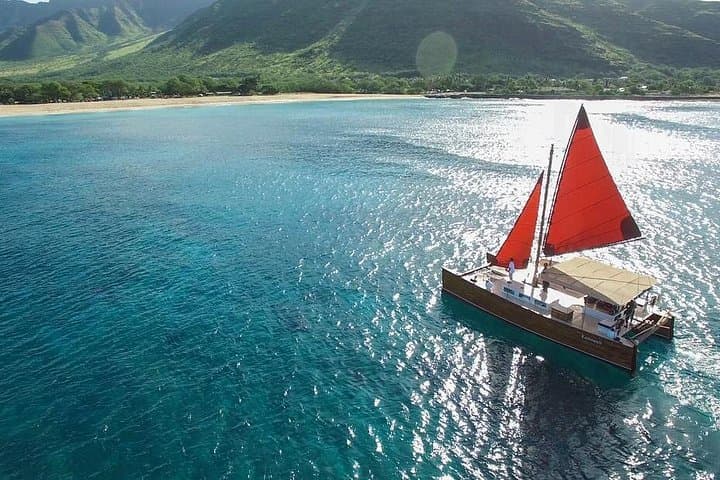
A bright morning on Mamala Bay feels deliberate: trade winds push a low, steady swell and the all-wood double-hulled waʻa kaulua slips through the water like a living artifact. Guests step aboard Kamoauli at Kewalo Basin, greeted by ukulele, chant, and the scent of taro being pounded into poi. The canoe doesn’t just move you along the coast — it places you inside a practice of navigation, craft and local story.
A bright morning on Mamala Bay feels deliberate: trade winds push a low, steady swell and the all-wood double-hulled waʻa kaulua slips through the water like a living artifact. Guests step aboard Kamoauli at Kewalo Basin, greeted by ukulele, chant, and the scent of taro being pounded into poi. The canoe doesn’t just move you along the coast — it places you inside a practice of navigation, craft and local story.
Oʻahu’s south shore is volcanic coastline: ancient lava flows built the shoreline and Diamond Head’s tuff cone marks the island’s explosive past. The Kona district moʻolelo told aboard ties Hawaiians to both ʻāina (land) and moana (ocean), and the waʻa itself is a reconstruction of voyaging technology that linked islands across the Pacific.
Cultural practitioners lead hands-on stations—net work, lauhala weaving, poi pounding—so the trip alternates between observation and participation. Look seaward for spinner dolphins and seabirds; bring a camera but also patience: some moments are meant to be listened to. Food is locally sourced pupus and drinks, served family-style.
Practicalities: tours run about two hours, boarding at a harbor pier with modest mobility needs but narrow gangway access. Book a private charter (1–6 passengers) to comply with current booking rules. Wear reef-safe sunscreen, non-slip shoes, and a wind layer; arrive 15–20 minutes early for check-in. Seas can be calm or brisk depending on trades—if you get seasick, plan ahead with medication or a fresh-air seat on deck.
This is a short, accessible cultural journey rather than a high-adrenaline sail: expect storytelling, hands-on crafts, panoramic views of Waikiki, and an education in Hawaiian voyaging traditions.